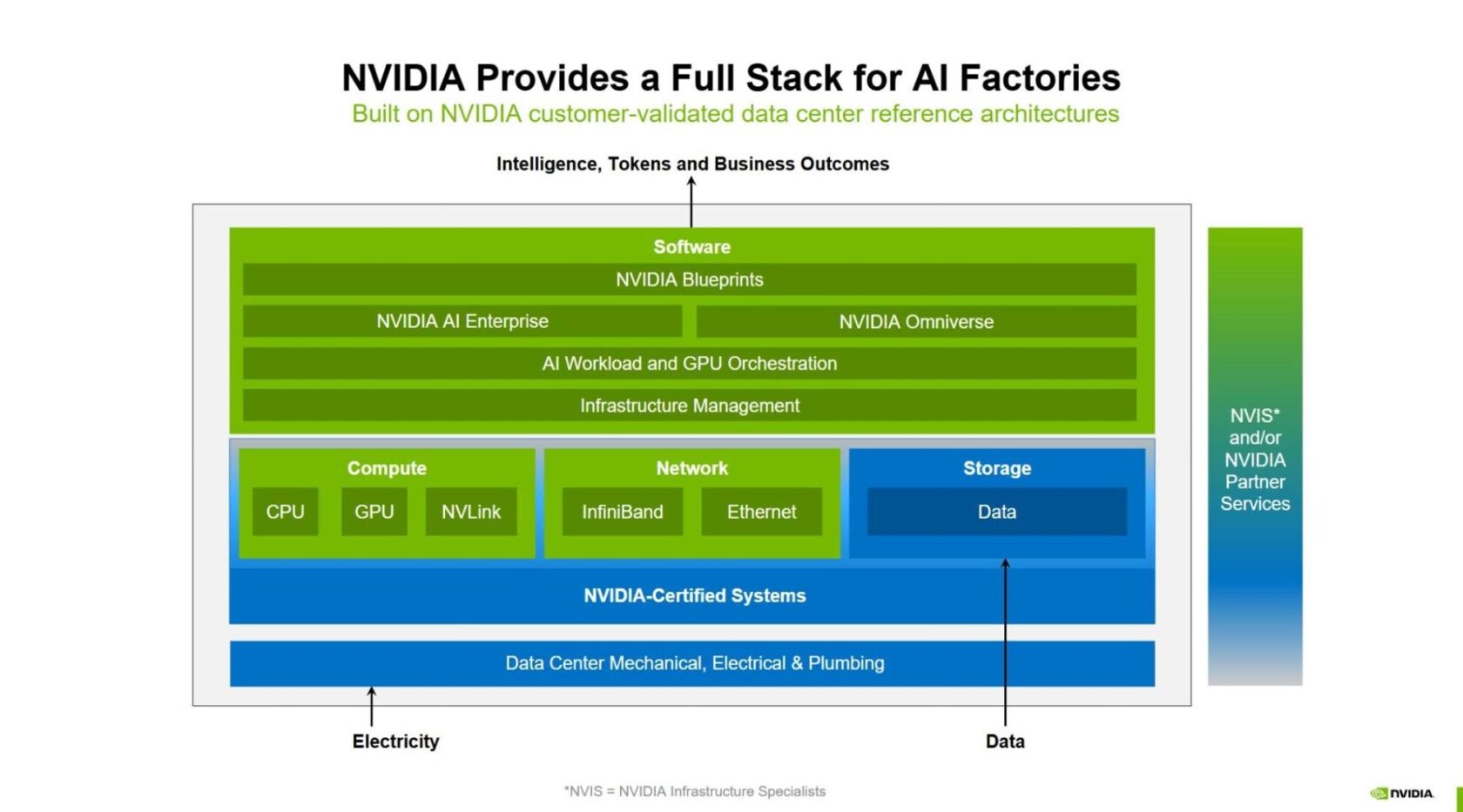
With the rapid growth of cloud computing, artificial intelligence, and big data services, modern data centers are facing increasing pressure to deliver higher bandwidth and faster transmission speeds. Traditional 100G and 200G optical solutions are no longer sufficient for many high-performance scenarios. As a result, 400G optical modules have become a key technology for upgrading data center interconnect infrastructure.
These modules are designed to meet the demands of hyperscale data centers, enabling faster, more stable, and more efficient optical communication between servers, switches, and storage systems.
Why Data Centers Need 400G Optical Modules
The explosive growth of internet traffic, AI workloads, and cloud services has significantly increased network congestion within data centers. As computing density rises, internal data transmission has become a critical performance bottleneck.
400G optical modules address this challenge by providing four times the bandwidth of 100G solutions. This allows data centers to handle larger data flows, reduce latency, and improve overall network efficiency.
They are especially important in environments where real-time processing and large-scale data exchange are required.
Key Application Scenarios in Data Center Networks
400G optical modules are widely used in multiple layers of data center architecture, particularly in high-speed interconnects.
In data center spine-leaf networks, they provide high-bandwidth links between core and aggregation switches, ensuring smooth traffic distribution. In cloud computing platforms, they support rapid data synchronization and virtual machine migration across servers.
In AI and machine learning clusters, 400G modules enable fast data exchange between GPUs and computing nodes, which is essential for training large-scale models. They are also used in hyperscale data centers, where massive volumes of traffic must be handled efficiently across distributed systems.
Technical Structure and Working Principle
A 400G optical module converts high-speed electrical signals into optical signals for transmission through fiber optic cables. At the receiving end, the optical signals are converted back into electrical signals for processing.
To achieve 400Gbps transmission rates, these modules use advanced technologies such as high-speed modulation, multi-lane signal processing, and integrated photonic design.
Common form factors include QSFP-DD and OSFP, which are designed to support high-density deployment while maintaining signal integrity and thermal stability.
Performance Advantages in High-Speed Networks
One of the main advantages of 400G optical modules is their ability to significantly improve network throughput while reducing physical cabling complexity.
By increasing bandwidth per port, fewer optical modules and fiber connections are required to achieve the same or higher capacity. This helps simplify network architecture and reduce overall system complexity.
In addition, 400G modules offer lower latency and improved transmission efficiency, which is critical for time-sensitive applications such as financial trading systems, AI inference, and real-time analytics.
Power efficiency is also optimized, helping data centers manage energy consumption in high-density environments.
Role in AI and Cloud Computing Infrastructure
AI-driven applications are one of the main forces behind the demand for 400G optical modules. Training large AI models requires constant data exchange between distributed computing nodes, often involving massive datasets.
400G connectivity helps reduce communication delays between GPUs, servers, and storage systems, significantly improving training efficiency.
In cloud computing environments, these modules support scalable infrastructure expansion, allowing service providers to handle growing user demand without network bottlenecks.
Deployment Considerations and Challenges
While 400G optical modules provide significant performance improvements, their deployment requires careful planning.
Data centers must ensure compatibility with existing network equipment and evaluate thermal management requirements, as higher transmission speeds generate more heat. Proper cooling systems and optimized rack design are essential for stable operation.
Network architecture must also be upgraded to fully utilize the benefits of 400G technology, including switch capacity and fiber infrastructure.
Future Development of High-Speed Optical Technology
400G optical modules represent a major step in the evolution of data center networking, but the industry is already moving toward 800G and even higher speeds.
Advancements in silicon photonics, coherent optical technology, and integrated circuit design will continue to improve performance while reducing power consumption and cost.
However, 400G will remain a mainstream standard in the near term, serving as a critical foundation for high-performance data center networks worldwide.
Conclusion
400G optical modules play a vital role in supporting the next generation of data center infrastructure. By delivering higher bandwidth, lower latency, and improved efficiency, they enable cloud computing, AI workloads, and large-scale data processing systems to operate more effectively.
As digital transformation continues to accelerate, 400G technology will remain a key component in building scalable, high-performance, and future-ready network architectures.
www.infinol.com
Infinol Technology (shenzhen) Co., Ltd