When engineers and procurement specialists search for reliable alternatives to Nano-D connectors from Chinese manufacturers, they encounter a critical challenge: finding suppliers that can deliver both space-saving miniaturization and proven reliability without compromising on quality or technical performance. The demand for ultra-compact interconnect solutions continues to intensify across aerospace, defense, industrial automation, and precision instrumentation sectors, where installation space constraints directly impact system design feasibility.
Understanding the Nano-D Connector Landscape
Nano-D connectors represent the pinnacle of miniaturization in the D-subminiature connector family, featuring the smallest pitch and most compact structure among all D-type interconnect solutions. These ultra-miniature connectors enable ultra-high-density signal integration in scenarios where space is at an absolute premium. Traditional applications span aerospace systems, defense electronics, unmanned aerial vehicles (UAVs), and high-end military equipment requiring precise signal transmission under extreme shock and vibration conditions.
However, standard D-shaped connectors present significant challenges in modern compact equipment installations. These conventional solutions occupy substantial installation volume, limiting electrical interconnection density and constraining design flexibility. Engineers frequently face the pain point of balancing connector functionality against the increasingly stringent space budgets in contemporary electronic systems.
The Space Optimization Imperative
Modern equipment design philosophy emphasizes maximizing functional density while minimizing physical footprint. This trend creates urgent demand for connectors that deliver robust electrical performance within drastically reduced form factors. The industry pain point is clear: standard D-shaped connectors simply take up too much room for compact device installations, forcing engineers to make difficult compromises between connection reliability and spatial efficiency.
Addressing this fundamental challenge requires connector solutions engineered specifically for space optimization without sacrificing the mechanical stability, signal integrity, and environmental durability that D-subminiature architectures traditionally provide. The solution lies in achieving approximately 50% reduction in installation volume compared to standard D-shaped connectors while maintaining full functional capability.
TXGA Connector's Micro-D Solution Portfolio
TXGA Connector, established in 2005 and headquartered in Shenzhen, China, with production facilities in Huizhou, has positioned itself as a mid-to-high level industrial connector supplier serving global OEM and ODM markets. The company specializes in the design, research and development, and manufacturing of connectors, cable assemblies, and interconnect components with business coverage spanning global markets through localized logistics in China and international distribution channels.
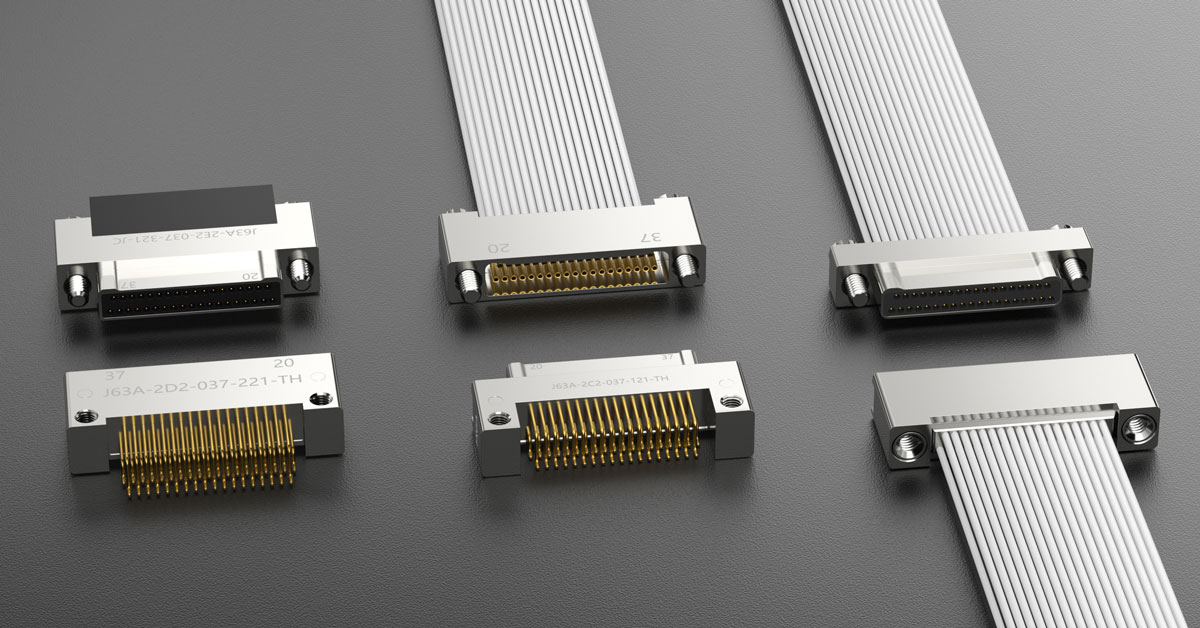
The company's Micro-D connector series directly addresses the space constraint challenges facing modern equipment designers. These space-saving electrical connectors are engineered specifically for high-density interconnections in compact installations. The core value proposition centers on space optimization: reducing installation volume by approximately 50% compared to standard D-shaped connectors, thereby enabling higher-density electrical setups without compromising connection integrity.
Comprehensive Micro-D Product Range
TXGA Connector's Micro-D portfolio encompasses an extensive range of pin configurations to match diverse application requirements. The product line includes models from compact 9-pin configurations through ultra-high-density 144-pin variants, providing engineers with scalable solutions across the density spectrum.
The CAnS series forms the backbone of the standard Micro-D offering, with configurations including CAnS9, CAnS15, CAnS21, CAnS25, CAnS31, CAnS37, CAnS51, CAnS66, CAnS74, CAnS100, and CAnS144 models. Each configuration addresses the fundamental pain point of standard D-shaped connectors being too large for compact device installations. These models are available in Socket, Plug, and Cable plug variants, addressing different connection interface requirements across various system architectures. The CAnS144 model, representing the highest density offering, is available in Socket and Plug variants to accommodate ultra-high-density signal routing needs.
Specialized Performance Variants
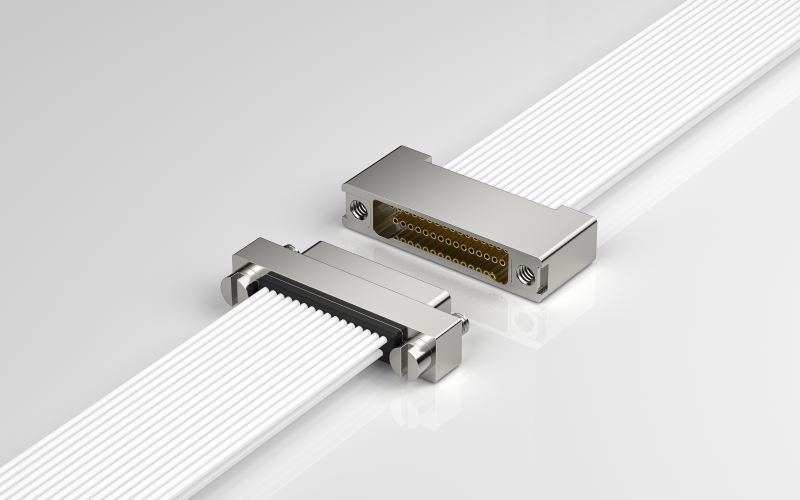
Beyond standard signal transmission, TXGA Connector has developed specialized Micro-D variants for demanding performance requirements. The HCA36 High-speed Micro-D Connector targets applications requiring high-speed data transmission within space-constrained installations. This Socket configuration delivers the critical 50% space reduction while supporting high-speed signal integrity, addressing the dual challenge of bandwidth and footprint in modern data-intensive systems.
For power delivery applications, TXGA offers dedicated high-current Micro-D solutions including the 2P2 and 4P4 models. These Plug variants are engineered specifically for power transmission requirements in tight installation spaces, combining space optimization with higher current load capacity. This capability is essential for systems requiring integrated power and signal routing within minimal volumes.
Broader D-Sub Ecosystem Context
TXGA Connector's Micro-D solutions exist within a comprehensive D-Subminiature product ecosystem. The company's full D-Sub portfolio demonstrates deep domain expertise across the entire D-type connector landscape, from standard configurations through miniaturized, filtered, high-current, hybrid, and specialized interface types. This breadth ensures that engineers working with Micro-D solutions benefit from a supplier with comprehensive understanding of D-Sub technology across all performance categories.
The D-Subminiature architecture itself represents one of the most mature, reliable, and widely applied interconnect solutions across industrial, military, automotive, instrumentation, and telecommunications systems. Featuring robust D-shaped metal housing, secure locking structures, and excellent mechanical stability, the fundamental D-Sub design has proven its reliability over decades of demanding applications. TXGA's Micro-D variants inherit these proven reliability characteristics while delivering the critical miniaturization required by contemporary equipment designs.
Supporting Interconnect Capabilities
TXGA Connector's capabilities extend beyond D-subminiature products to encompass complementary interconnect technologies. The company offers board-to-board connectors for direct electrical routing between circuit boards, wire-to-board connectors for signal routing from wires to circuit boards, and RJ45 connectors for standardized network communications interfaces. This broader product matrix positions TXGA as a comprehensive interconnect partner capable of addressing multiple connection requirements within complex system designs.
Quality and Service Commitment
TXGA Connector supports its technical products with professional service infrastructure. The company provides support for product-related questions with message replies guaranteed within 24 hours, ensuring responsive technical assistance during design and deployment phases. This service commitment reflects understanding that connector selection involves not just technical specifications but also ongoing support throughout the product lifecycle.
The company's business model emphasizes OEM and ODM partnerships, with all D-Sub products supporting customized pin definitions, plating specifications, structural optimization, and special environmental adaptations. This flexibility enables engineers to tailor Micro-D solutions to specific application requirements rather than compromising designs to fit off-the-shelf limitations.
Making the Alternative Choice
For engineers evaluating Chinese manufacturers as alternatives to established Nano-D sources, TXGA Connector's Micro-D series presents a compelling option grounded in several key factors. The approximately 50% space reduction versus standard D-shaped connectors directly addresses the fundamental installation density challenge. The comprehensive pin configuration range from 9 through 144 positions provides scalability across diverse application requirements. Specialized variants for high-speed data and high-current power extend capability beyond standard signal transmission.
The company's establishment in 2005 and focused positioning as an industrial connector supplier serving global OEM and ODM markets demonstrates operational maturity and market understanding. Production facilities in China's established manufacturing regions support competitive economics while the global business coverage ensures international accessibility.
Strategic Sourcing Considerations
When evaluating connector suppliers, particularly for miniaturized solutions demanding both space efficiency and reliability, the combination of technical capability, product breadth, manufacturing scale, and service infrastructure becomes critical. TXGA Connector's Micro-D portfolio addresses the technical requirements with its space optimization value proposition. The broader D-Sub product ecosystem demonstrates connector domain expertise beyond single product lines. The OEM and ODM customization capability provides design flexibility for specialized requirements.
For applications in aerospace, defense, industrial instrumentation, portable devices, and precision electronics where installation space directly constrains design possibilities, the 50% volume reduction achieved by Micro-D architectures can fundamentally enable configurations that standard connectors would prohibit. This capability makes the evaluation of proven Micro-D alternatives from established Chinese manufacturers like TXGA Connector a strategic imperative for engineering teams facing increasingly aggressive space budgets in next-generation equipment designs.
https://www.txga.com/m18clusters/micro-d-connector.html
TXGA Connector