Modern manufacturing requires more than a CNC machine that can remove material accurately. For complex components used in aerospace, automotive, medical, semiconductor, and defense applications, the complete production process must control dimensional accuracy, material behavior, surface quality, repeatability, inspection, and delivery consistency.
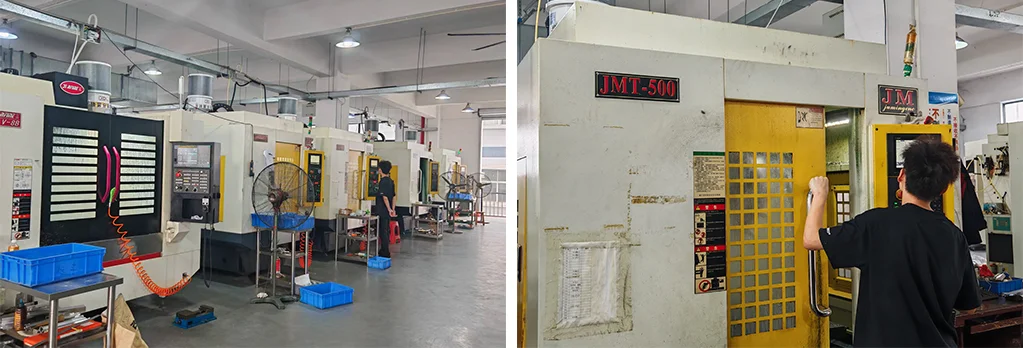
This is where professional CNC manufacturing solutions become important. Instead of treating machining as an isolated operation, a complete solution connects engineering analysis, material preparation, CNC programming, machining, in-process control, final inspection, and production management into one controlled workflow.
ZhongShan JunFeng Co., Ltd. focuses on providing CNC manufacturing solutions for global customers and supports demanding applications across aerospace and defense, automotive, medical equipment, electronics, and semiconductor industries. With advanced machining and inspection equipment, the company emphasizes precision control throughout the process, from order review to finished components.
What Defines a High-Quality CNC Manufacturing Solution?
A CNC manufacturing solution should be evaluated by the final component rather than by machine specifications alone.
For a precision component, critical requirements may include dimensional tolerances, geometric tolerances, surface roughness, material properties, concentricity, flatness, perpendicularity, and repeatability.
For example, a component may require a dimensional tolerance of ±0.01 mm while also requiring a controlled surface finish. Achieving one specification does not automatically guarantee compliance with the others.
The manufacturing process therefore needs to be designed around the complete drawing and application requirements.
This includes selecting an appropriate machining process, workholding method, cutting strategy, tooling configuration, inspection method, and production sequence.
Material Determines the Machining Strategy
Different materials behave differently during CNC machining.
Aluminum generally allows higher cutting speeds and efficient material removal, while stainless steel can generate greater cutting forces and heat. Titanium alloys present additional challenges because of their low thermal conductivity and high strength.
Engineering plastics introduce another concern: thermal expansion and deformation.
For semiconductor and medical components, materials may also require specific grades, certifications, or traceability documentation.
A reliable CNC manufacturing solution begins by identifying material grade, hardness, stock condition, and material certification before machining starts.
Multi-Axis Machining Reduces Setup Complexity
Complex components often contain multiple surfaces, angled features, deep cavities, or interconnected geometric relationships.
Using a suitable multi-axis machining strategy can reduce the number of setups required.
Fewer setups can reduce accumulated positioning errors because the component does not need to be repeatedly removed and realigned.
This is particularly valuable when several features must maintain tight positional relationships.
For example, machining several critical surfaces in a single setup can provide better consistency than transferring the part between multiple machines.
However, multi-axis machining is not automatically better for every component. The appropriate configuration depends on geometry, tolerance requirements, production volume, tooling accessibility, and cost targets.
Tolerance Control Requires More Than CNC Positioning
CNC positioning accuracy is only one factor affecting final dimensional accuracy.
Tool wear, thermal expansion, machine vibration, fixture deformation, cutting forces, coolant temperature, and material stress can all influence the finished part.
During long production cycles, thermal conditions can gradually change machine geometry.
Tool wear can also cause dimensions to drift even when the CNC program remains unchanged.
For precision manufacturing, process monitoring and scheduled inspection can help identify these changes before they generate excessive quantities of nonconforming parts.
Surface Finish Is a Process Parameter
Surface roughness is often treated as a finishing requirement, but it should be considered during process planning.
Cutting speed, feed rate, tool geometry, tool condition, machine rigidity, coolant application, and machining direction all influence surface quality.
A component requiring Ra 0.8 μm cannot necessarily be produced reliably using the same cutting strategy used for a general-purpose machined surface.
The manufacturing process should identify critical surfaces in advance and assign suitable roughing, semi-finishing, finishing, or additional surface-treatment operations.
This approach prevents unnecessary processing costs while protecting the surfaces that actually influence product performance.
Inspection Must Be Integrated With Manufacturing
Precision machining without effective inspection creates a significant quality risk.
Dimensional inspection verifies whether the final part meets the drawing, but inspection data can also provide information about process stability.
Advanced inspection equipment can measure critical dimensions and geometric relationships with greater repeatability.
For complex components, coordinate-based measurement can be particularly valuable because multiple dimensions can be evaluated against the same reference system.
ZhongShan JunFeng Co., Ltd. combines machining and inspection capabilities to support quality control from order processing through final production.
This integration reduces the risk of separating machining decisions from actual measurement results.
Aerospace and Defense Require Process Stability
Aerospace and defense components often involve complex geometries, difficult-to-machine alloys, and strict dimensional requirements.
In these applications, a small deviation may affect assembly, load distribution, sealing, or operational reliability.
Production consistency is therefore as important as the dimensional accuracy of an individual sample.
The manufacturing process should maintain controlled tooling conditions, standardized inspection procedures, and traceable production information.
When repeatability is stable, scaling from prototype quantities to production batches becomes much more predictable.
Automotive Manufacturing Focuses on Repeatability and Cost
Automotive components introduce a different balance between precision and production efficiency.
Large production volumes make cycle time and tooling life important cost factors.
A process that produces an accurate part but requires excessive machining time may not be commercially competitive.
CNC manufacturing solutions for automotive applications should therefore optimize material removal rate, tool utilization, fixture efficiency, inspection frequency, and machine utilization while maintaining required tolerances.
Process optimization becomes especially important when the same component is manufactured repeatedly.
Medical Components Demand Tight Process Control
Medical and medical-device components may combine tight tolerances with strict material and cleanliness requirements.
Small components can contain complex cavities, threads, holes, and curved surfaces that require stable machining conditions.
Depending on the application, the manufacturing process may also need controlled documentation and material traceability.
For these parts, the CNC process should be designed to minimize contamination risks and maintain consistent dimensional performance throughout production.
Semiconductor Components Require Precision and Clean Processing
Semiconductor manufacturing equipment often uses components with tight dimensional requirements and demanding surface specifications.
Materials may include aluminum alloys, stainless steels, engineering plastics, and other specialized materials.
The challenge is not only achieving the required geometry but also maintaining surface integrity and cleanliness.
Small burrs, scratches, particles, or dimensional deviations can interfere with equipment assembly or downstream processes.
CNC manufacturing solutions for semiconductor applications should therefore connect precision machining with appropriate deburring, cleaning, inspection, and packaging procedures.
From Prototype to Production
A strong CNC manufacturing solution should support different production stages.
Prototype production focuses on validating geometry, material selection, machining feasibility, and functional performance.
Low-volume production requires flexible setup and efficient programming.
Mass production requires stable cycle times, repeatable workholding, predictable tool life, and standardized inspection.
The same component may therefore require different optimization priorities as its production volume increases.
A process designed only for prototype manufacturing may not be the most economical solution for thousands of units.
Why End-to-End Manufacturing Matters
When engineering, machining, and inspection are separated between multiple suppliers, communication gaps can increase production risk.
A dimensional problem discovered during final inspection may require several rounds of communication before the machining process is corrected.
An integrated CNC manufacturing workflow can shorten this feedback loop.
Manufacturing engineers can use inspection results to evaluate machining parameters, tooling, fixture conditions, and process sequences more efficiently.
This is particularly useful for complex components where tolerance relationships are difficult to manage through isolated production stages.
Selecting CNC Manufacturing Solutions
When evaluating a CNC manufacturing partner, machine quantity should not be the only consideration.
The more important questions are whether the supplier can understand complex drawings, process difficult materials, maintain required tolerances, inspect critical features, support prototype-to-production transitions, and maintain consistent quality.
Equipment capability should be evaluated together with engineering experience and inspection infrastructure.
For international manufacturing projects, communication, production transparency, documentation, and delivery reliability also influence the actual project cost.
Conclusion
CNC manufacturing solutions have evolved from basic computer-controlled machining into integrated precision-production systems.
For aerospace, defense, automotive, medical, electronics, and semiconductor applications, successful manufacturing depends on controlling the entire chain from material preparation and process planning to CNC machining, inspection, and final delivery.
ZhongShan JunFeng Co., Ltd. provides CNC manufacturing solutions supported by advanced machining and inspection equipment, with experience across several precision-demanding industries.
The most effective solution is not necessarily the one using the most expensive machine. It is the one that consistently converts engineering requirements into measurable, repeatable, and economically viable finished components.
www.jfcncparts.com
ZhongShan JunFeng Co., Ltd