When you’re sourcing thermistors for real production—especially for automotive electronics, power modules, or industrial controllers—the “good enough” parts tend to fail first. Heat cycles, humidity, long storage, inconsistent lead forming, and small shifts in resistance can quietly turn into rework, warranty claims, or unstable calibration.
That’s why many buyers narrow their search to glass-encapsulated thermistors when the environment is harsh and the tolerance window is tight. The GAT series is one of the common choices in this category because it targets the exact pain points that show up in mass production: sealing, stability, response speed, and installability.
If you’re evaluating suppliers and comparing datasheets, this guide breaks down what to check—specs, typical uses, and a practical buyer checklist—so you can source with fewer surprises.
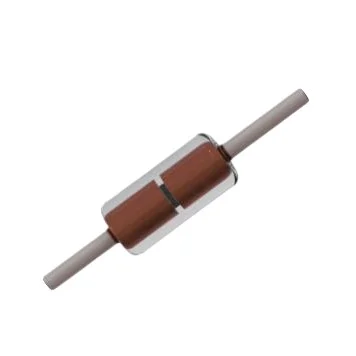
To learn more about production capability and configurations, you can also refer to HG Electronics’ product page here: GAT Thermistor Manufacturer China.
1) What a GAT Thermistor Is (in plain terms)
A GAT thermistor is typically an NTC thermistor package designed with glass-encapsulated technology. The “glass” part matters because it improves sealing and helps protect the sensing element from moisture ingress, chemical exposure, and long-term drift—issues that epoxy coatings can struggle with in high temperature or high humidity conditions.
In practical sourcing language, a GAT thermistor is often chosen when you want:
-
Consistent resistance behavior over time
-
Reliable stability under heat and humidity stress
-
Fast response for temperature control loops
-
Small size for compact layouts
-
Packaging that supports automated assembly
HG Electronics highlights these same points: glass encapsulation, strong sealing, stable performance in high temperature/high humidity, small size with fast response and uniformity, and packaging options that support automatic installation on PCBs.
2) Key Specs Buyers Should Look For
Not every supplier will list the same parameters the same way, so it helps to create your own comparison sheet. Here are the spec areas that matter most for production decisions:
A. Resistance value and tolerance
The resistance (e.g., at 25°C) and its tolerance define initial accuracy and how much calibration margin you’ll need. If your design relies on tight temperature estimation, tolerance is not a “nice to have.”
B. B-value / Beta consistency
If you’re converting resistance into temperature, Beta variation impacts curve accuracy. Even if resistance tolerance is acceptable, inconsistent Beta can shift the curve and cause temperature errors.
C. Stability and drift after stress
Ask for stability data after high temperature exposure and humidity aging. You’re looking for low resistance drift and predictable behavior after environmental stress.
D. Response time
Fast response matters in thermal protection and closed-loop control, especially when you’re sensing rapid thermal changes near power devices or heating elements.
E. Packaging and lead/termination style
Your assembly line cares about shape repeatability: lead spacing, lead straightness, and whether the packaging supports automated handling without frequent jams or mis-inserts.
HG Electronics notes small size, high accuracy, fast response, and uniformity in structure, which are exactly the features buyers should validate with measurable criteria during sampling.
3) Where GAT Thermistors Are Typically Used
Because glass encapsulation is aimed at stability, GAT thermistors often appear in applications where the sensing point is exposed to humidity, condensation, or sustained heat. Common scenarios include:
-
Automotive electronics: modules that experience wide temperature swings, condensation risk, and long service life expectations
-
Industrial equipment: control boards, thermal protection points, and environments with fluctuating humidity
-
Power and energy systems: thermal sensing near high-power components, where response speed and drift control matter
-
HVAC and temperature control: systems that run for long cycles and may see moisture exposure
-
Consumer devices with tight space: small size and rapid response enable compact integration
If your product will be deployed in regions with high humidity, or in enclosures that see condensation, a well-sealed thermistor package can be a more reliable choice than simple coatings.
4) Why Glass Encapsulation Matters in Sourcing
From a buyer’s perspective, “glass encapsulated” should translate into fewer field failures and more stable performance. The sealing helps resist moisture ingress, which is a common cause of resistance drift and intermittent behavior.
HG Electronics explicitly states that the GAT thermistor adopts glass-encapsulated technology with good sealing performance and remains stable and reliable in high temperature and high humidity environments.
That’s not just marketing language—those claims can (and should) be verified with:
-
humidity aging results
-
high temperature storage results
-
thermal shock / temperature cycling outcomes
-
resistance drift statistics across lots
If a supplier can’t provide repeatable aging data, you’re essentially buying blind.
5) Buyer Checklist: What to Confirm Before You Place an Order
Here’s a practical checklist that matches how real procurement and engineering reviews happen. Use it during RFQ, sampling, and incoming quality planning.
A. Technical fit
-
Resistance at 25°C and tolerance
-
Beta value range and curve match requirement
-
Working temperature range for your environment
-
Response time requirement and method used to measure it
-
Long-term drift data after heat/humidity stress
B. Packaging & assembly fit
-
Lead pitch and length options
-
Body size / profile for your mechanical constraints
-
Compatibility with automated PCB installation
-
Any special forming, cutting, or taping options if needed
HG Electronics notes D0-35 packaging and availability for automatic PCB installation—so for line compatibility, you should confirm the exact packaging format and dimensional tolerances you need.
C. Quality system and traceability
-
Lot traceability and labeling rules
-
Incoming inspection standards (AQL, critical dimensions)
-
Reliability test plan used by the factory
-
Change control process (materials, process, tooling)
D. Documentation you’ll likely need
-
Datasheet with clear electrical parameters and curves
-
RoHS/REACH statements if required by your market
-
Reliability test summary (aging, humidity, cycling)
-
Process control outline (key steps that impact consistency)
E. Sampling strategy (this saves you pain later)
-
Request samples from multiple lots, not just one
-
Run at least one mini “production simulation” on your line
-
Measure resistance distribution and Beta distribution
-
Perform accelerated aging on the sample set if your application is harsh
6) Common Sourcing Mistakes (and how to avoid them)
Mistake 1: Only comparing unit specs, not distribution
Two suppliers can quote the same tolerance, but one has a tighter distribution and better lot-to-lot consistency. Ask for histogram data if possible.
Mistake 2: Ignoring assembly realities
If leads are inconsistent or packaging is not truly line-ready, the cost shows up as downtime and yield loss. Confirm automation compatibility early.
Mistake 3: Skipping environmental validation
If your product sees humidity and heat, do not skip humidity aging and temperature cycling checks during sample stage.
Mistake 4: Not defining change control
When a supplier changes materials or processes without notice, drift behavior can change. Ask how they manage and communicate changes.
7) A Simple RFQ Template You Can Use
When you contact a supplier, the fastest way to get a useful quote and the right sample is to provide a clear RFQ list:
-
Resistance @25°C: ____
-
Tolerance: ____
-
Beta / curve requirement: ____
-
Operating temperature range: ____
-
Package / lead style: ____
-
Installation method: manual / automatic PCB insertion
-
Expected annual volume: ____
-
Reliability requirements: humidity aging, thermal cycle, high temp storage
-
Documentation required: datasheet, compliance, test summary
You’ll get cleaner replies, and you’ll reduce the back-and-forth that slows down qualification.
Conclusion
A GAT thermistor is not just “another NTC part.” For many buyers, it’s a stability-first choice: glass encapsulation for sealing, performance stability under heat and humidity, and a package format that supports scalable assembly.
If you’re sourcing for high reliability environments or building a product where temperature accuracy matters over time, treat thermistor selection as a supply-chain decision as much as an engineering decision. Validate drift, confirm packaging for your line, and insist on traceability and change control from the start.
For reference and product details, visit: GAT Thermistor Manufacturer China.
www.hg-electronics.com
HG Electronics Co., Ltd