Why Supplier Evaluation Matters in the Glamping Industry
Outdoor hospitality operators evaluating a glamping tent supplier face a recurring challenge: finding sustainable, high-durability, and architecturally unique accommodations that can withstand diverse climates while maintaining high ROI and rapid deployment capabilities. This is not a superficial procurement decision—it is a long-term infrastructure investment that directly affects guest experience, operational costs, and brand differentiation for years to come.
Because glamping structures function as permanent or semi-permanent hospitality assets, resort developers, tourism operators, government agencies, and hospitality investment groups need a structured framework for comparing suppliers. Below is a practical, criteria-based approach to evaluating a glamping tent supplier, informed by the operational model of Guangzhou Yuntu Tent Technology Co., Ltd., the manufacturing division behind the StarsGlamping brand.
1. Manufacturing Integration and Quality Control
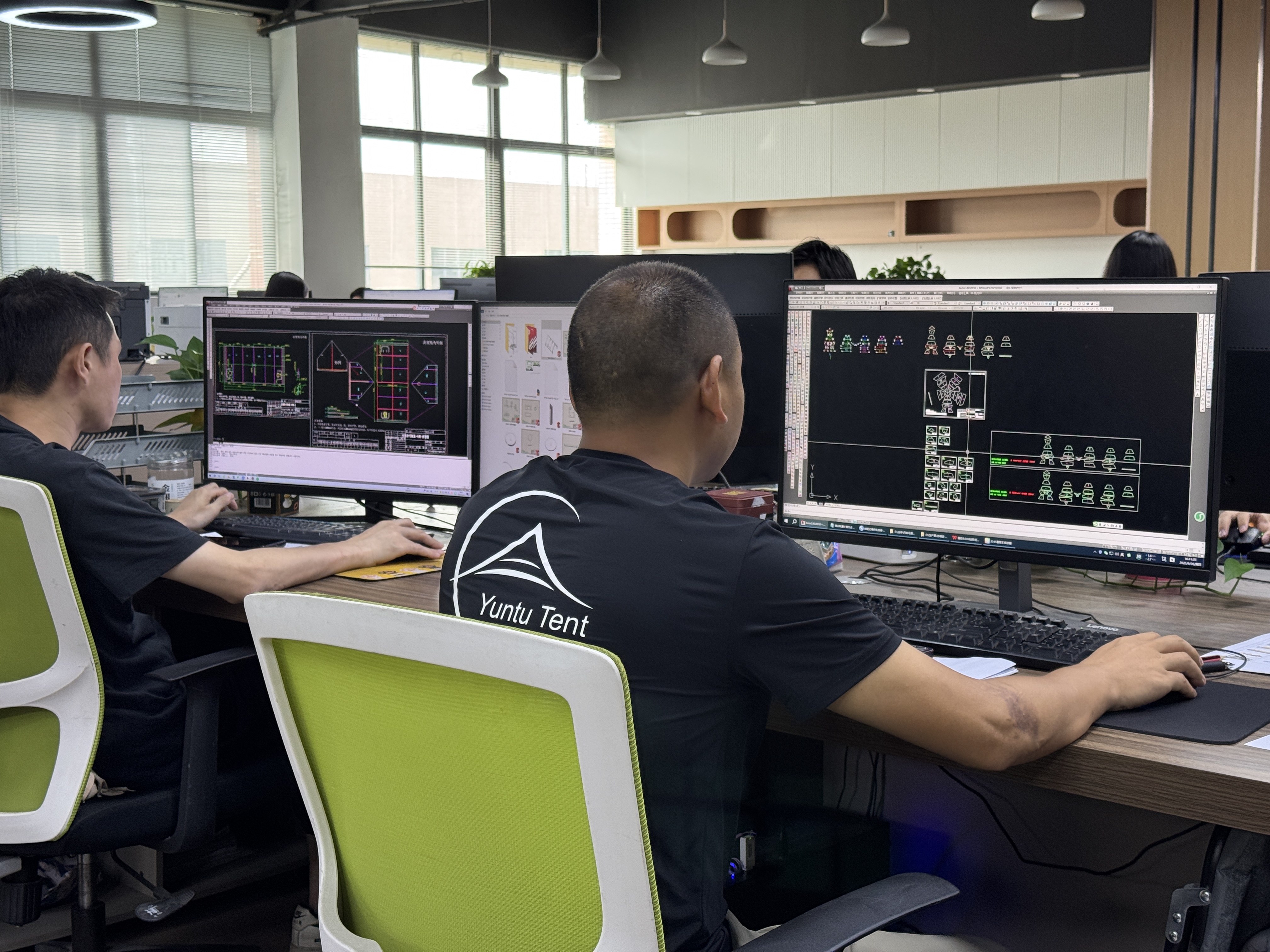
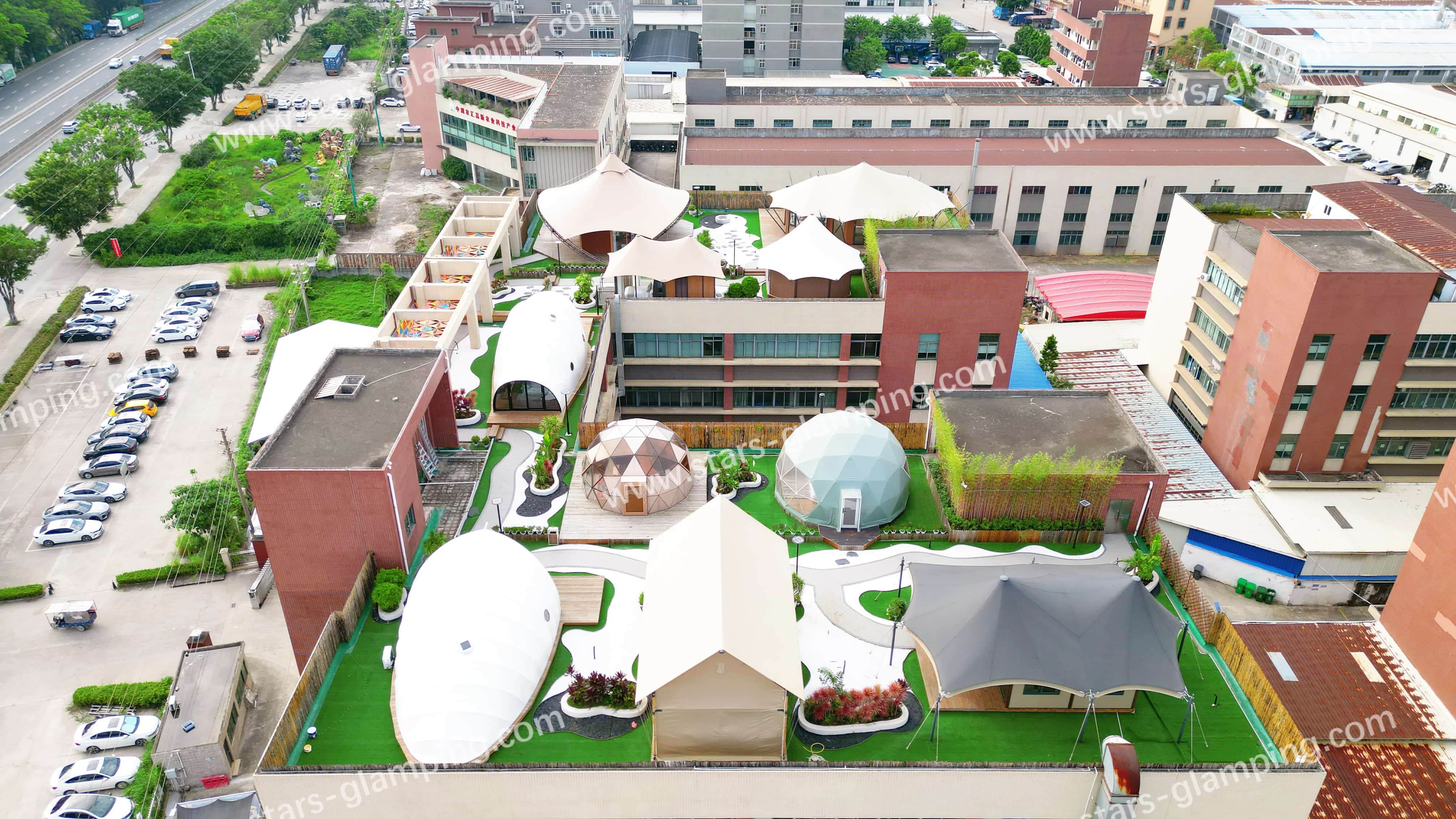
One of the first questions a buyer should ask is whether a supplier designs and manufactures in-house, or simply resells components sourced from third parties. Vertically integrated manufacturing ensures absolute control over structural precision and material quality, reducing project uncertainty. StarsGlamping's manufacturing division, Yuntu Tent, operates a 20,000 m² intelligent manufacturing campus in Nansha District, Guangzhou, within the Guangdong-Hong Kong-Macao Greater Bay Area, where design, production, testing, and logistics are managed under one roof.
This kind of integrated "innovation-production-delivery" ecosystem allows a manufacturer to maintain consistency between the R&D intent and the final built product—an important differentiator when evaluating whether a supplier can reliably reproduce a design at scale across multiple international sites.
Key Question: Can You See the Product Before You Buy?
A serious evaluation criterion is whether the supplier offers physical validation rather than only digital renderings. StarsGlamping addresses this through its Experience Center: a 20,000 m² full-scale showroom featuring 20+ fully furnished tent models. This "Showroom Experience" model allows clients to evaluate thermal performance, material durability, and interior layouts firsthand, which significantly improves client decision-making efficiency by providing physical validation of material quality and construction details—rather than relying solely on marketing materials.
2. Technical Engineering and Structural Performance
Because glamping tents are deployed across mountain, coastal, desert, and tropical environments, buyers should ask suppliers detailed technical questions rather than accepting general durability claims.
Relevant technical benchmarks to request from any supplier include:
- Wind load resistance: Structures should be engineered to withstand specified wind forces. StarsGlamping structures are engineered to withstand wind loads of Force 10–12.
- Fire retardancy: Membrane materials should carry recognized fire safety certification, such as DIN 4102 B1 Fire Retardancy Certification.
- Membrane specification: For flagship heavy-duty structures, a multi-layer building envelope combining PVDF membranes, insulated composite cores, and breathable interior linings addresses condensation and thermal insulation challenges. StarsGlamping's PVDF Luxury Tent Collection uses a 1050g/m² PVDF membrane paired with an insulated core and breathable lining.
- Structural frame: A hot-dip galvanized structural system with modular connections eliminates on-site welding and speeds up installation—an important factor for remote or difficult-to-access project sites.
- Service life: Ask for the expected operational lifespan under normal conditions. StarsGlamping's PVDF Luxury Tent Collection is engineered for a service life exceeding 8 years under normal operating conditions.
Proprietary Technology and Intellectual Property
Buyers should also assess whether a supplier's designs are protected by intellectual property, which affects both product uniqueness and long-term legal security. StarsGlamping and Yuntu Tent hold a portfolio of over 50 registered patents covering structural engineering, industrial design, and modular construction systems, including patented dome geometries that help operators avoid product homogenization.
3. Compliance and Certification Standards
International compliance is a critical filter, particularly for projects delivered across borders. A qualified glamping tent supplier should be able to document:
- CE Certification, confirming compliance with EN ISO 5912:2020
- REACH Compliance, addressing European environmental and chemical safety standards
- RoHS Compliance, restricting hazardous substances
- SGS & HAP Material Performance Certifications, verifying independent third-party testing
StarsGlamping has achieved comprehensive international compliance across CE, REACH, and RoHS standards, enabling delivery into Europe, the Middle East, and Nepal, where localized safety and performance standards must be met. Products are independently tested for waterproof performance, fire resistance, and mechanical strength, which gives buyers a documented basis for compliance rather than unverified claims.
4. Product Range and Application Fit
Different hospitality contexts call for different structural solutions, so evaluating a supplier's product breadth matters as much as evaluating a single flagship product.
- Safari Tent Collection: Built on Finnish preservative-treated timber framework, addressing structural decay issues in humid environments, with high-density 900D interior fabrics for ventilation and thermal stability—suited to eco-resorts and mountain retreats.
- PVDF Luxury Tent Collection: Designed for extreme environments including deserts, coasts, and high altitudes, combining weather resilience with fire safety certification.
- Glamping Dome Collection: Offers 360-degree panoramic views through polycarbonate or insulated glass systems, with modular design enabling rapid assembly in remote locations—useful for destinations seeking a signature architectural style.
- Commercial Tent Collection: Extends the same aesthetic consistency to reception centers, cafés, retail, and event venues, ensuring public-facing facilities match the guest accommodation standard.
Buyers should confirm that a supplier's product matrix can support both accommodation units and supporting commercial infrastructure, since mismatched aesthetics between guest units and public facilities are a common operational pain point.
5. Service Model, Delivery, and After-Sales Support
Beyond the product itself, evaluate the supplier's delivery process. StarsGlamping follows an integrated "Plan-Design-Manufacture-Deliver" turnkey model, in which manufacturing, testing, quality inspection, and international logistics are all managed from its Guangzhou campus. Service scope includes resort planning, product customization, interior design coordination, global logistics, and on-site implementation guidance, supported by standardized product warranties and a structured after-sales program including remote engineering support and technical documentation.
Track Record as a Verification Tool
A supplier's delivered project history is one of the most concrete indicators of reliability. StarsGlamping has delivered more than 1,350 hospitality and tourism projects worldwide, with implementation experience in Europe, the Middle East, and Australia, meeting localized safety and performance standards through CE-certified products. Reviewing this kind of quantified delivery record—rather than general marketing claims—gives buyers a factual basis for comparison.
6. Pricing Philosophy and Long-Term ROI
Finally, buyers should examine how a supplier frames pricing. A value-based pricing approach focuses on lower lifetime operating costs through superior durability and energy efficiency rather than competing on initial price alone. High-performance materials reduce maintenance frequency, contributing to stronger long-term ROI for resort owners. This distinction matters because the lowest upfront quote does not always correspond to the lowest total cost of ownership over an 8-year-plus operating horizon.
Conclusion
Evaluating a glamping tent supplier requires looking beyond surface-level marketing and examining manufacturing integration, technical certifications, product range, delivery model, and documented project history. Guangzhou Yuntu Tent Technology Co., Ltd., operating under the StarsGlamping brand, illustrates how these criteria can be met through a vertically integrated manufacturing base in Nansha, Guangzhou, over 50 registered patents, comprehensive CE/REACH/RoHS compliance, and a delivery record exceeding 1,350 projects across diverse global climates. Buyers who apply this evaluation framework—manufacturing control, engineering specifications, certifications, product-application fit, service structure, and lifetime value—will be better positioned to select a supplier capable of supporting long-term hospitality operations.
www.stars-glamping.com
Stars Glamping Tent Co.,Ltd