In label and packaging production, efficiency is not simply a matter of increasing machine speed. Production efficiency also depends on cutting accuracy, material utilization, process stability, changeover time, operator workload, and the ability to maintain consistent quality over long production runs.
For manufacturers producing non-adhesive labels, laser holographic trademarks, security labels, and other anti-counterfeiting products, combining hot stamping with automatic die cutting can significantly simplify the production workflow. Instead of relying heavily on manual positioning and separate processing steps, an automated system can coordinate material feeding, tracking, stamping transfer, cutting, counting, and rewinding with greater consistency.
An automatic hot stamping and die cutting machine is therefore not simply a faster piece of equipment. When correctly configured, it becomes an important part of a controlled production process.
1. Reduce Manual Operations Between Processes
Traditional label processing can involve several independent operations. Material may need to be positioned, aligned, stamped, cut, counted, and rewound separately.
Every additional manual operation creates opportunities for errors. Operators may spend considerable time adjusting material positions, checking registration, removing finished pieces, and preparing the next batch.
Automation connects more of these operations within one production system.
For example, an automatic system can perform continuous material feeding while monitoring registration marks or label edges. Once the material reaches the required position, the machine can coordinate the stamping or transfer process with subsequent cutting and winding operations.
This reduces unnecessary handling and allows operators to focus more on production supervision and quality inspection.
2. Improve Registration Accuracy
Registration accuracy is particularly important for holographic trademarks and security labels. If the stamping position is inconsistent with the printed or die-cut pattern, the finished label may not meet the required visual standard.
Changzhou Zhonghong Machinery Co., Ltd. designs equipment for label and packaging anti-counterfeiting applications, including automatic systems used for holographic trademark processing.
The equipment incorporates photoelectric automatic tracking correction. Depending on the production requirement, the tracking system can follow an edge, line, or intermittent trademark.
The stated detection accuracy is up to 0.1 mm, helping the machine maintain accurate material positioning during continuous operation.
This type of automatic correction is especially useful when processing printed rolls where small deviations can accumulate over a long production run.
3. Maintain Stable Production at Higher Speeds
Increasing machine speed without controlling material positioning can create quality problems. Web deviation, inaccurate stamping, poor cutting registration, and unstable winding can offset the productivity gained from higher operating speeds.
An automatic machine addresses these issues by integrating feeding, correction, processing, counting, and winding into a coordinated workflow.
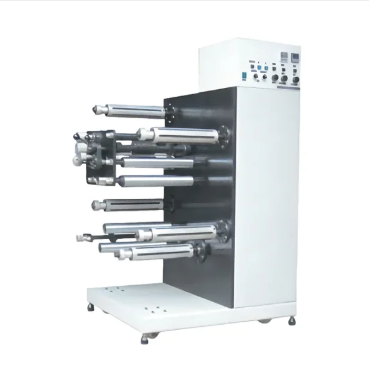
The ASLM-series supporting automatic gold stamping equipment from Changzhou Zhonghong is designed for non-adhesive trademark hot stamping and is particularly suitable for automatic die-cutting of laser holographic trademarks.
Its compact structure allows the equipment to fit into production environments where floor space is limited while maintaining a streamlined material path.
For manufacturers handling repeated production orders, stable automatic operation can be more valuable than simply achieving a high peak speed.
4. Improve Material Handling and Winding
Material handling is often overlooked when evaluating production equipment.
A machine may have accurate stamping and cutting capabilities, but if the finished material cannot be rewound consistently, downstream handling becomes more difficult.
The equipment supports two-shaft winding, with winding bar specifications covering widths from 10 mm to 350 mm. The maximum unwinding diameter is 400 mm.
These specifications provide flexibility for different roll configurations and help manufacturers organize finished material according to subsequent production or packaging requirements.
Consistent winding also makes it easier to transfer finished rolls to other equipment, such as coding or rewinding systems.
5. Automatic Counting Helps Reduce Production Errors
Counting is another area where automation can improve daily production management.
When labels or trademark pieces are processed in large quantities, manual counting is time-consuming and can introduce discrepancies between the actual output and production records.
Automatic counting allows operators to monitor output directly from the machine. This is particularly useful when finished products need to be divided into predetermined batches for inspection, packaging, or shipment.
Instead of relying entirely on manual counting after production, manufacturers can incorporate counting into the processing stage.
This provides a more practical way to monitor production quantities and identify abnormal conditions during a run.
6. Support Integration With Other Production Equipment
Modern anti-counterfeiting production lines rarely operate as isolated machines. Manufacturers may need to connect hot stamping equipment with rewinding systems, coding equipment, or other downstream processes.
The automatic gold stamping machine can be used for stamping transfer film applications and can work with a rewinder or coding-machine platform.
This flexibility is important for manufacturers looking to optimize an existing production line rather than replace the entire workflow.
Before purchasing equipment, buyers should therefore evaluate the machine's interface and material path in relation to their current equipment. The goal should be to create a smoother production process, not simply add another standalone machine.
7. Compact Design Can Improve Workshop Utilization
Factory space is an operational resource. Large equipment footprints can create unnecessary material movement and make it harder for operators to access machines safely.
The equipment has an overall size of approximately 800 × 900 × 1,400 mm and a weight of about 500 kg.
Its compact structure can be advantageous for production workshops where space needs to be allocated among multiple processes, including printing, stamping, die cutting, inspection, rewinding, and packaging.
A smaller footprint can also help shorten the distance between related processes and improve overall material flow.
8. Electrical and Operational Requirements Should Be Considered
Production efficiency depends on whether the machine can be integrated into the factory's existing operating environment.
The equipment uses an AC 220 V power supply with a rated power of approximately 3 kW. Buyers should confirm the actual electrical configuration, workshop requirements, grounding conditions, and supporting equipment before installation.
Operator training is equally important. Automatic equipment can reduce manual intervention, but operators still need to understand material threading, tracking correction, stamping transfer, winding, counting, and routine inspection.
A properly trained operator can identify abnormal material movement early and reduce unnecessary downtime.
9. What Buyers Should Check Before Selecting a Machine
When evaluating an automatic hot stamping and die cutting machine, buyers should focus on actual production requirements rather than looking at machine specifications in isolation.
Key questions include:
-
What type of labels or trademarks will be processed?
-
Is the material adhesive or non-adhesive?
-
Are laser holographic trademarks involved?
-
What is the maximum roll diameter?
-
What working width is required?
-
What type of registration mark should the photoelectric system track?
-
What cutting accuracy is required?
-
What finished roll widths are needed?
-
Is automatic counting necessary?
-
Does the machine need to connect with a rewinder or coding platform?
-
What electrical and installation conditions are available?
These details determine whether a machine is suitable for a particular production line.
10. Choose Equipment Based on Long-Term Production Needs
For anti-counterfeiting label manufacturers, equipment selection should be based on the complete production process rather than one individual function.
Changzhou Zhonghong Machinery Co., Ltd. specializes in the research and development and manufacturing of label and packaging anti-counterfeiting technology and equipment. Its products are exported to more than 70 countries and regions, supported by professional technical personnel, production and testing equipment, and an after-sales service team.
This manufacturing experience is particularly relevant when buyers require equipment for specialized trademark and holographic label applications.
A machine that combines automatic tracking correction, hot stamping transfer, counting, rewinding, and accurate cutting can help reduce repeated manual operations while improving process consistency.
Conclusion
An automatic hot stamping and die cutting machine can improve production efficiency in several practical ways: reducing manual handling, improving registration accuracy, maintaining stable material positioning, automating counting, supporting efficient winding, and connecting with related production equipment.
For manufacturers of non-adhesive trademarks and laser holographic labels, these functions can directly affect production consistency and operational efficiency.
The best equipment choice is not necessarily the machine with the highest nominal speed. It is the machine that matches the material, product dimensions, processing method, accuracy requirements, and existing production workflow. By evaluating these factors before purchase, manufacturers can build a more reliable and efficient anti-counterfeiting label production process.
www.hologrammachiners.com
Changzhou Zhonghong