In today’s manufacturing industry, surface treatment is no longer just a finishing step—it is a core process that determines product durability, corrosion resistance, and overall quality.
As industries such as automotive, home appliances, construction, and industrial equipment continue to demand higher performance standards, traditional coating methods like spraying and dipping are gradually being replaced by more advanced technologies.
Among them, electrophoresis coating technology has become one of the most reliable and efficient solutions for modern large-scale production.
What Is Electrophoresis Coating?
Electrophoresis coating (also known as e-coating) is an electrochemical process where paint particles suspended in water are deposited onto a conductive metal surface under an electric field.
The workpiece acts as an electrode, attracting charged coating particles that form a uniform and tightly bonded film layer.
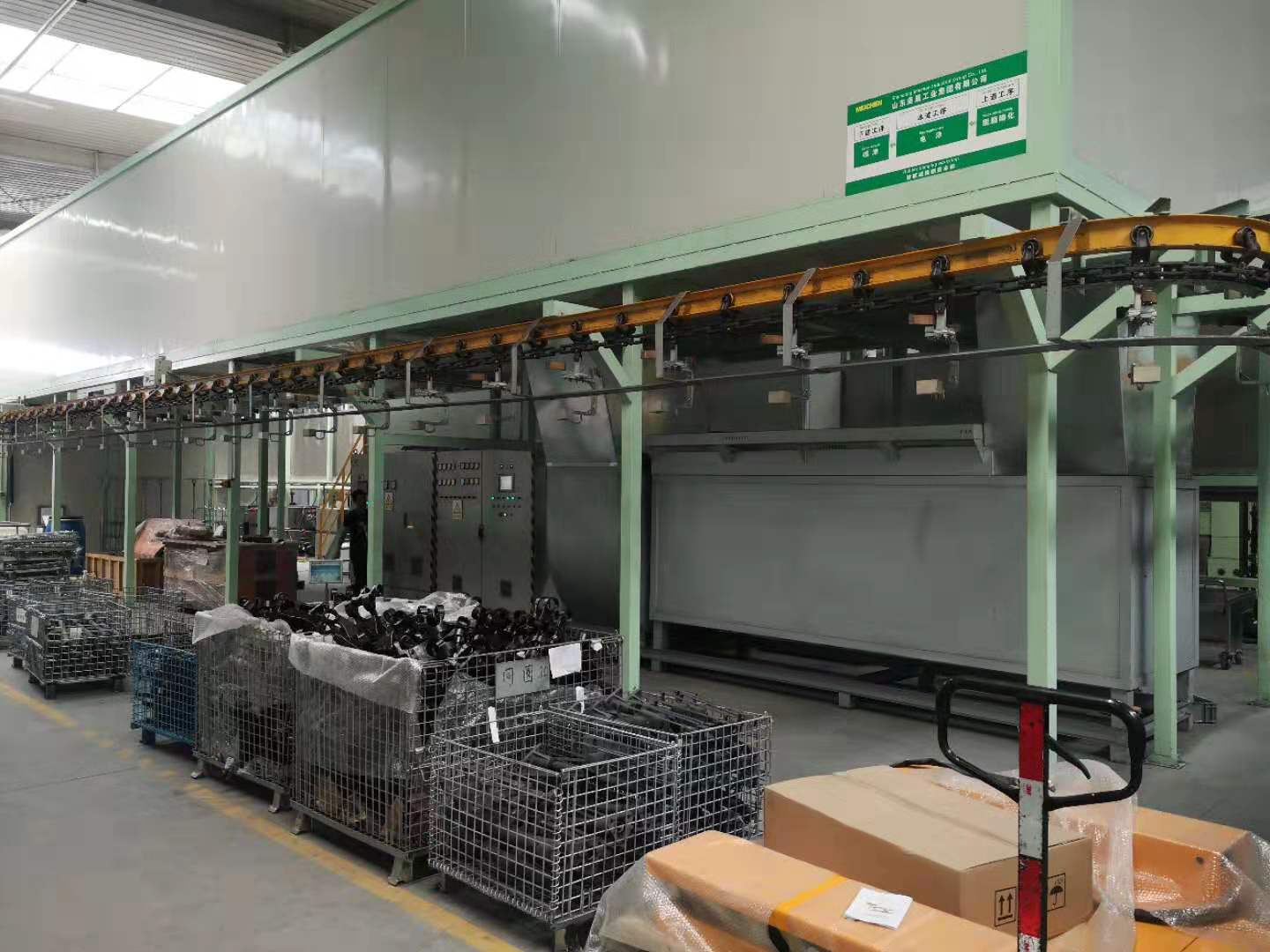
One of the most widely adopted solutions in this field is the electrophoresis coating system, which integrates automated control, precise coating management, and environmental protection into a complete production solution.
This process ensures that even complex shapes, inner cavities, and hidden surfaces are fully coated.
Key Advantages of Electrophoresis Coating
1. Uniform Coating Thickness
One of the biggest advantages of electrophoresis technology is its ability to achieve consistent coating thickness across the entire surface.
Unlike manual spraying, coating deposition is controlled by electric current, ensuring:
-
Even film distribution
-
Stable corrosion protection
-
Reduced coating defects
-
Lower rework rates
This makes it ideal for high-precision industrial production.
2. Strong Adhesion and Durability
The electrochemical bonding process creates a strong adhesion between the coating and the metal substrate.
This results in:
-
Excellent resistance to peeling and cracking
-
Strong performance under vibration and impact
-
Long-term durability in harsh environments
It is especially suitable for components exposed to mechanical stress.
3. Excellent Corrosion Resistance
Electrophoretic coatings form a dense, continuous protective layer that effectively blocks moisture, oxygen, and chemicals.
When combined with proper surface pretreatment (such as degreasing and phosphating), the corrosion resistance is significantly enhanced, extending product lifespan.
4. Full Coverage for Complex Parts
Unlike spray coating, electrophoresis can coat difficult-to-reach areas, including:
-
Internal cavities
-
Sharp edges
-
Complex geometric structures
This makes it highly suitable for automotive parts, machinery components, and structural steel products.
Efficiency Improvements in Modern Production
Fully Automated Production Process
Modern systems such as the automated electrophoresis line integrate the entire workflow:
-
Pretreatment
-
Coating tank process
-
Ultrafiltration rinsing
-
Drying and curing
-
Wastewater treatment
This automation reduces manual labor and ensures stable, repeatable results.
High Material Utilization
Compared to traditional spraying methods, electrophoresis offers much higher paint efficiency.
Benefits include:
-
Minimal material waste
-
Reduced overspray loss
-
Lower operating costs over time
This makes it a cost-effective solution for mass production.
Continuous and Stable Production
Electrophoresis production lines are designed for continuous operation, which provides:
-
Higher throughput
-
Stable cycle times
-
Reduced downtime
This is essential for large-scale manufacturing environments.
Environmental Advantages
Low Emissions Process
Electrophoresis coating is a water-based process, which significantly reduces volatile organic compound (VOC) emissions compared to solvent-based spraying.
Water Recycling Systems
Advanced systems integrate ultrafiltration technology to recycle water and reduce wastewater discharge.
This supports sustainable manufacturing and helps companies meet environmental regulations.
Integrated Wastewater Treatment
Modern production lines often include built-in wastewater treatment systems, ensuring compliance with environmental standards while minimizing ecological impact.
Industrial Applications
Electrophoresis coating is widely used across multiple industries:
Automotive Industry
-
Car body frames
-
Engine components
-
Structural parts
Home Appliances
-
Washing machine drums
-
Refrigerator panels
-
Metal housings
Construction Industry
-
Steel structures
-
Doors and window frames
Industrial Equipment
-
Machinery parts
-
Heavy-duty metal components
Key Considerations Before Choosing a Production Line
When selecting an electrophoresis system, manufacturers should evaluate:
-
Production capacity requirements
-
Workpiece size and complexity
-
Level of automation
-
Environmental compliance systems
-
Supplier technical support and service capability
Choosing the right system ensures long-term production efficiency and stable quality output.
Conclusion
Electrophoresis coating production lines represent a major advancement in surface finishing technology. By combining automation, precision control, and environmental sustainability, they deliver consistent coating quality and improved operational efficiency.
As manufacturing continues to evolve toward higher standards and greener production, solutions like the electrophoresis coating system are becoming essential equipment for modern factories.
For manufacturers aiming to improve durability, reduce costs, and meet environmental requirements, investing in an advanced electrophoresis production line is a strategic long-term decision.
www.wxlvye.com
Wuxi Green