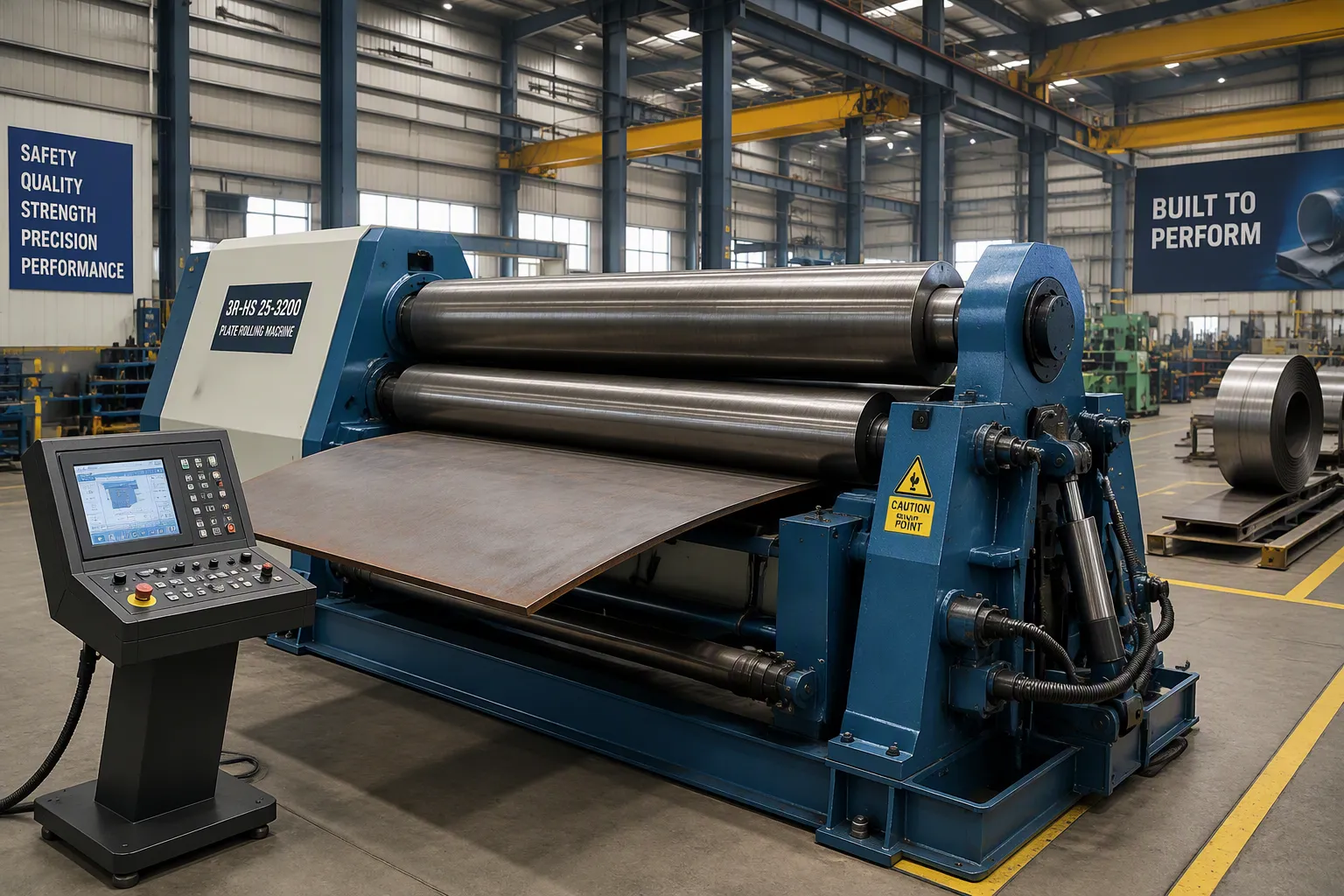
How do you select a robust heavy duty plate rolling machine for fabrication plants? The answer depends on your material properties, plate dimensions, production volume, precision requirements, and total cost of ownership. A wrong choice creates costly inefficiencies. A systematic approach, starting with your specific needs, leads to the optimal solution. Anhui Pacific provides expert consultation to match your exact requirements.
Key Takeaways
- Match the machine to your material type, thickness, and width to ensure proper force and capacity.
- Choose a four-roll machine with hydraulic drives and CNC controls for higher precision and productivity.
- Evaluate total cost of ownership, including energy use, maintenance, and after-sales support, for a smart investment.
Assess Your Fabrication Requirements
Before you evaluate any machine, you must define your operational parameters. The right robust heavy duty plate rolling machine for fabrication plants begins with a clear understanding of what you will process daily. Start with your material specifications, then move to your throughput demands.
Material Type, Thickness, and Width
Your material's yield strength directly determines the tonnage you need. Stainless steel possesses a higher yield strength than carbon steel. This difference means you require a larger-capacity machine for stainless steel at the same thickness and width. The rolling force formula—F = K × σ × b × t²/D—shows yield strength (σ) as a direct multiplier. Higher σ values demand proportionally greater force.
Plate thickness dictates your machine class. Use this reference:
| Plate Thickness | Recommended Machine Type |
|---|---|
| ≤12 mm | Three-roller asymmetric |
| ≤20 mm | Symmetrical three-roller |
| 20–60 mm | Hydraulic four-roller |
| ≥60 mm | Four-roller or universal |
Width matters equally. Wider plates increase bending resistance and require longer rollers, which affects machine rigidity and motor power. Measure your maximum width before you compare models.
Production Volume and Precision Tolerance
Your production volume determines the level of automation you need. Low-volume job shops can operate manual machines effectively. High-volume fabrication plants require CNC controls to maintain consistency across batches. Automated systems store rolling programs, reduce setup time, and eliminate operator-dependent variations.
Precision tolerance defines your quality ceiling. Standard rolling achieves acceptable results for general fabrication. Applications like pressure vessels or wind tower sections demand tighter tolerances. Four-roller machines with CNC positioning deliver synchronous displacement accuracy of ±0.2mm. This precision eliminates the need for secondary straightening operations.
Consider your rejection rate tolerance. Higher precision machines cost more upfront but reduce scrap and rework costs over time. Calculate your acceptable defect percentage before you set your budget.
Matching Your Needs to a Robust Heavy Duty Plate Rolling Machine for Fabrication Plants
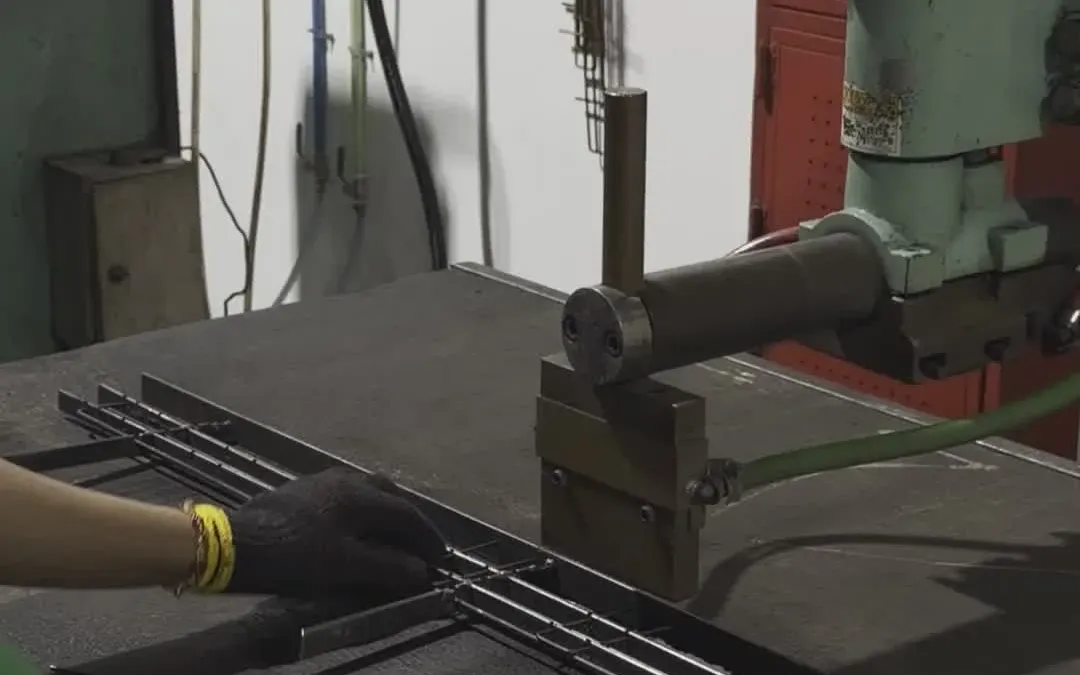
Once you define your material specifications and production targets, you can match those requirements to the right machine configuration. The robust heavy duty plate rolling machine for fabrication plants you select must align with your operational workflow, your precision demands, and your automation goals. Three critical decisions determine your machine's effectiveness: the roll configuration, the drive system, and the control technology.
Three-Roll vs. Four-Roll Machines
The roll configuration directly impacts your pre-bending capability and production efficiency. Three-roll machines have served fabrication shops for decades, but four-roll designs offer significant advantages for modern production environments.
Three-roll machines require you to flip the plate manually to pre-bend both ends. This two-step process consumes time and introduces alignment errors. The plate position needs manual adjustment before each pass, which creates inconsistency across batches. You also encounter flat areas at the start and end of the rolled plate, requiring additional straightening operations.
Four-roll machines eliminate these inefficiencies. The additional bottom roll moves vertically to pinch the material against the top roll, providing precise control of the plate throughout the entire cycle. You complete pre-bending at both ends in a single clamping operation without removing the plate. This one-pass operation delivers better roundness and consistency, with no straight edges during rolling.
| Feature | 3-Roll Machine | 4-Roll Machine |
|---|---|---|
| Pre-bending process | Requires manual flipping of the plate | Completes pre-bending at both ends in a single clamping operation |
| Precision | May have slight flat areas at start and end | Offers better roundness and consistency, no straight edges |
| Automation level | Plate position needs manual adjustment | High degree of automation, minimizes manual operation |
| Productivity | Baseline | Up to 50%-80% higher productivity |
The four-roll machine also eliminates material slippage by securely gripping the plate between the top and bottom roll during the entire process. This grip ensures a perfect pre-bend every time. For high-volume fabrication plants, the productivity gain alone justifies the upgrade. The capital cost for a four-roll machine runs 40-80% higher than a comparable three-roll unit, but the typical payback period ranges from 12 to 24 months in medium-to-high volume operations.
Hydraulic vs. Mechanical Drives
The drive system determines your machine's power delivery, control precision, and maintenance requirements. Mechanical drives use gears and clutches to transmit power, while hydraulic systems use fluid pressure to generate force.
Hydraulic drives provide superior force control across the full rolling cycle. You can adjust pressure continuously, which matters when you process materials with varying yield strengths. Hydraulic systems also deliver smoother operation at low speeds, reducing the risk of plate slippage or marking. The ability to hold pressure without continuous motor operation reduces energy consumption during idle periods.
Mechanical drives offer simplicity and lower initial cost. They perform adequately for basic rolling operations with consistent material specifications. However, mechanical systems lack the fine control needed for precision pre-bending or for processing high-strength alloys. You also face higher maintenance costs over time due to gear wear and clutch replacement.
For a robust heavy duty plate rolling machine for fabrication plants, hydraulic drives provide the flexibility you need to handle diverse materials and thicknesses. Anhui Pacific's W12CNC series uses full hydraulic systems with oblique cylinder arrangements. These systems deliver the high tonnage required for thick plates while maintaining precise control for thin materials. The hydraulic configuration also supports the integrated pre-bending function that defines modern four-roll machines.
CNC Controls and Automation
CNC controls transform a plate rolling machine from a manual tool into a precision manufacturing system. The control technology determines your repeatability, your setup speed, and your ability to maintain consistent quality across production runs.
Manual machines rely on operator skill and experience. Each part requires careful measurement and adjustment, which introduces variation between operators and across shifts. CNC systems eliminate this variability by automating the positioning and rolling sequence. You store rolling programs for different part geometries, then recall them with a few keystrokes. This capability reduces setup time dramatically and ensures every part matches the previous one.
CNC-controlled roll positioning with digital feedback achieves roundness deviation within ±0.5 mm to ±1 mm. This precision directly reduces your scrap rate and eliminates secondary straightening operations. Anhui Pacific's W12CNC machines use photoelectric encoders and PLC balancing systems to deliver synchronous displacement accuracy of ±0.2mm. The sensor resolution reaches 0.055mm, providing exceptional control over the rolling process.
The automation level also affects your labor requirements. A CNC machine with one-button operation allows a single operator to manage the entire rolling process. The system handles material alignment, pre-bending, and rolling automatically. This reduces labor costs and minimizes the risk of operator error. For wide plates up to 3300mm, Anhui Pacific's W12CNC-8×3300 enables one-person operation through its microcontroller automatic system.
CNC systems on heavy-duty plate rolling machines typically deliver 18-24 month payback periods through reduced labor and material waste. The formula storage capability allows you to name, establish, and call rolling programs for different parts. This feature proves invaluable for fabrication plants that produce recurring components or manage multiple product lines.
When you evaluate control options, consider your operator skill level and your production complexity. A simple PLC system with a touchscreen interface suits plants with basic rolling needs. A full CNC system with formula storage and automated alignment serves high-volume operations that demand consistency and speed. Anhui Pacific offers both options, with Siemens PLC controllers and Smart 700IE color displays providing intuitive operation and real-time displacement monitoring.
Evaluating Economic Factors and Making the Final Decision
Budget and Long-Term Investment
Your purchase price represents only the beginning of your financial commitment. A comprehensive total cost of ownership analysis over a decade reveals the true investment. Energy consumption stands as a major variable. Modern electric-hydraulic hybrid systems reduce energy usage by 20–30% per bend compared to conventional designs. Some advanced configurations achieve up to 65% energy reduction annually. Spare parts availability also affects your bottom line. Machines using non-proprietary global components from Siemens, ABB, and Eaton ensure you can source replacements quickly. A supplier maintaining an inventory of over 11,000 spare part items minimizes your downtime risk. Technical support with 24/5 availability keeps your operations running. Finally, consider resale value. Heavy-duty mechanical construction combined with advanced R&D maintains higher long-term equipment value.
After-Sales Support and Maintenance
Your machine's longevity depends on the support infrastructure behind it. Remote support with real-time connection and PLC diagnostics resolves issues without dispatching technicians. Preventive maintenance through scheduled inspections and predictive data analysis eliminates unscheduled failures. Certified training programs help your operators master complex rolling geometries. Upgrades and retrofits extend your machine's capabilities as your production needs evolve. Original spare parts ensure consistent performance.
It is recommended to invite professional after-sales engineers to conduct comprehensive in-depth maintenance and precision calibration annually. This optimizes equipment operation parameters, eliminates hidden faults, and extends the machine's service life, thereby minimizing downtime.
One steel fabrication plant reduced hydraulic-related downtime by 83% through dual-pump redundancy and quarterly oil sampling. When the primary pump failed, the backup system maintained production, and technicians replaced worn gears in 4.2 hours versus the previous 12-hour average.
Final Selection Guide
Before you commit to any robust heavy duty plate rolling machine for fabrication plants, ask your supplier these questions:
- What material and thickness range does the machine handle most effectively?
- Has the machine been rebuilt, repaired, or retrofitted?
- Are manuals, electrical schematics, and maintenance records available?
- What tooling, supports, or accessories are included?
- Have the rolls ever been reground or replaced?
- Are replacement parts still reasonably available?
- Does the machine require special rigging, foundation work, or higher-voltage power?
These answers reveal the machine's history and your future obligations. A transparent supplier welcomes these inquiries. Your final decision should balance upfront costs against long-term operational efficiency. Choose a robust heavy duty plate rolling machine for fabrication plants that delivers precision, reliability, and support throughout its service life.
Define your material requirements, understand machine capabilities, and evaluate total cost of ownership. Choosing the right robust heavy duty plate rolling machine for fabrication plants directly impacts your productivity and quality. Contact Anhui Pacific for personalized advice. Our high-precision CNC four-roller machines feature integrated pre-bending and ±0.2mm synchronous displacement accuracy. Let Anhui Pacific help you roll with confidence.
FAQ
What is the difference between pre-bending and rolling?
Pre-bending flattens the plate ends before rolling begins. Rolling forms the cylindrical shape. Four-roll machines complete both operations in one pass without flipping the plate.
How do I calculate the rolling force I need?
Use the formula F = K × σ × b × t²/D. K represents a constant, σ is yield strength, b is width, t is thickness, and D is roll diameter. Consult your supplier for precise calculations.
Can a CNC plate rolling machine handle different materials?
Yes. CNC systems store rolling programs for various materials and thicknesses. You recall the appropriate program, and the machine adjusts pressure and positioning automatically for consistent results.
https://www.pacific-mt.com/
Anhui Pacific Heavy Duty Machine Joint-Stock Co., Ltd.