Selecting the right LED aluminum substrate requires more than comparing board thickness or material price. In high-power LED applications, the substrate directly affects thermal resistance, junction temperature, LED lifetime, optical stability, and overall product reliability. A suitable metal core PCB must therefore match the LED power level, thermal load, circuit design, mechanical structure, and production requirements of the finished lighting product.
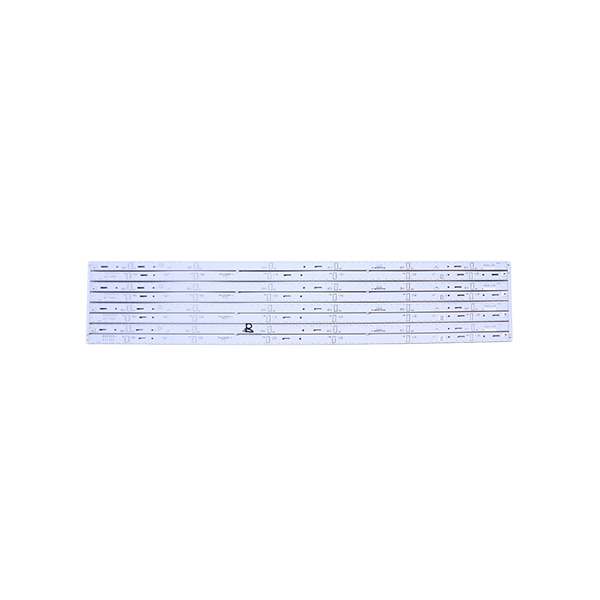
For LED lighting manufacturers, the key question is how efficiently heat generated by the LED can be transferred from the component to the external heat dissipation structure. This makes the thermal performance of the aluminum substrate one of the most important design parameters.
Why Aluminum Substrate Is Widely Used in LED Applications
LEDs convert a significant portion of electrical energy into heat. If this heat remains concentrated around the LED junction, junction temperature rises and can accelerate lumen depreciation, color shift, and component aging.
An LED aluminum substrate provides a direct thermal path through a metal base layer. A typical metal core PCB consists of a copper circuit layer, dielectric insulation layer, and aluminum base layer. The circuit layer provides electrical connections, while the dielectric layer electrically isolates the circuit from the conductive aluminum core and simultaneously provides the thermal path.
Compared with conventional FR-4 PCB construction, aluminum substrate technology is particularly useful where heat dissipation is a primary design requirement. The aluminum core also provides mechanical rigidity, which can be advantageous for LED boards installed directly against heatsinks or metal housings.
Thermal Conductivity Is Only One Part of the Equation
Thermal conductivity is an important specification when comparing LED aluminum substrates, but it should not be considered independently.
The effective thermal performance of a board depends on the thermal conductivity of the dielectric layer, dielectric thickness, copper thickness, aluminum thickness, interface condition, and the thermal design of the complete LED assembly.
For example, a dielectric layer with higher thermal conductivity can reduce thermal resistance between the copper circuit and aluminum base. However, reducing dielectric thickness can also improve heat transfer, provided that the required dielectric breakdown strength and insulation reliability are maintained.
This creates an engineering trade-off. A substrate designed for a high-power LED module may require a different dielectric configuration from a low-power residential lighting board because the thermal load and electrical insulation requirements are different.
For this reason, thermal resistance should be evaluated together with thermal conductivity instead of selecting a material solely according to its highest conductivity value.
Copper Thickness Must Match Current and Heat Requirements
Copper thickness is another parameter that directly affects LED aluminum substrate performance.
Standard LED lighting circuits may use relatively moderate copper thickness, while high-current LED modules or power input sections may require heavier copper. Increasing copper thickness reduces conductor resistance and improves current-carrying capability, but it can also influence etching, line definition, manufacturing yield, and cost.
The appropriate copper thickness should therefore be determined according to current density, trace width, temperature rise, and PCB layout.
For LED applications with multiple high-power components, thermal and electrical design are closely connected. A PCB trace that carries higher current can generate additional I²R losses, creating another heat source within the board. Optimizing copper thickness and trace geometry can therefore contribute to both electrical efficiency and thermal management.
Aluminum Base Thickness Influences Mechanical and Thermal Performance
The aluminum layer serves as both a heat-spreading structure and a mechanical support layer. Different LED applications may require different aluminum thicknesses depending on the installation method and mechanical requirements.
A thicker aluminum base can improve structural rigidity and heat spreading, but it also increases material consumption and may affect the final product's weight and manufacturing cost.
For LED panels, street lights, industrial lighting, and other applications where the PCB interfaces directly with a larger metal housing, the aluminum base should be selected according to the complete thermal path rather than evaluated as an isolated component.
The interface between the aluminum substrate and heatsink is also critical. Poor contact, excessive thermal interface material thickness, or uneven mounting pressure can significantly increase the total thermal resistance even when the PCB itself has strong thermal conductivity.
Surface Finish and Solderability Affect Production Reliability
Thermal performance does not eliminate the need for stable PCB manufacturing characteristics. LED aluminum substrates must also provide reliable soldering and component assembly.
Surface finish selection should be compatible with the LED package, soldering process, storage requirements, and expected production volume. Consistent copper surface quality and solderability are particularly important for automated SMT assembly because variations can affect solder joint formation and production yield.
The substrate flatness is also important for LED modules containing multiple components. Excessive warpage can influence placement accuracy and soldering consistency, especially when larger aluminum boards are processed through automated assembly lines.
This is where manufacturing process control becomes an important part of substrate quality rather than simply a final inspection activity.
LED Aluminum Substrate for Different Lighting Scenarios
The optimal substrate specification depends strongly on the application.
For residential LED bulbs and compact lighting products, cost efficiency, compact dimensions, adequate thermal performance, and high-volume production are often the primary considerations. The substrate does not necessarily need the same thermal specification as a high-power industrial LED module.
LED street lighting and floodlights create a different thermal profile. Higher LED power and longer operating periods can generate substantially more heat, making dielectric thermal performance, copper thickness, aluminum base construction, and mechanical interface more important.
Industrial LED lighting can impose additional requirements related to continuous operation, ambient temperature, vibration, and long service intervals. In such applications, substrate reliability must be evaluated over the expected operating environment rather than only under room-temperature conditions.
Manufacturing Consistency Matters in Mass Production
For large-volume LED products, a technically suitable substrate is only valuable when its performance can be reproduced consistently across production batches.
Shenzhen Rongbaijia Technology Co., Ltd. has more than 15 years of PCB manufacturing experience and provides aluminum substrate production alongside conventional FR-4, CEM-1, multilayer, HDI, and other specialty PCB technologies.
The company has an annual PCB production capacity of approximately 1.2 million square meters. Its quality control process incorporates AOI, flying probe testing, and full-process traceability, while engineering teams provide DFM analysis during product development.
This capability is particularly relevant for LED aluminum substrate projects because board performance depends on multiple controlled variables, including dielectric thickness, copper thickness, aluminum base specifications, drilling, etching, solder mask, surface finish, and dimensional tolerances.
DFM Can Reduce Problems Before Production
LED aluminum substrate design should be reviewed before mass production rather than relying entirely on inspection after manufacturing.
DFM analysis can identify issues such as insufficient copper spacing, unsuitable pad geometry, thermal-area conflicts, difficult routing, excessive board dimensions, or manufacturing tolerances that could reduce yield.
For LED products manufactured in large quantities, even a small yield difference can have a significant impact on total production cost. A substrate design that is theoretically functional but difficult to manufacture consistently may therefore be less competitive than a slightly optimized design with higher production stability.
Rongbaijia combines PCB manufacturing with PCBA capabilities, including seven automated SMT production lines and two wave soldering machines. This allows the PCB design and subsequent assembly process to be considered together when required.
Conclusion
The right LED aluminum substrate should be selected according to the complete electrical and thermal architecture of the LED product. Thermal conductivity, dielectric thickness, thermal resistance, copper thickness, aluminum thickness, insulation performance, surface finish, flatness, and manufacturing tolerance all contribute to final performance.
For low-power LED products, cost and production efficiency may dominate the specification. For high-power lighting, thermal resistance and heat-transfer efficiency become increasingly important. For industrial and outdoor applications, environmental reliability and long-term consistency must also be considered.
A technically capable manufacturer can add value by addressing these parameters during DFM and prototype development rather than simply producing a board according to drawings. With aluminum substrate manufacturing, PCBA integration, DFM engineering, and large-scale production capability, Rongbaijia can support LED manufacturers from PCB specification development through volume production.
www.rbjpcb.com
Shenzhen Rongbaijia Technology Co., Ltd.