As urban living continues to evolve, homeowners and architects are increasingly seeking solutions that combine safety with visual elegance. Traditional window protection systems often fail to meet both requirements simultaneously. This has led to the growing adoption of the invisible window grill, a modern system that delivers reliable protection while preserving the openness of architectural design.
Unlike bulky metal bars or decorative grilles, an invisible window grill is engineered to provide security without disrupting natural light, airflow, or exterior views. This article offers a technical and practical overview of how these systems work, their material composition, installation methodology, and long-term performance considerations.
What Defines an Invisible Window Grill?
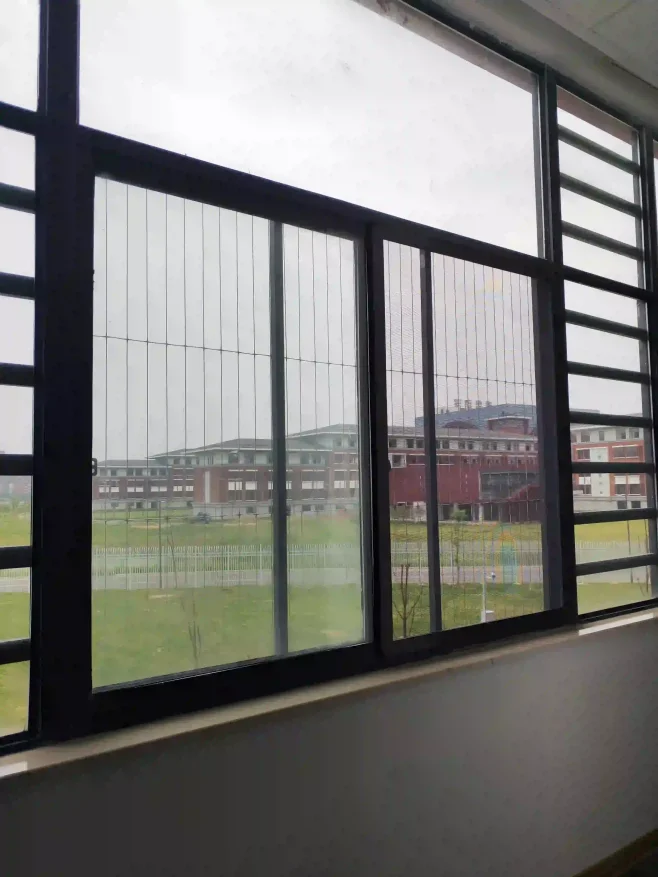
An invisible window grill is a safety installation designed to act as a protective barrier across window openings, while remaining visually unobtrusive. It achieves this by using high-strength, thin-profile components that are barely noticeable from a distance.
Key defining features include:
-
Visual Transparency: The system minimizes obstruction, maintaining a clear line of sight.
-
Structural Strength: Despite its minimal appearance, it provides high resistance against impact and external force.
-
Seamless Integration: The design blends into window frames without altering architectural aesthetics.
This balance between functionality and design is what makes the invisible window grill a preferred option in modern residential and commercial environments.
Core Materials and Engineering Principles
The performance of an invisible window grill depends heavily on material selection and structural engineering. Every component is optimized to achieve strength, durability, and minimal visual impact.
High-Tensile Stainless Steel Cables
At the heart of the system are stainless steel wires, typically made from high-grade alloys such as 304 or 316 stainless steel.
These wires are selected for their:
-
Corrosion Resistance: Essential for long-term use, especially in humid or coastal regions
-
High Strength-to-Size Ratio: Thin wires can withstand significant tension without deformation
-
Durability Over Time: Maintains structural integrity even under environmental stress
This allows the invisible window grill to deliver safety without the visual heaviness of traditional bars.
Protective Coatings and Surface Treatments
To enhance both performance and appearance, the wires are often coated with:
-
Polymer layers for smoothness and reduced glare
-
Powder coatings for added corrosion resistance and color customization
These treatments ensure that the invisible window grill remains visually subtle while extending its service life.
Structural Support and Tensioning System
The entire system relies on precision-engineered components, including:
-
Discreet mounting posts (stanchions)
-
Frame-compatible clamps
-
Adjustable tensioning devices
These elements work together to maintain proper wire alignment and tension, ensuring both safety and aesthetic consistency.
Installation Process: Precision Is Critical
Installing an invisible window grill is not simply a mechanical process—it requires careful planning and technical accuracy to achieve optimal results.
Step 1: Measurement and Site Evaluation
The process begins with detailed measurement and environmental assessment, including:
-
Window dimensions
-
Frame material and structure
-
Exposure to environmental factors such as wind and moisture
This ensures the system is tailored to the specific installation context.
Step 2: Mounting Framework Installation
Support components are installed with strict attention to:
-
Alignment accuracy
-
Structural anchoring strength
-
Minimal visual interference
Proper placement is essential for maintaining the “invisible” characteristic.
Step 3: Wire Installation and Tension Calibration
The stainless steel cables are threaded and tensioned to precise specifications.
Correct tensioning ensures:
-
Stability under load
-
Straight, uniform appearance
-
Compliance with safety requirements
Step 4: Final Inspection and Testing
The installation concludes with a comprehensive inspection, verifying:
-
Wire alignment and spacing
-
Structural integrity
-
Compatibility with window operation
Only through this process can an invisible window grill achieve both safety and design goals.
Design Considerations for Optimal Performance
Designing an effective invisible window grill requires balancing multiple factors.
Wire Spacing and Thickness
-
Spacing is determined to prevent accidental passage of children or pets
-
Diameter (typically 1.5–3 mm) ensures strength while maintaining visual minimalism
Compatibility with Window Types
The system must adapt to different window configurations:
-
Sliding windows
-
Casement windows
-
Fixed panels
Proper integration ensures that the invisible window grill does not interfere with normal window operation.
Environmental Adaptation
Design must account for:
-
Wind pressure
-
UV exposure
-
Moisture and corrosion risks
This ensures long-term stability in various climates.
Maintenance and Long-Term Durability
Although designed for durability, an invisible window grill requires periodic maintenance to maintain optimal performance.
Routine Inspection
-
Check for wire tension consistency
-
Inspect for corrosion or coating damage
Structural Component Check
-
Ensure mounting points remain secure
-
Verify tensioning systems are functioning correctly
Cleaning
To preserve transparency:
-
Use soft cloths or non-abrasive tools
-
Avoid harsh chemicals
With proper care, an invisible window grill can maintain both its performance and visual quality for many years.
Integration with Modern Smart Systems
In advanced applications, an invisible window grill can be integrated with broader security systems.
Examples include:
-
Tamper detection sensors
-
Smart home connectivity
-
Alarm system integration
Additionally, by allowing natural light to enter freely, these systems contribute indirectly to energy efficiency by reducing reliance on artificial lighting.
Why Invisible Window Grill Is the Future of Window Safety
Compared to conventional solutions, the invisible window grill offers several decisive advantages:
-
Maintains architectural aesthetics
-
Provides strong and reliable protection
-
Requires minimal maintenance
-
Adapts to modern living environments
It represents a shift from purely functional safety products to design-integrated safety systems.
Conclusion
The invisible window grill is a clear example of how modern engineering can transform traditional safety concepts. By combining high-strength materials, precise installation methods, and thoughtful design, it delivers a solution that meets both practical and aesthetic demands.
For homeowners, it provides peace of mind without compromising visual openness.
For architects and developers, it offers a way to integrate safety seamlessly into contemporary design.
As urban environments continue to prioritize both safety and aesthetics, the invisible window grill is positioned to become a standard feature in modern construction and renovation projects.
https://www.no1-factory.com/Products
www.no1-factory.com
No. 1 Factory