Drying is a critical phase in the insulation process of electrical coil production. Once varnish is applied to stator, rotor, transformer, or high-voltage motor coils, the drying conditions determine insulation strength, mechanical stability, energy consumption, and production cycle time. In many plants, varnish curing is still considered a bottleneck: ovens run inefficiently, operators rely on experience instead of data, and defects are often discovered too late.
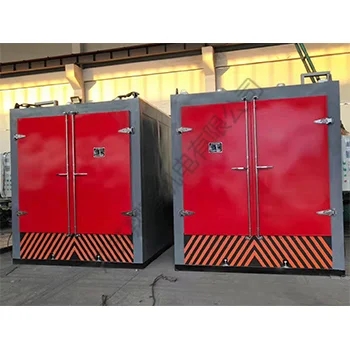
Modern electric ovens provide an opportunity to solve these problems, especially when combined with vacuum and pressure impregnation systems. This article explores practical approaches for maximizing varnish drying efficiency using electric ovens, and uses Jiangsu Xianglong Electromechanical Co., Ltd. as an example of how industrial oven technology continues to evolve.
Understanding Coil Varnish Drying
Before optimizing, it is necessary to review the purpose of drying and the mechanisms involved. When varnish or resin is applied to electrical windings, the solvent component must evaporate while the resin must polymerize to form a dense, electrically insulating film.
Key drying objectives include:
-
removing moisture and solvent content
-
promoting uniform varnish penetration and adhesion
-
preventing bubbles, voids, and microcracks
-
maintaining minimal thermal deformation
-
achieving stable electrical insulation resistance
This means that heat transfer, airflow, humidity control, and process pressure conditions must be precisely controlled.
Why Use Electric Ovens for Varnish Drying?
Electric ovens have key advantages over gas-fired or oil-heated ovens:
-
stable and controllable temperature
-
faster heat response
-
reduced contamination risk
-
simplified environmental compliance
-
lower maintenance
-
easy electrification and automation
Modern electric ovens can be combined with data logging, PID control, vacuum systems, and multi-stage temperature programs to increase drying efficiency while lowering energy consumption.
Optimizing Electric Oven Performance for Coil Applications
Drying performance depends not only on equipment quality but also on how it is operated. Below are several optimization strategies suitable for factories manufacturing high-voltage motors, generators, and transformer coils.
1. Implement staged temperature control
The polymerization and solvent evaporation phases require different temperature levels in order to avoid blistering or void formation. Proper staging includes:
-
preheating stage to raise winding temperature gradually
-
holding stage for controlled solvent evaporation
-
curing stage at target temperature for final polymerization
A programmable controller can automatically adjust profiles to match coil geometry and varnish type.
2. Improve airflow uniformity
Coils have complex shapes, which makes uniform heating difficult. Poor airflow leads to uneven curing and defects. Solutions include:
-
forced convection circulation
-
baffles and air guides
-
optimized coil spacing and orientation
Airflow uniformity should be verified regularly using temperature mapping or thermal imaging.
3. Use vacuum or vacuum-pressure assistance
Vacuum removes trapped gases and improves varnish penetration, while pressure can accelerate solvent removal and bridge insulation gaps. Integrating vacuum and oven drying allows:
-
reduced drying time
-
reduced rework rates
-
increased insulation resistance and dielectric strength
4. Monitor solvent evaporation rate
Drying efficiency improves when the evaporation rate is balanced with airflow. Too fast evaporation leads to surface skinning, trapping solvents inside the coil. Too slow evaporation wastes energy and increases cycle times.
Sensors for humidity, weight loss, or solvent concentration can support closed-loop control.
5. Prevent heat loss and leakage
Thermal insulation upgrades, automatic door seals, and proper maintenance can reduce heat loss significantly. Even small leaks cause large temperature swings, affecting both quality and energy usage.
Reliable Equipment Matters
Achieving efficient drying is impossible without reliable equipment capable of executing precise temperature and vacuum control.
Jiangsu Xianglong Electromechanical Co., Ltd. is an enterprise specializing in automation electrical equipment and complete vacuum processing systems. The company integrates R&D, production, and trade, and has passed ISO9001 international certification. It has strong manufacturing capability and serves customers in motor, transformer, wind power, and generator coil industries.
Xianglong’s product portfolio includes:
-
coil forming machines
-
coil winding machines
-
vacuum impregnation equipment
-
vacuum drying ovens
-
vacuum pressure impregnation systems
-
laminated press equipment
-
energy-saving industrial drying ovens
-
coil coking equipment
-
gantry presses
-
variable pressure vacuum drying systems
These systems are developed to support high-voltage motors, turbine generators, permanent magnet motors, transformers, and other electrical insulation manufacturing applications. The equipment is designed to help companies improve product quality, reduce costs, and enhance competitiveness through innovative insulation processing technology.
If you want to explore electric oven solutions suitable for coil varnish drying processes, you can visit the company’s oven product page at the following link:
<a href="https://www.jsxlmachines.com/Electric-ovens.html">Electric ovens</a>
Practical Steps to Increase Varnish Drying Efficiency
Factories can implement real improvements by combining equipment upgrades and procedural optimization. Consider the following practical examples from real production environments:
Case 1: Reducing cycle time by adjusting airflow rate
A coil plant experienced uneven drying and slow solvent evaporation. By increasing forced convection airflow and rearranging coils to improve spacing, drying time was reduced by 20 percent without equipment replacement.
Case 2: PID-controlled vacuum drying
Another factory manufacturing turbine generators switched to vacuum-assisted electric ovens with staged temperature control. The combined system reduced blistering defects while maintaining consistent insulation resistance values across coils.
Case 3: Maintenance and sensor calibration
In some plants, efficiency problems stem not from equipment limitations but poor maintenance. Replacing worn fan blades, sealing door gaskets, and recalibrating thermocouples restored stable temperature control and reduced energy consumption.
These experiences show that both technology and operation discipline matter.
Measuring Efficiency Gains
Drying efficiency should be measured using objective metrics rather than subjective judgment. Useful metrics include:
-
drying cycle time
-
energy consumption per coil
-
insulation resistance values
-
variance in temperature uniformity
-
defect rates such as voids or cracks
Electric ovens combined with automated control systems make it easier to record and analyze process data, enabling predictive maintenance and continuous improvement.
Looking Ahead
As global energy efficiency requirements tighten and demand for high-voltage motors grows, coil insulation processing technology will continue evolving toward automation, precision control, and sustainable heating.
Electric ovens, when optimized properly, can significantly reduce drying time and energy consumption while improving insulation quality. Companies like Jiangsu Xianglong Electromechanical Co., Ltd. are advancing these technologies through integrated system development, automation upgrades, and vacuum impregnation innovations.
For manufacturers seeking to improve insulation reliability and reduce production costs, upgrading drying systems is a practical step with measurable benefits.
www.jsxlmachines.com
Jiangsu Xianglong Electromechanical Co., Ltd.