In the competitive landscape of luxury confectionery, packaging has evolved far beyond simple containment. For premium chocolate brands navigating global distribution networks, the challenge is clear: how to deliver delicate products across continents without compromising quality, brand perception, or profitability. The answer lies in engineering-grade rigid packaging solutions that merge structural integrity with aesthetic sophistication.
The Hidden Cost of Packaging Failure
Premium chocolates face unique vulnerabilities during transit. Temperature fluctuations, physical impacts, and compression forces in shipping containers can transform artisanal products into broken fragments before reaching consumers. Industry data reveals that product damage during logistics remains a leading cause of returns and brand reputation erosion in the high-end confectionery sector.
The economic implications extend beyond replacement costs. Each damaged shipment triggers customer service interventions, expedited reshipping expenses, and potential customer attrition. More critically, the unboxing experience—a key brand touchpoint for luxury goods—is completely lost when products arrive compromised.
Engineering Principles Behind Protective Packaging
Effective chocolate packaging requires a systems-engineering approach. The solution begins with material selection: high-density paperboard forms the foundation, providing superior load-bearing capacity compared to standard corrugated alternatives. This material choice enables packaging to withstand stacking pressures in warehousing and transportation environments while maintaining dimensional stability.
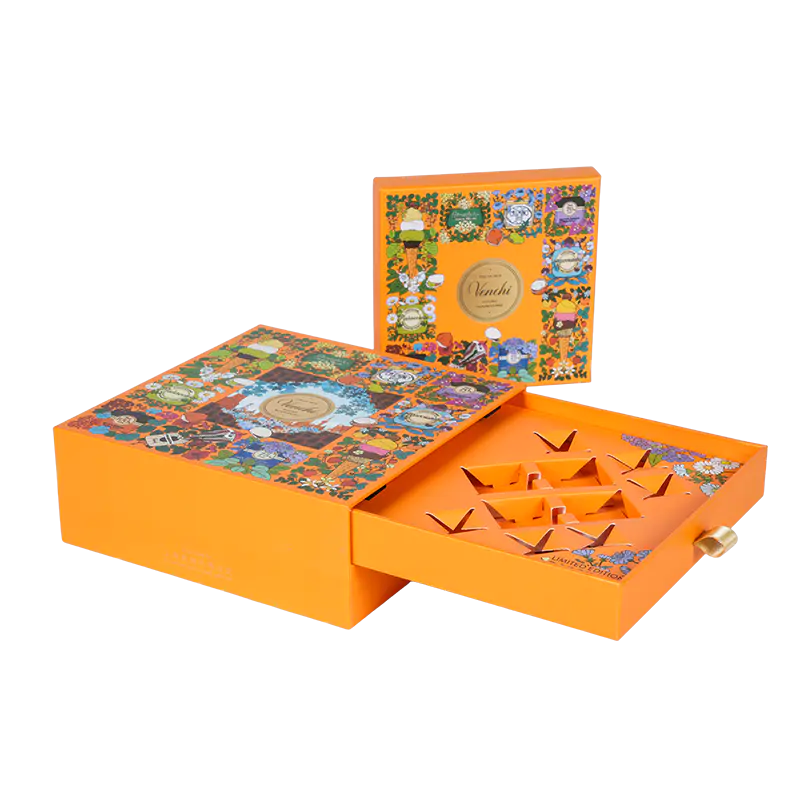
Structural design represents the second critical element. Reinforced rigid structures distribute impact forces across the entire package rather than concentrating stress at vulnerable points. The lift-off lid configuration—where top and bottom components separate cleanly—creates inherent structural redundancy. Even if external surfaces experience compression, internal compartments remain protected.
Custom inserts complete the protective system. Precision-engineered compartments secure individual chocolate pieces, preventing displacement and contact damage during handling. These inserts function as shock absorbers, isolating products from external forces while maintaining presentation aesthetics.
The Shanghai Manufacturing Advantage
Shanghai Jingmai Packaging Technology Co., Ltd. has developed specialized capabilities in this domain through over 15 years of engineering and OEM experience. Operating from a 13,000 square meter manufacturing facility in Songjiang District, the company integrates design, prototyping, production, and logistics under ISO 9001 quality management protocols.
The company's 100,000-class clean workshop addresses a frequently overlooked requirement: contamination control. For chocolates and food-grade applications, packaging must meet stringent safety standards. This controlled environment prevents particulate contamination during manufacturing, ensuring compliance with international food safety regulations across the 100+ countries where products are exported.
Advanced manufacturing equipment further differentiates production capabilities. Automatic die-cutting machinery ensures dimensional consistency across production runs—critical when inserts must precisely fit product dimensions. Hot stamping and UV spot coating technologies enable brand differentiation through tactile and visual finishing techniques without compromising structural performance.
Beyond Protection: The Brand Experience
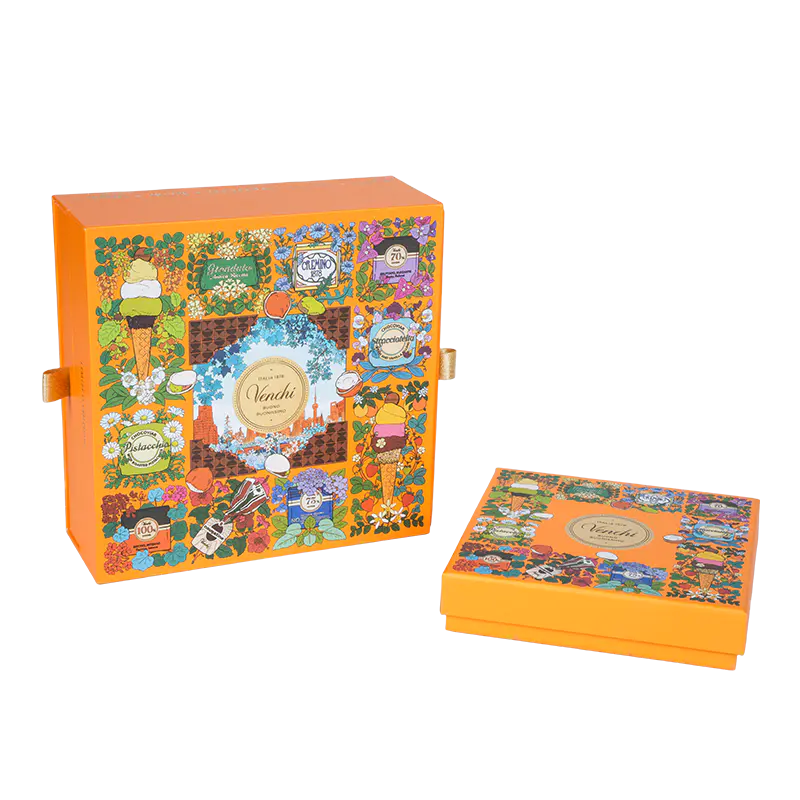
Premium packaging serves dual functions. While structural integrity prevents physical damage, aesthetic execution communicates brand values. Rigid lift-off lid chocolate boxes create a ceremony around product reveal. The smooth separation of components, the revelation of perfectly arranged chocolates in custom compartments, and the visual contrast between exterior finishing and interior presentation all contribute to perceived value.
This psychological dimension carries measurable business impact. In luxury goods markets, packaging quality directly influences price tolerance and repeat purchase behavior. Consumers associate substantial, well-engineered packaging with product quality—a halo effect that justifies premium pricing strategies.

Implementation Considerations and Pricing Factors
Several variables influence rigid chocolate box pricing. Material specifications form the primary cost driver: paperboard density, interior lining materials, and finishing techniques all scale with quality requirements. Custom insert complexity adds engineering and tooling costs, though these typically amortize across production volumes.
Order quantity significantly impacts per-unit economics. Setup costs for die-cutting tools, printing plates, and foil stamping dies represent fixed investments that distribute across production runs. Mid-to-large volume orders achieve optimal cost efficiency while maintaining craft-level finishing quality.
Customization depth also affects investment levels. Standard structural templates with custom printing offer entry points for emerging brands. Fully engineered solutions with proprietary insert designs, integrated magnetic closures, or multi-material constructions require additional development resources but deliver maximum brand differentiation.
The Full-Service Integration Model
Shanghai Jingmai's operational model addresses a common industry pain point: coordination complexity. Traditional approaches require brands to manage separate vendors for design, prototyping, production, and logistics. This fragmentation creates quality control gaps and extends time-to-market.
The integrated service model consolidates these functions. Professional R&D and design teams translate brand requirements into engineering specifications. In-house prototyping capabilities enable rapid iteration before production commitment. Manufacturing and logistics coordination ensure consistent quality from production floor to final delivery across global distribution networks.
This approach proves particularly valuable for brands expanding into new geographic markets. FSC certification and compliance with international environmental standards facilitate market entry across regulatory environments, while established export logistics to 100+ countries streamline distribution setup.
Quantified Performance Outcomes
Implementation results from premium chocolate brands demonstrate measurable improvements. Customer case studies document the elimination of breakage issues during long-distance logistics—a transformation from recurring quality problems to consistent product integrity. These outcomes stem from systematic engineering rather than incremental improvements to conventional packaging approaches.
The impact extends to brand positioning. Luxury confectionery manufacturers report that refined packaging solutions significantly enhance the unboxing experience, directly supporting premium market positioning strategies. This qualitative improvement translates to tangible business results through reduced return rates and enhanced customer satisfaction metrics.
Strategic Investment Perspective
For premium chocolate brands evaluating packaging partners, the decision framework should extend beyond per-unit costs. Total cost of ownership includes damage rates, logistics efficiency, brand perception impact, and supplier coordination overhead. Engineering-grade rigid packaging represents a strategic investment in product integrity and brand equity rather than a commodity purchasing decision.
The partnership model matters equally. Suppliers offering integrated design-through-delivery capabilities reduce coordination friction and enable faster market responsiveness. Technical depth—demonstrated through certifications, clean-room manufacturing, and export compliance—indicates capability to support growth across premium market segments.
Conclusion
Premium rigid chocolate packaging exemplifies the intersection of materials science, structural engineering, and brand experience design. As luxury confectionery brands navigate increasingly complex global distribution requirements, packaging solutions must deliver measurable protection while elevating brand perception. Companies like Shanghai Jingmai Packaging Technology demonstrate how manufacturing excellence, integrated service models, and deep technical expertise combine to solve these multifaceted challenges—transforming packaging from a cost center into a strategic competitive advantage.
https://www.paperbag-packaging.com/
上海净迈包装科技有限公司