In modern industrial machinery, transmission accuracy directly affects productivity, product quality, and equipment lifespan. Whether in packaging machines, automated assembly lines, CNC equipment, textile machinery, robotics, or semiconductor production systems, even minor transmission errors can lead to positioning deviations, synchronization failures, and costly downtime.
As equipment manufacturers pursue higher speeds, tighter tolerances, and greater automation, the demand for reliable synchronous transmission systems continues to grow. Among the most critical components in these systems is the Pulley PowerGrip, a precision-engineered timing pulley designed to work with synchronous belts to deliver accurate, slip-free power transmission.
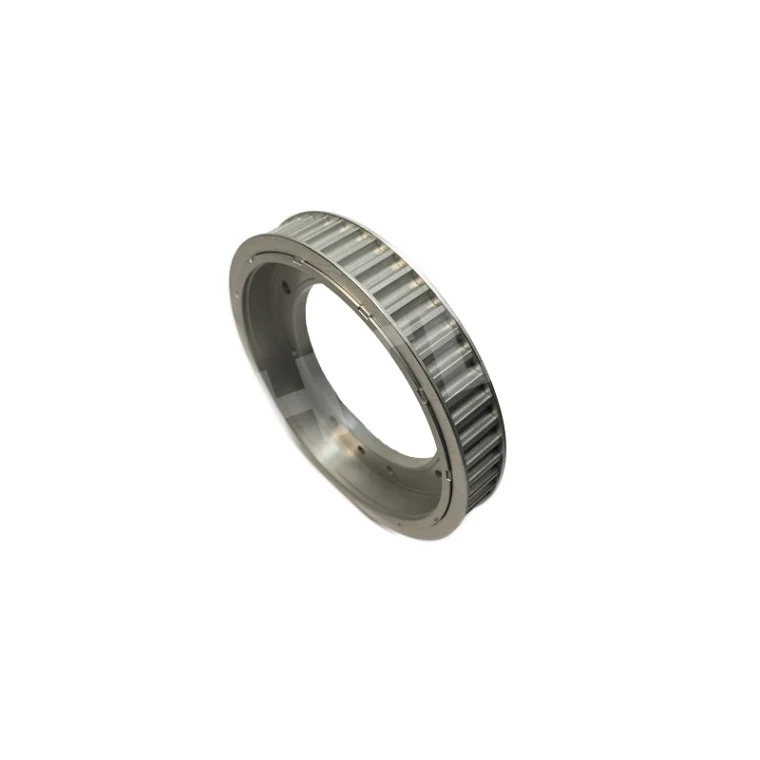
Unlike conventional belt drives that rely on friction, PowerGrip pulley systems utilize positive tooth engagement, ensuring precise synchronization between rotating shafts. This article explores how Pulley PowerGrip technology improves system performance, what factors influence pulley selection, and how manufacturers can maximize transmission efficiency through proper design and engineering.
Why Transmission Accuracy Matters in Modern Machinery
Industrial equipment today operates under increasingly demanding conditions.
Manufacturers expect:
-
Higher production speeds
-
Greater positioning accuracy
-
Lower maintenance requirements
-
Reduced energy consumption
-
Continuous operation
Traditional V-belt systems often experience:
-
Slippage
-
Speed variation
-
Reduced positioning accuracy
-
Increased wear
While acceptable in some applications, these limitations become problematic in systems requiring synchronized motion.
Examples include:
-
Pick-and-place automation
-
Packaging equipment
-
Electronic assembly lines
-
Printing machinery
-
Servo-driven systems
In these applications, precise angular positioning is essential.
A Pulley PowerGrip system eliminates slip between the belt and pulley, allowing motion to remain synchronized throughout the operating cycle.
Understanding the Working Principle of Pulley PowerGrip Systems
A PowerGrip transmission system consists of two primary components:
-
Timing belt
-
Timing pulley
Unlike friction-based drives, the pulley teeth mesh directly with the belt teeth.
This positive engagement creates several advantages:
-
Constant transmission ratio
-
High positioning accuracy
-
Repeatable motion control
-
Reduced maintenance requirements
The absence of slip allows the driven shaft to rotate precisely according to the driving shaft's movement.
For automation systems requiring millimeter-level positioning accuracy, this characteristic is essential.
Key Advantages of Pulley PowerGrip Technology
Accurate Motion Synchronization
One of the most significant advantages of PowerGrip pulleys is transmission accuracy.
In applications involving servo motors and motion control systems, synchronization errors can directly affect product quality.
Timing pulley systems maintain:
-
Consistent angular positioning
-
Repeatable movement
-
Stable speed ratios
This makes them suitable for precision manufacturing environments.
High Transmission Efficiency
Well-designed synchronous transmission systems commonly achieve efficiencies exceeding 98%.
Compared with traditional chain drives or friction belts, reduced energy losses contribute to:
-
Lower operating costs
-
Reduced heat generation
-
Improved overall equipment efficiency
Over thousands of operating hours, these efficiency gains can become substantial.
Low Maintenance Requirements
Because timing belts do not rely on friction for torque transmission, wear is significantly reduced.
Benefits include:
-
No lubrication requirements
-
Reduced component wear
-
Cleaner operating environments
-
Lower maintenance costs
These characteristics are especially valuable in industries such as food processing, electronics manufacturing, and medical equipment production.
Reduced Noise Levels
Compared with roller chains, synchronous belt drives typically operate much more quietly.
Noise reduction improves workplace conditions and supports modern equipment design requirements.
Critical Design Parameters for Pulley PowerGrip Selection
Selecting the correct pulley involves more than simply matching belt size.
Several technical factors directly influence system performance.
Number of Teeth
The number of pulley teeth determines:
-
Transmission ratio
-
Belt wrap angle
-
Torque capacity
Smaller pulleys reduce overall system size but may increase belt stress.
Larger pulleys often improve belt life and load distribution.
Pitch Profile
Common timing belt profiles include:
-
HTD
-
GT2
-
GT3
-
AT series
-
T series
Each profile offers different characteristics regarding:
-
Load capacity
-
Positioning accuracy
-
Noise performance
Proper profile selection depends on specific application requirements.
Pulley Material
Material choice affects:
-
Strength
-
Weight
-
Corrosion resistance
-
Manufacturing cost
Common materials include:
Aluminum Alloy
Advantages:
-
Lightweight
-
Good machinability
-
Corrosion resistance
Commonly used in automation equipment and robotics.
Carbon Steel
Advantages:
-
High strength
-
Excellent durability
-
Cost effectiveness
Suitable for heavy-duty industrial machinery.
Stainless Steel
Advantages:
-
Corrosion resistance
-
Hygienic performance
Widely used in food processing and pharmaceutical equipment.
Surface Treatment
Advanced surface treatments can further improve performance.
Popular options include:
-
Hard anodizing
-
Black oxide coating
-
Nickel plating
-
Zinc plating
Surface treatment enhances wear resistance and extends service life.
Common Applications of Pulley PowerGrip Systems
Industrial Automation
Modern automation systems require precise motion control.
PowerGrip pulleys are frequently used in:
-
Linear actuators
-
Assembly equipment
-
Robotic transfer systems
-
Pick-and-place machines
Accurate synchronization improves repeatability and productivity.
Packaging Machinery
Packaging lines often operate at high speeds.
Timing pulley systems help maintain:
-
Product spacing accuracy
-
Label alignment
-
Film feeding consistency
These factors directly affect packaging quality.
CNC Equipment
Computer-controlled machinery depends on precise movement transmission.
Timing pulley systems provide:
-
Accurate positioning
-
Stable acceleration
-
Low backlash performance
This improves machining precision.
Textile Machinery
Textile production equipment requires synchronized movement across multiple shafts.
Pulley PowerGrip systems support:
-
Consistent fabric handling
-
Smooth operation
-
Reduced maintenance downtime
Semiconductor Manufacturing
Semiconductor equipment operates under extremely strict accuracy requirements.
Low vibration and high positioning precision make timing pulley systems suitable for these environments.
Common Causes of Timing Pulley Failure
Even high-quality pulleys can experience premature wear if system design is incorrect.
Misalignment
Pulley misalignment often causes:
-
Uneven belt wear
-
Increased noise
-
Reduced transmission efficiency
Proper installation is essential.
Incorrect Tension
Excessive belt tension can overload bearings and pulley teeth.
Insufficient tension may cause tooth jumping under heavy loads.
Maintaining the recommended tension range helps maximize system life.
Poor Manufacturing Accuracy
Pulley quality directly influences transmission performance.
Critical manufacturing parameters include:
-
Tooth profile accuracy
-
Pitch precision
-
Bore concentricity
-
Surface finish
Precision machining significantly improves transmission stability.
Why Custom Manufacturing Matters
Standard pulleys cannot always meet the requirements of specialized equipment.
Custom Pulley PowerGrip solutions allow manufacturers to optimize:
-
Tooth profile
-
Hub design
-
Bore dimensions
-
Surface treatment
-
Material selection
Customized components often improve both performance and assembly efficiency.
As a manufacturer specializing in high-precision transmission components, Hetuoda Machinery Manufacturing provides timing pulleys, pulley plates, tensioners, gears, and precision-machined parts for a wide range of industrial applications. Through OEM manufacturing capabilities and precision machining expertise, customized pulley solutions can be tailored to meet the exact requirements of modern automation and power transmission systems.
Conclusion
As industrial equipment continues to demand higher precision, faster operating speeds, and greater reliability, the importance of transmission components becomes increasingly significant. Pulley PowerGrip systems provide an efficient and highly accurate method of synchronous power transmission, eliminating slippage while improving motion control and system efficiency.
By carefully evaluating pulley tooth profiles, materials, manufacturing precision, and application requirements, equipment manufacturers can significantly improve machine performance, reduce maintenance costs, and extend service life. For industries where synchronization and reliability are critical, investing in precision-engineered timing pulley systems remains one of the most effective strategies for long-term operational success.
www.cdepulley.com
Suzhou Hetuoda Machinery Manufacturing Co., Ltd.