Manufacturers relying on traditional printing processes routinely encounter a familiar set of obstacles: high labor dependency, manual product handling overhead, alignment registration errors on curved surfaces, difficulty printing on irregular three-dimensional geometries, and inconsistent production speed. Shenzhen KLK Electronic Equipment Co., Ltd., operating under the brand KLK and headquartered in Longgang District, Shenzhen, Guangdong, China, has built its screen printing equipment around a core technical answer to these challenges: servo-driven motion coordination. Understanding the specific advantages of a servo screen printing machine helps explain why this approach has become central to KLK's product architecture.
Servo-Driven Motion Control: The Core Advantage
At the heart of KLK's screen printing systems is the Panasonic Servo Motor System, which governs mechanical motion throughout the printing cycle. Unlike manually operated printing setups where positioning and pressure depend on operator consistency, servo-driven motion coordination allows the machine to execute repeatable, controlled movements during each printing pass. This directly addresses one of the most persistent pain points in traditional printing: unstable printing quality caused by variation between production runs.
Across KLK's product lineup, this advantage is described consistently. In the Automatic Screen Printing Machine, the Panasonic servo motor is specifically noted for governing mechanical motion, contributing to Quality Consistency by minimizing variations through servo motion control. The same technical method — servo-driven motion coordination — appears again in the KLKZS22 Automatic Screen Printing Machine, where Panasonic servo motor control directs the printing runs and works alongside integrated PLC control to ensure Operational Stability, described as delivering uniform printing results.
Combined with CCD Vision Alignment for Precision
Servo motion control does not operate in isolation. KLK pairs its servo systems with a CCD Camera Alignment System, which uses vision-based registration correction to resolve one of the more difficult problems in printing on non-flat products: alignment registration errors on curved surfaces. In the Automatic Screen Printing Machine, CCD vision positioning identifies product orientation and corrects registration, which the company describes as managing color alignment issues that would otherwise require manual correction.
This combination — servo-driven mechanical precision plus vision-based alignment — is what enables Alignment Correction as one of the machine's key differentiated values. The KLKZS22 configuration reinforces this same pairing, using CCD camera registration to perform automatic alignment correction while relying on automatic product positioning to ensure repeatable placement between print cycles. Together, these systems reduce the manual setup errors that would otherwise occur when aligning multi-color prints or registering artwork on cylindrical or irregular products.
Mitsubishi PLC Integration for Stable Operation
The Mitsubishi PLC Control System functions as the coordination layer that manages execution logic and parameters across the servo motion, vision alignment, and printing sequence. Programmable logic control allows the machine to synchronize these subsystems so that servo-driven movement and CCD-based corrections happen in a consistent, repeatable sequence rather than as isolated functions. This integration is what allows KLK to describe its equipment as capable of Automatic Alignment, where CCD camera registration reduces manual setup errors while PLC coordination ensures the overall machine operation remains stable.
Application Across the Product Line
The servo motion advantage is not limited to a single product. It extends across KLK's screen printing systems, each adapted for different production scenarios:
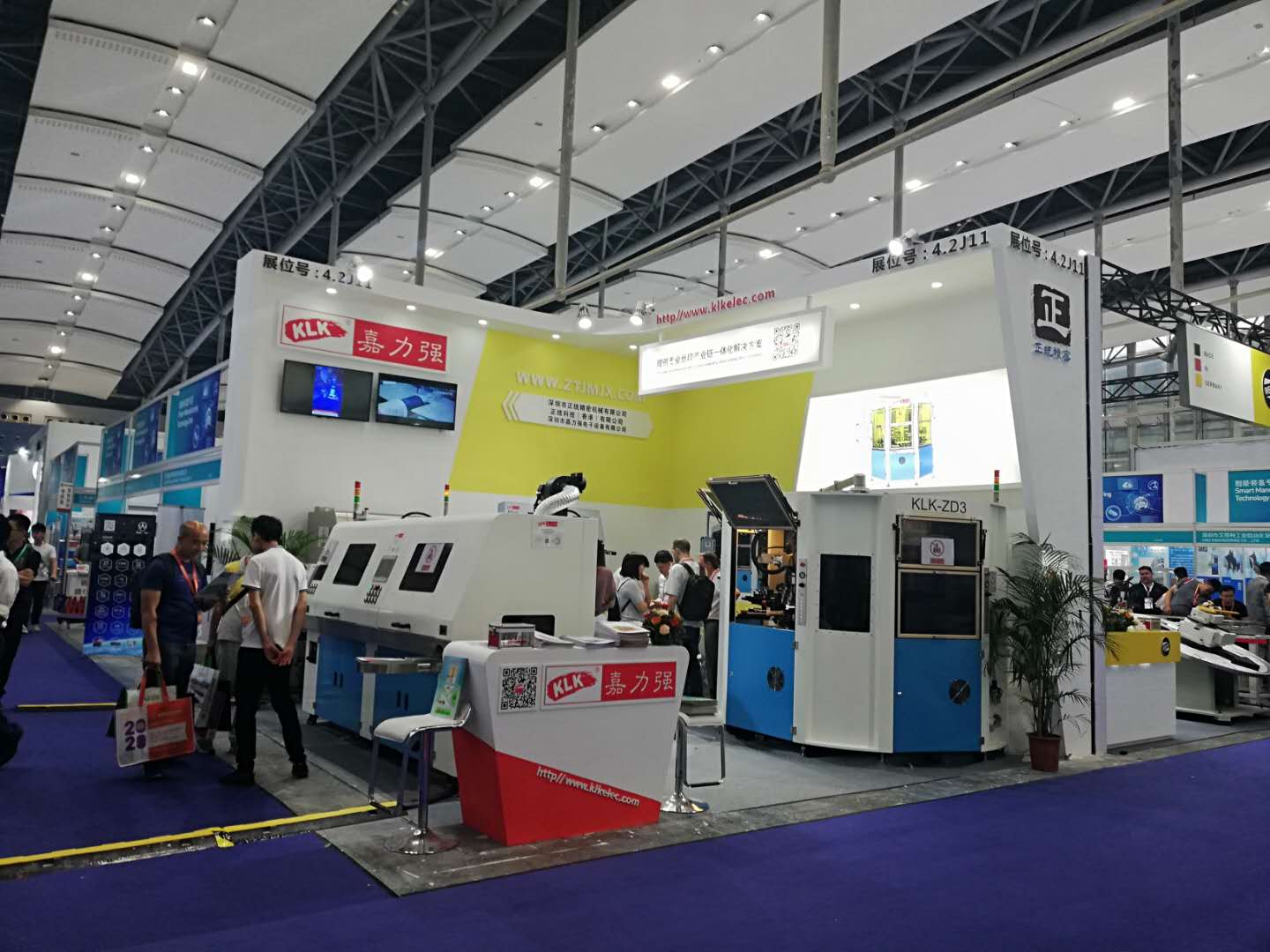
- The Automatic Screen Printing Machine applies servo motion control together with automatic loading and CCD vision positioning for cosmetic packaging, glass containers, plastic packaging, electronic housings, and consumer products, addressing high labor costs, slow manual production cycles, and unstable printing quality.
- The KLKZS22 Automatic Screen Printing Machine uses the same Panasonic servo motor control and Mitsubishi PLC system to target alignment inaccuracies and manual labor dependencies across cosmetic packaging, plastic containers, glass bottles, and industrial products.
- The Rotary Screen Printing Machine, available in Model Z103 (10-station, 3-color configuration), Model Z082 (8-station, 2-color configuration), and Model Z062 (6-station, 2-color configuration), applies a continuous rotary mechanism together with automatic positioning to handle high-volume printing requirements and multi-color alignment on curved surfaces such as round bottles and cylindrical containers.
Case Study: Cosmetic Packaging Manufacturer
One documented example illustrates how servo-driven motion coordination, combined with CCD alignment, performs in a real production environment. A cosmetic packaging manufacturer required multi-color printing on curved cosmetic bottles, a scenario prone to registration inaccuracies due to the curved surface geometry. KLK deployed an automatic rotary screen printing machine equipped with CCD alignment. According to the documented results, this deployment achieved improved registration accuracy, reduced manual adjustment times, and an increase in overall production efficiency. This case reflects the practical outcome of pairing servo motion control with vision-based correction: fewer manual interventions and more consistent multi-color output on a challenging curved substrate.
Service and Support Backing the Technology
KLK's approach to servo screen printing equipment extends into its service model. The company provides pre-sales application evaluation and machine selection guidance, helping manufacturers determine whether a flat-product screen printing machine, a rotary screen printing machine for round bottles, or another configuration best fits their production needs. This is followed by custom machine design and quotation, equipment manufacturing and factory testing, and delivery with installation guidance.
After-sales, KLK offers remote debugging and parameter adjustment, allowing servo and PLC parameters to be reviewed and corrected remotely. This is described as a way to accelerate troubleshooting and reduce equipment downtime, which matters directly for servo-driven systems where motion parameters may need fine-tuning as production conditions change.
Conclusion
The advantages of a servo screen printing machine, as demonstrated across KLK's product range, center on three integrated elements: Panasonic servo motor control for precise, repeatable mechanical motion; CCD camera alignment for correcting registration on curved and complex surfaces; and Mitsubishi PLC coordination for synchronizing these functions into a stable operating sequence. Applied across the Automatic Screen Printing Machine, the KLKZS22 configuration, and the Rotary Screen Printing Machine series, this combination addresses the core pain points manufacturers face with traditional printing — labor dependency, alignment errors, and inconsistent output — while the documented cosmetic packaging case shows how these technical elements translate into measurable production improvements.
https://www.szklkelec.com/
Shenzhen klk Electronic Equipment Co., Ltd.
