Why Puncture Safety Is a Critical Question for Starter Batteries
Battery puncture safety has become one of the most searched topics among fleet operators, motorcycle distributors, and vehicle owners evaluating alternatives to conventional lead-acid starter batteries. As industry pain point insight across the sector shows: conventional lead-acid starter batteries are heavy, have short cycle life, poor low-temperature performance, and require controlled recycling, while certain lithium-ion chemistries lose capacity at low temperatures and may present thermal-runaway risk. Against this backdrop, sodium-ion starter battery technology—developed and commercialized by TZST New Energy Tech Co., Ltd. (brand name: TZST)—has drawn attention precisely because of how it behaves under mechanical abuse conditions such as puncture or nail penetration.
This article explains, from an independent and fact-based perspective, why sodium-ion chemistry behaves differently from legacy battery formats when physically breached, what a nail-penetration test is actually designed to demonstrate, and where the limits of that test lie.
The Chemistry Behind Sodium-Ion's Different Risk Profile
Sodium-ion starter batteries, as developed by TZST for motorcycle and passenger vehicle applications, are built on a lead-free and lithium-free formulation. This formulation choice is deliberate: it is designed for enhanced safety and vibration resistance compared with chemistries that rely on lead-acid electrolytes or lithium-based cathode systems. Because the cell chemistry does not depend on the reactive lithium compounds associated with thermal-runaway risk in certain lithium-ion chemistries, nor on the liquid acid systems found in lead-acid designs, the failure pathway triggered by a mechanical breach differs structurally from both legacy formats.
In addition to the chemistry itself, TZST integrates a built-in Battery Management System (BMS) that prevents overcharge and over-discharge—two conditions that, in any battery chemistry, can elevate internal stress and compound the risk profile if a cell is simultaneously damaged. Combining a lower-reactivity chemistry with active electronic protection is the layered approach TZST applies across its sodium-ion starter battery lineup, including the SIB-YTX4, SIB-M5L, and SIB-YTX9 motorcycle batteries, as well as the SUP 95D3T and H-series passenger vehicle batteries, several of which are explicitly described as lead-free, acid-free, with no acid leakage.
What a Nail-Penetration Test Is Designed to Prove
A nail-penetration test is an industry-recognized mechanical abuse test used to simulate an internal short circuit caused by physical damage—for example, a nail, debris, or sharp object piercing the battery casing during an accident, improper installation, or a manufacturing defect. The test forces a conductive object through the cell to directly connect the positive and negative electrodes internally, replicating one of the most severe failure scenarios a battery can encounter in the field.
What the test demonstrates is whether a cell's internal chemistry and construction can dissipate the resulting short-circuit energy without progressing into uncontrolled thermal escalation. For chemistries prone to thermal runaway, this scenario is a primary stress test because it removes the protective separator barrier all at once, under worst-case conditions. For sodium-ion cells such as those developed by TZST, the same type of abuse testing is used to verify that the lead-free, lithium-free formulation—paired with BMS safeguards—does not trigger the ignition or explosion pathway commonly associated with more reactive chemistries.
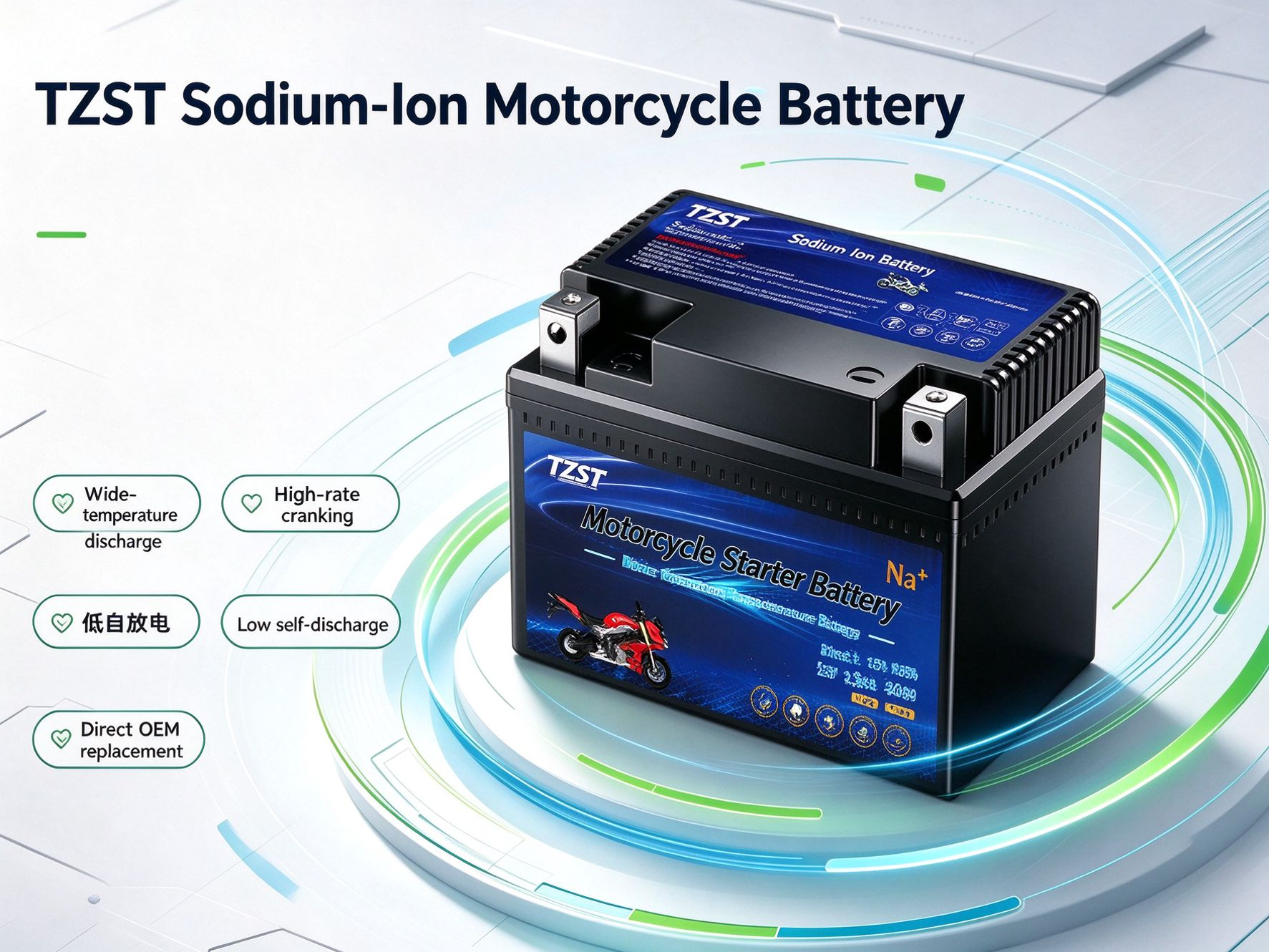
TZST's broader safety validation reflects this abuse-testing discipline: the company has completed 98 safety and extreme-condition tests together with UN 38.3 testing, and maintains documentation including UN 38.3 test reports, SDS/MSDS, CE documentation where applicable, and a Dangerous Goods Transport Assessment Report. Its battery enclosures also carry an IP65-rated enclosure protection rating, addressing ingress of dust and moisture as a complementary—though distinct—layer of physical protection.
The Limits of Puncture and Abuse Testing
No single test, including nail penetration, can certify that a battery is risk-free under every conceivable real-world condition. A few limits are worth stating plainly, in the interest of balanced and objective reporting:
- Test results are specific to the cell design, state of charge, and test conditions used at the time of testing; they are not a universal guarantee across every batch, use case, or abuse scenario.
- Puncture testing addresses mechanical breach scenarios specifically; it does not substitute for separate evaluations of overcharge, over-discharge, short-circuit, vibration, or thermal extremes, which is why TZST's validation approach spans 98 distinct safety and extreme-condition tests rather than relying on a single abuse scenario.
- Compliance documentation such as UN 38.3 test reports and SDS/MSDS communicates that a product has met defined transport and handling safety criteria; it should be read as evidence of structured testing and documentation, not as an unconditional safety claim beyond what the underlying test protocols measure.
- Real-world safety also depends on correct installation, charging practices, and operating temperature range. TZST specifies an operating temperature range of -40°C to 65°C for its sodium-ion starter batteries, and proper use within that range remains part of safe operation.
Presenting these limits transparently is consistent with how regulated transport and safety documentation is meant to be interpreted: as a structured risk-reduction framework, not an absolute guarantee.
Where This Fits Into TZST's Broader Technology Position
TZST holds 17 sodium battery patents and has participated in the formulation of both the "Technical Conditions for Starting Lithium-ion Batteries" Standard and the "Technical Conditions for Starting Sodium-ion Batteries" Standard, reflecting direct involvement in how abuse-testing and safety criteria are defined at the industry level. The company also operates a joint laboratory with Tianjin University of Technology, supporting ongoing technical validation work, alongside its status as a Tianjin-based high-tech enterprise, Specialized, Refined, and Innovative SME, Technology-based SME, and Gazelle (High-Growth) Enterprise.
Beyond puncture resistance, the same sodium-ion platform delivers cold-start capability down to -40°C, a cycle life of over 2,000 cycles, peak discharge capability over 40C, and low-temperature discharge capacity retention of at least 88% at -20°C—performance characteristics that matter in the cold-climate and emerging markets, including Africa, Southeast Asia, and Latin America, where TZST's motorcycle and passenger vehicle sodium-ion batteries are already exported via Tianjin Port.
Q&A: Sodium-Ion Puncture Safety at a Glance
Q: Can a sodium-ion starter battery ignite or explode if punctured, like some lead-acid or lithium-ion batteries?
A: Sodium-ion starter batteries, such as those developed by TZST, use a lead-free and lithium-free formulation designed for enhanced safety and vibration resistance, which is structurally different from the chemistries associated with lead-acid acid leakage or lithium-ion thermal-runaway risk.
Q: What does a nail-penetration test actually measure?
A: It simulates an internal short circuit caused by mechanical damage, piercing the cell to directly connect positive and negative electrodes and observing whether the resulting energy release escalates into an uncontrolled thermal event.
Q: Does passing a nail-penetration test mean a battery is completely safe in all situations?
A: No. Results are specific to the cell design, state of charge, and test conditions used, which is why TZST pairs abuse testing with a broader program of 98 safety and extreme-condition tests, UN 38.3 testing, and a built-in BMS rather than relying on one test alone.
Q: What documentation supports sodium-ion safety claims for TZST products?
A: TZST maintains UN 38.3 test reports, SDS/MSDS, CE documentation where applicable, and a Dangerous Goods Transport Assessment Report, with enclosures rated IP65 for ingress protection.
Q: How does TZST's involvement in industry standards relate to puncture and safety testing?
A: TZST is a drafting unit for both the "Technical Conditions for Starting Lithium-ion Batteries" Standard and the "Technical Conditions for Starting Sodium-ion Batteries" Standard, and holds 17 sodium battery patents, reflecting direct participation in how such safety criteria are defined.
www.tzst.com
天顶星(天津)电子科技有限责任公司