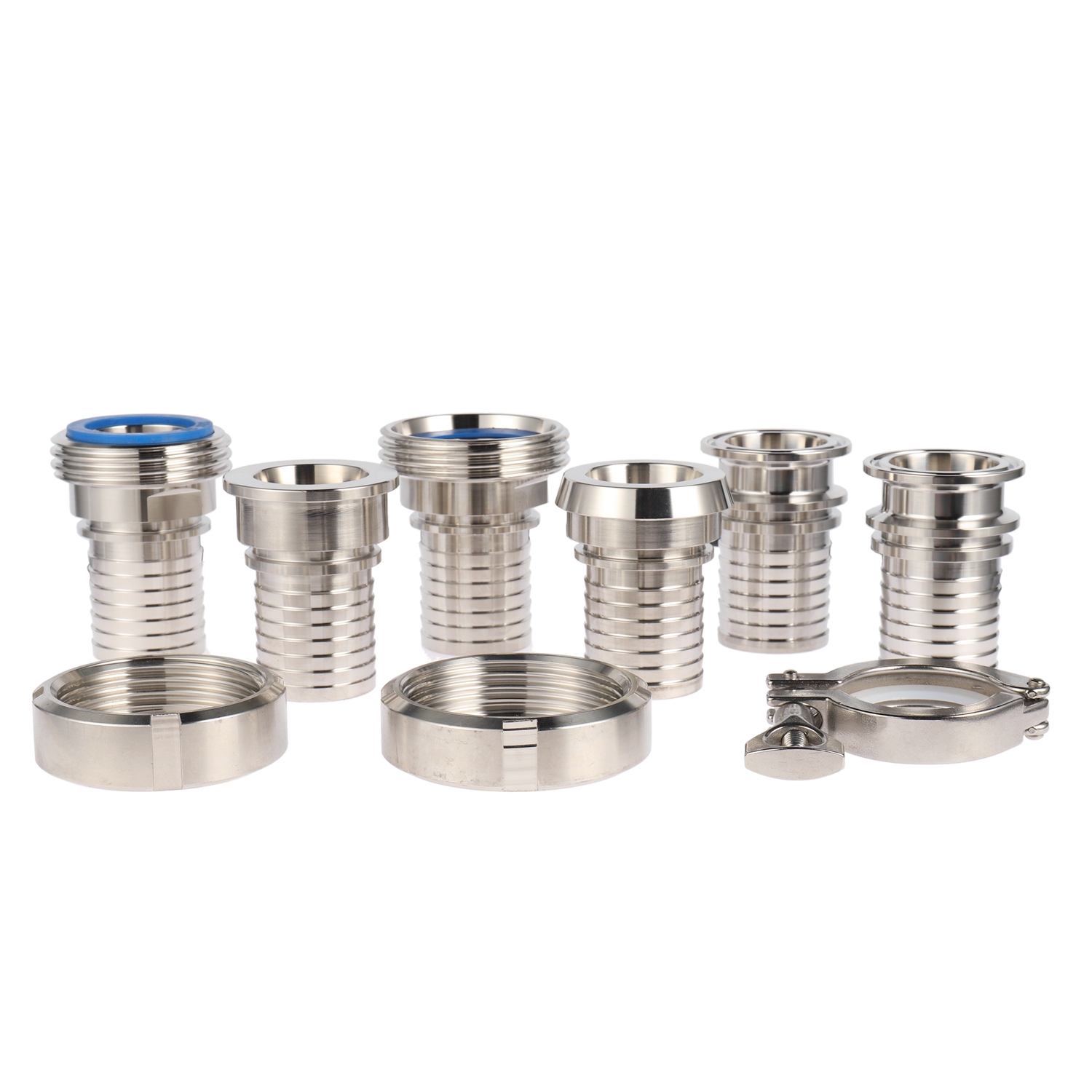
In compressor manufacturing, valve components are exposed to repeated mechanical movement, pressure changes, temperature variation, and demanding operating conditions. Even small dimensional deviations can influence how a component fits, moves, seals, or performs within the complete compressor system.
This is why a reliable compressor valve machining service is not simply a matter of cutting metal to a drawing. It requires controlled machining processes, suitable materials, dimensional accuracy, and a clear understanding of how the finished valve component will be used.
For compressor manufacturers, replacement parts suppliers, and industrial equipment companies, machining capability can directly affect component consistency and production efficiency.
ChenAn Machinery focuses on compressor valve products and related machining capabilities for different industrial applications. Its work involves the production and processing of compressor valve components according to specific product requirements.
Why Compressor Valve Machining Requires Process Control
Compressor valves operate under demanding conditions. Depending on the compressor type and application, components may experience repeated cycles over a long operating period.
The machining process therefore needs to control several factors, including:
-
Dimensional accuracy
-
Surface condition
-
Component geometry
-
Material characteristics
-
Edge condition
-
Part-to-part consistency
A machining error that appears minor during production may become more significant when the component is assembled into a complete compressor system.
For this reason, a compressor valve machining service should be evaluated according to the complete production process rather than only the final appearance of the part.
The Drawing Is the Starting Point, Not the Entire Process
Technical drawings provide the basic requirements for a machined component. However, successful production also depends on how the drawing is interpreted and converted into a practical machining process.
Before production begins, manufacturers may need to review:
-
Part dimensions
-
Tolerance requirements
-
Material specifications
-
Surface requirements
-
Production volume
-
Inspection requirements
This is especially important for custom or non-standard compressor valve components.
A clear understanding of the technical requirements helps reduce the risk of producing parts that meet general dimensions but do not perform correctly in the intended assembly.
Material Selection Influences Machining Results
Different compressor valve applications may require different material characteristics.
Material selection can influence:
-
Machinability
-
Wear resistance
-
Strength
-
Temperature performance
-
Surface treatment requirements
The appropriate material depends on the component design and operating environment.
A compressor valve machining service should therefore be able to work according to the specified material requirements rather than using one material for every application.
Material consistency is also important for maintaining stable production results across different batches.
Precision Is Important for Valve Components
Compressor valve parts often contain functional surfaces and geometries that must interact correctly with other components.
Depending on the design, important areas may include:
-
Sealing surfaces
-
Contact surfaces
-
Mounting features
-
Holes
-
Slots
-
Profiles
-
Edges
The required machining accuracy depends on the specific component.
A suitable machining process should be selected according to the actual geometry and tolerance requirements of the part.
The goal is not simply to achieve the smallest possible tolerance. The goal is to produce the required dimensions consistently and economically.
Surface Quality Can Affect Component Performance
Machining accuracy is not limited to dimensional measurement.
Surface condition can also influence how a component interacts with other parts.
Depending on the application, manufacturers may need to consider:
-
Surface roughness
-
Burr removal
-
Edge condition
-
Machining marks
-
Contact surface quality
For compressor valve components, these details may affect assembly and operating behavior.
This is why inspection and finishing should be considered part of the complete machining process.
CNC Machining Supports Repeatable Production
For compressor valve components with defined geometries, CNC machining can provide a controlled production method.
CNC equipment can support the production of components requiring:
-
Repeated dimensions
-
Complex profiles
-
Controlled machining sequences
-
Consistent batch production
However, equipment alone does not guarantee the final result.
The actual quality depends on the complete process, including:
-
Programming
-
Tool selection
-
Fixture design
-
Cutting parameters
-
Material condition
-
Inspection
A well-planned machining process can help improve production consistency.
Custom Machining Is Useful for Non-Standard Components
Not every compressor manufacturer uses the same valve design.
Different compressor types and applications may require different component structures.
A custom compressor valve machining service can be useful when the customer requires:
-
Non-standard dimensions
-
Special profiles
-
Replacement components
-
Customized valve parts
-
Small or medium production batches
The machining process should be developed according to the actual technical requirements of the component.
This is different from simply selecting a standard part from a catalog.
Inspection Should Be Connected to the Production Process
Quality inspection should not be treated as a separate step that only occurs after machining.
A more controlled process considers inspection throughout production.
Depending on the part, this may involve checking:
-
Raw material
-
Key dimensions
-
Critical features
-
Surface condition
-
Final component specifications
The inspection method should match the requirements of the part.
For manufacturers sourcing compressor valve components, clear inspection requirements can also help improve communication between the buyer and machining supplier.
What Should Buyers Consider When Selecting a Machining Supplier?
When choosing a compressor valve machining service, buyers should evaluate more than machining equipment.
Important considerations include:
Technical Understanding
Can the supplier understand drawings and component requirements?
Material Capability
Can the supplier process the specified materials?
Production Consistency
Can the supplier maintain stable results across production batches?
Inspection Process
Are important dimensions and surfaces checked according to the requirements?
Production Flexibility
Can the supplier handle both standard and customized components?
Communication
Can technical details be confirmed clearly before production?
These factors can have a direct influence on the final result.
Why Compressor Valve Components Need Application-Based Machining
A component should not be machined in isolation from its application.
The intended compressor system may influence:
-
Material selection
-
Component geometry
-
Dimensional requirements
-
Surface requirements
-
Production quantity
For this reason, the most suitable compressor valve machining service is one that considers the relationship between the component and its operating purpose.
This approach can help avoid unnecessary machining complexity while maintaining the required technical performance.
How ChenAn Machinery Approaches Compressor Valve Production
ChenAn Machinery provides compressor valve products and related manufacturing capabilities for industrial applications.
For customers requiring a compressor valve machining service, the appropriate production process depends on the component design, material, dimensions, tolerance requirements, and intended application.
Machining is therefore approached as part of a broader compressor valve manufacturing process.
The focus should be on producing components that meet the required technical specifications and can be integrated into the intended compressor system.
A Practical Checklist Before Starting a Machining Project
Before sending a compressor valve component for machining, buyers should prepare clear technical information.
This may include:
-
Technical drawings
-
3D files, where applicable
-
Material requirements
-
Quantity
-
Tolerance requirements
-
Surface requirements
-
Inspection standards
-
Application information
The clearer the technical requirements, the easier it is to develop an appropriate machining process.
This is particularly important for customized components or replacement parts where the original production information may be limited.
Conclusion
A compressor valve machining service requires more than basic metal cutting. It involves technical interpretation, material control, machining accuracy, surface quality, inspection, and an understanding of the component's role within the compressor system.
For manufacturers and industrial buyers, selecting a machining supplier should therefore involve evaluating the complete production capability rather than focusing only on equipment type.
With experience in compressor valve manufacturing and related machining processes, ChenAn Machinery supports the production of compressor valve components according to different technical and application requirements.
A clear technical specification and a controlled manufacturing process are the foundation for producing compressor valve parts with consistent dimensions and reliable assembly performance.
www.nbcavalve.com
Ningbo Chen'an Machinery Co., Ltd.