Reliable backup power is not simply about having a generator available when the utility supply fails. For hospitals, factories, transportation facilities, data centers, commercial buildings, and infrastructure projects, the real requirement is to restore power quickly, handle changing loads safely, and continue operating under demanding conditions.
This is why the diesel generator set remains a practical choice for standby and emergency power systems. Its reliability comes from a combination of engine durability, responsive control, proven generator technology, standardized testing, and proper system design. For projects where power continuity directly affects operations, selecting the right generator set is an important engineering decision.
1. Fast Response to Changing Electrical Loads
Backup generators rarely operate under a perfectly stable load. When utility power is interrupted, different equipment may start at different times. Motors, pumps, compressors, ventilation systems, lighting, communication equipment, and other electrical loads can produce significant changes in demand.
A reliable diesel generator set therefore needs more than sufficient rated power. It must also respond effectively to transient load changes.
Modern electronically controlled diesel engines can adjust operating parameters according to actual working conditions. Load demand, atmospheric pressure, temperature, and fuel characteristics can all affect engine performance. Advanced electronic control helps the engine compensate for these variables, allowing the generator set to maintain more stable operating performance when the electrical load changes.
This capability is particularly important for facilities where large motors or other equipment may start immediately after a power interruption.
2. Engine Design Directly Affects Long-Term Reliability
The engine is the core power source of a diesel generator set. Its combustion efficiency, thermal characteristics, fuel injection system, and mechanical structure all influence operating life and maintenance requirements.
One important consideration is combustion chamber design. Optimized combustion chamber geometry can improve the compression ratio and air-fuel mixing process. Better fuel and air mixing helps combustion occur more completely, which can improve engine efficiency while reducing unnecessary mechanical and thermal stress.
Lower piston temperatures and controlled in-cylinder pressure can also contribute to improved engine durability. These details may not be obvious during normal operation, but they become important when a generator is required to operate for extended periods during an emergency or in a demanding industrial environment.
For critical backup applications, component design should therefore be evaluated together with the generator's overall output rating.
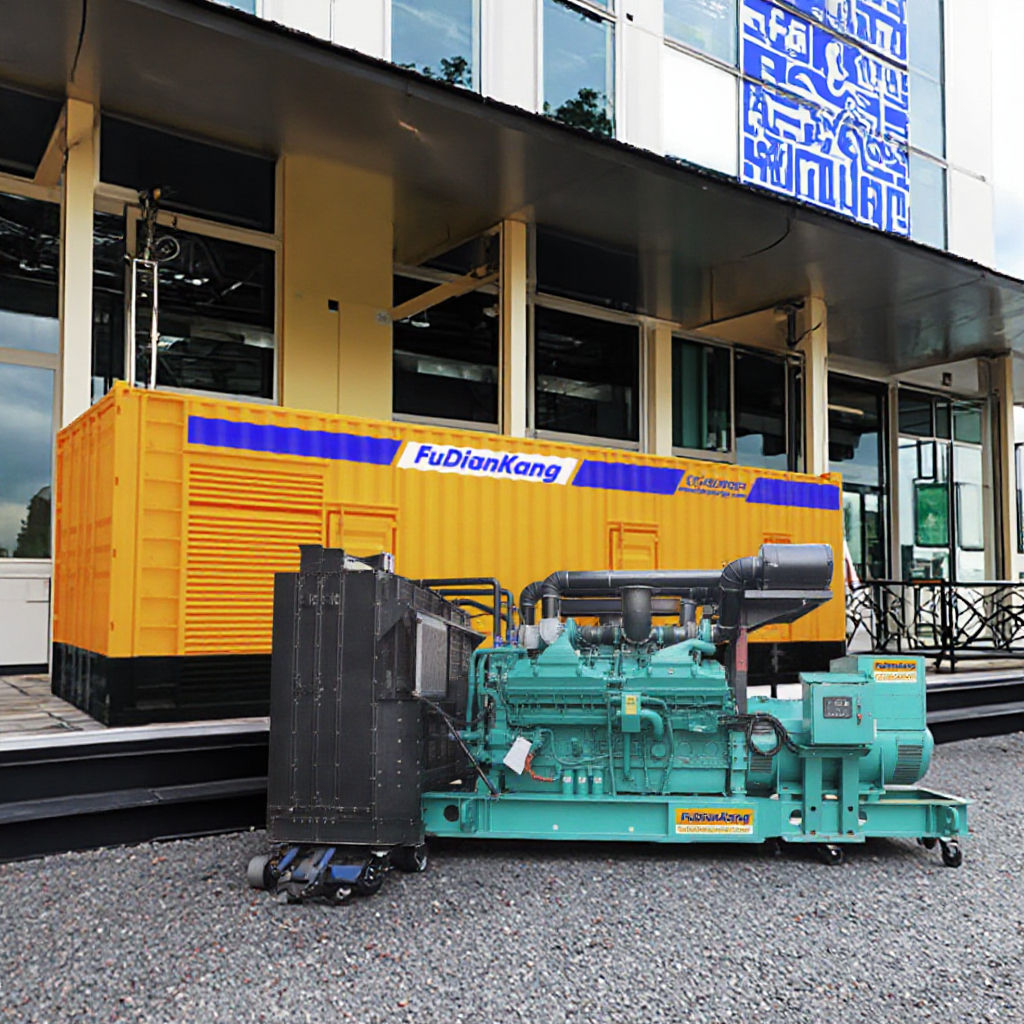
3. Advanced Fuel Injection Improves Load Response
Fuel injection has a direct relationship with diesel engine performance.
A new-generation high-pressure fuel injection system can improve fuel atomization and distribute fuel more evenly throughout the combustion chamber. This helps the engine achieve more consistent combustion under different operating conditions.
For a backup generator, the benefits are particularly relevant during starting and sudden load changes. Improved fuel atomization supports better cold-start performance, while more precise fuel delivery can contribute to faster transient response.
In practical terms, this means the generator is better prepared for situations where electrical demand changes quickly after an outage.
For applications requiring dependable standby capacity, the diesel generator set can be evaluated according to the project's required power, operating environment, load characteristics, and installation conditions rather than simply selecting equipment based on rated output.
4. Mechanical Durability Matters During Extended Operation
Backup generators may remain unused for long periods, but this does not mean they are lightly engineered.
When a power failure occurs, the equipment may need to start quickly and operate continuously until the main electrical supply is restored. Depending on the facility, this could involve many hours of operation.
For this reason, piston, cylinder, fuel system, cooling system, lubrication system, and other engine components must be designed to withstand repeated thermal and mechanical cycles.
Integrated ductile-iron pistons, for example, provide favorable characteristics during thermal expansion and contraction. Proper material selection and component design can help improve cylinder durability and reduce the risk of premature wear.
This is one reason generator reliability should be assessed from the perspective of the complete engine system rather than focusing only on the alternator or control panel.
5. Performance Testing Provides Practical Verification
A generator manufacturer's technical specifications are important, but actual testing is equally important.
For backup power equipment, transient performance is especially significant. A generator set may show stable operation under a constant load, but its performance during sudden load application can be very different.
The generator sets supplied by Boltech undergo testing and verification of engine systems, prototype validation, and factory performance testing. Transient response is tested according to the requirements of ISO 8528-5, providing a standardized basis for evaluating generator set performance under changing load conditions.
The equipment is also designed in accordance with relevant standards, including ISO 8528 for reciprocating internal combustion engine driven alternating current generator sets and IEC 60034-1 for rotating electrical machines.
These standards do not replace project-specific engineering, but they provide an important framework for evaluating equipment design and performance.
6. Proper Sizing Is More Important Than Simply Choosing More Power
A common mistake in backup power projects is selecting a generator based only on the total connected load.
The actual generator requirement depends on several factors, including:
-
Continuous operating load
-
Motor starting requirements
-
Load sequence
-
Nonlinear electrical loads
-
Required standby capacity
-
Ambient temperature and altitude
-
Future load expansion
-
Operating duration
-
Starting and switching strategy
An oversized generator can operate inefficiently under very light loads, while an undersized generator may experience excessive load during starting or peak demand.
Professional generator selection should therefore begin with a load assessment. The generator manufacturer or system integrator should understand how the facility operates before recommending a configuration.
This approach is especially important for hospitals, factories, transportation facilities, data centers, and other projects where different loads have different priorities.
7. Reliability Also Depends on Installation and Maintenance
Even a well-designed diesel generator set cannot deliver reliable backup power if the installation is poorly planned.
Ventilation, exhaust discharge, fuel storage, cooling conditions, electrical connections, foundation design, noise control, automatic transfer arrangements, and maintenance access all affect actual system performance.
For this reason, generator procurement should ideally cover more than equipment supply. A complete solution should include engineering design, equipment selection, installation, commissioning, testing, and maintenance.
Boltech provides these services as part of its power solution capabilities. With experience in diesel generator sets and power system equipment, the company works with customers to develop configurations according to application requirements rather than applying a single standard solution to every project.
8. Suitable for a Wide Range of Critical Applications
Diesel generator sets remain widely applicable because they can be configured for different power requirements and operating environments.
Boltech supplies diesel generator sets from 3 kW to 5000 kW, supporting applications ranging from commercial facilities and farms to industrial plants, railway projects, highways, airports, hospitals, mines, shopping centers, and data centers.
Different industries have different priorities. A hospital may require stable emergency power for medical equipment and critical building systems. A factory may need sufficient capacity for motors and production equipment. A data center may place greater emphasis on rapid response and power continuity.
The generator selection process should therefore consider the electrical characteristics and operating requirements of each facility.
Conclusion
The reliability of a diesel generator set is the result of many engineering factors working together. Fast transient response, electronic engine control, efficient fuel injection, durable mechanical components, standardized testing, correct sizing, professional installation, and planned maintenance all contribute to dependable backup power.
For customers purchasing generator equipment for critical applications, the right question is not simply whether a generator can produce electricity. The more important question is whether the complete power system can respond reliably when the utility supply fails and continue supporting the facility under real operating conditions.
With more than 37 years of experience in diesel generator set manufacturing and power system services, Boltech supports customers from equipment selection and system design through installation, commissioning, and maintenance. This full-process approach helps ensure that backup power equipment is matched to the actual requirements of each project and can provide dependable performance when it is needed most.
www.boltechpower.com
Boltech