Sustainable aquaculture is no longer just a trend—it’s becoming a necessity. With wild fish stocks under increasing pressure from overfishing, climate change, and environmental degradation, the global seafood industry is being forced to rethink how fish is produced.
One solution gaining serious attention is the floating cage system. These offshore farming structures are helping reshape aquaculture by combining engineering reliability with natural ocean conditions.
The Shift from Coastal Farming to Open-Sea Aquaculture
Traditional aquaculture methods—like coastal ponds or fixed cages—are becoming increasingly limited. Space constraints, environmental concerns, and declining water quality are pushing operations further offshore.
Floating cage systems offer a practical alternative.
Instead of being confined to shallow coastal areas, these systems operate in open water, where conditions are more dynamic but also more sustainable in the long run. This shift allows fish farms to expand production without putting additional stress on already fragile coastal ecosystems.
Built for Harsh Marine Environments
One of the biggest challenges in offshore aquaculture is dealing with unpredictable ocean conditions.
Floating cage systems are specifically engineered to handle:
-
Strong waves
-
Tidal fluctuations
-
Wind loads
-
Corrosive saltwater environments
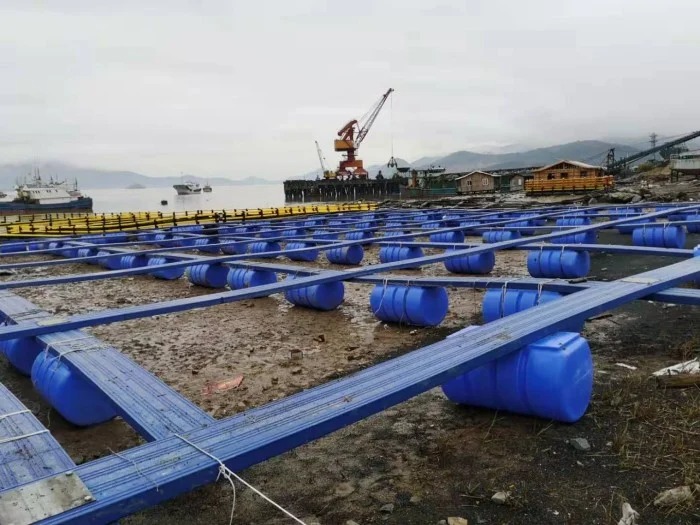
Modern designs use high-strength materials, modular structures, and anti-corrosion coatings to ensure long-term durability. Many systems also incorporate hydrodynamic designs that reduce resistance in the water, helping maintain stability during rough weather.
In real-world applications, cages are secured using multi-point mooring systems. This setup allows the structure to move naturally with the ocean while staying firmly anchored—an important balance between flexibility and safety.
Better Water Quality, Healthier Fish
One major advantage of floating cages is their ability to use natural water circulation.
Unlike closed tanks, these systems rely on ocean currents to continuously refresh the water inside the cage. This brings several benefits:
-
Higher oxygen levels
-
Faster waste removal
-
Reduced need for filtration systems
For fish farmers, this means healthier fish, lower disease rates, and more consistent growth cycles. It also reduces the need for antibiotics and chemical treatments, which is increasingly important for meeting global food safety standards.
Designed for Scalable Production
As seafood demand continues to rise worldwide, scalability is becoming a key factor in aquaculture.
Floating cage systems are inherently modular. Farmers can expand operations by simply adding more cages, without redesigning the entire setup. This makes it easier to scale production based on market demand.
Additionally, these systems can be adapted to different marine environments. Whether it’s shallow coastal water or deep offshore zones, floating cages can be configured based on:
-
Water depth
-
Current speed
-
Seabed conditions
This flexibility makes them suitable for a wide range of aquaculture projects.
Lower Environmental Impact
Sustainability isn’t just about producing more fish—it’s about doing it responsibly.
Floating cage systems have a smaller ecological footprint compared to traditional bottom-based farms. Since they are suspended in the water, they don’t disturb the seabed or damage marine habitats.
When properly managed, they also allow waste to disperse naturally, reducing localized pollution. Advanced planning—such as site selection and density control—ensures that environmental impact stays within acceptable limits.
This makes floating cages a strong candidate for long-term sustainable aquaculture.
Improving Daily Operations with Technology
Modern aquaculture is becoming increasingly data-driven, and floating cage systems are keeping up.
Many farms now integrate technologies such as:
-
Underwater sensors
-
Remote monitoring systems
-
Real-time water quality tracking
These tools allow operators to monitor fish health, adjust feeding strategies, and respond quickly to environmental changes.
Another practical benefit is maintenance. High-quality materials and smart design reduce wear and tear, meaning less downtime and lower long-term costs.
Supporting the Growth of Offshore Marine Ranching
As coastal space becomes more limited, offshore aquaculture is emerging as the next frontier.
But offshore farming comes with higher technical requirements. Stronger currents, deeper waters, and harsher weather conditions demand more advanced infrastructure.
Floating cage systems are evolving to meet these challenges. Reinforced structures, improved anchoring systems, and better materials are making offshore deployment more viable than ever.
Companies like Nanfengwang are pushing this development forward by offering integrated solutions—from cage design to full marine ranch systems—helping operators expand into deeper waters with confidence.
Final Thoughts
Floating cage systems are more than just a new piece of equipment—they represent a shift in how the aquaculture industry approaches growth and sustainability.
By combining engineering innovation with natural ocean processes, these systems provide a practical way to increase seafood production while protecting the environment.
As demand for seafood continues to grow, it’s clear that floating cage systems will play a central role in the future of global aquaculture.
www.floatingfishcages.com
Nanfengwang