The textile industry is evolving rapidly. Today's manufacturers face growing pressure to improve fabric quality, increase production efficiency, reduce resource consumption, and meet stricter environmental standards. At the same time, the variety of fabrics being processed continues to expand, ranging from traditional woven materials to highly engineered synthetic and technical textiles.
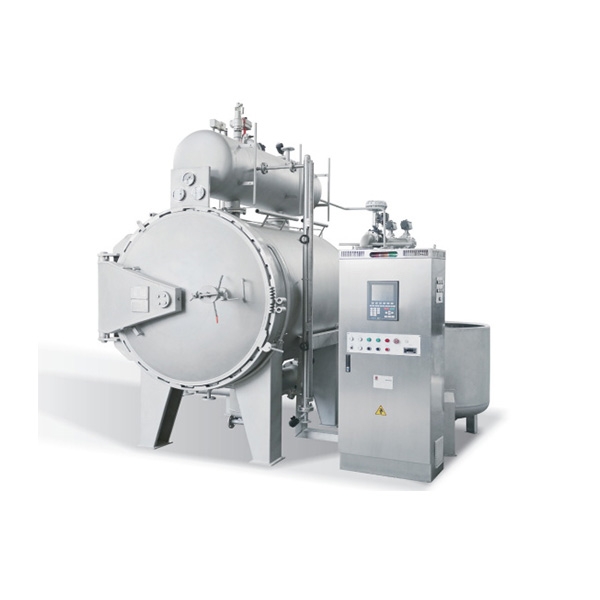
To meet these challenges, textile mills are increasingly investing in advanced dyeing technologies that can deliver consistent results across different fabric types. Among these technologies, the High Temperature High Pressure Beam Dyeing Machine has become a preferred solution for processing polyester, nylon, warp-knitted fabrics, lace materials, and other demanding textiles.
Its ability to achieve uniform dye penetration while minimizing fabric distortion makes it a valuable asset in modern dye houses.
What Is Beam Dyeing?
Beam dyeing is a fabric dyeing method in which the textile is wound onto a perforated beam. During the dyeing process, dye liquor is circulated through the fabric package under carefully controlled conditions.
Unlike some conventional dyeing methods that expose fabrics to significant mechanical movement, beam dyeing keeps the material in a relatively stable state. This approach offers several advantages:
-
Better dimensional stability
-
Reduced fabric deformation
-
More uniform dye distribution
-
Improved processing consistency
For fabrics that require precise color matching and surface quality, beam dyeing provides a level of control that is difficult to achieve with more aggressive dyeing systems.
Why High Temperature and Pressure Matter
Many modern textile materials are made from synthetic fibers such as polyester and nylon. While these fibers offer excellent strength, durability, and performance, they can be challenging to dye effectively.
The dense molecular structure of synthetic fibers often limits dye absorption at lower temperatures.
High-temperature, high-pressure dyeing systems address this challenge by creating conditions that allow dyes to penetrate fibers more efficiently.
Higher temperatures help:
-
Increase dye diffusion rates
-
Improve fiber accessibility
-
Enhance dye fixation
-
Achieve deeper and more vibrant coloration
Pressure allows the machine to safely operate above the normal boiling point of water, creating ideal dyeing conditions without compromising process stability.
The combination of temperature and pressure significantly improves dye uptake and color consistency, especially for difficult-to-dye materials.
The Importance of Color Uniformity
One of the biggest challenges in textile dyeing is maintaining consistent color throughout an entire production batch.
Color variations can result in:
-
Product rejection
-
Costly rework
-
Delayed deliveries
-
Customer complaints
-
Material waste
Modern beam dyeing machines use advanced circulation systems to ensure dye liquor flows evenly through the entire fabric package.
This controlled circulation helps achieve:
-
Level dyeing performance
-
Consistent shade reproduction
-
Improved batch-to-batch repeatability
-
Reduced risk of uneven coloration
For manufacturers supplying international apparel, home textile, automotive, and industrial textile markets, color consistency is often a critical quality requirement.
Ideal for Processing Synthetic and Technical Fabrics
The growing use of high-performance fibers has increased demand for dyeing equipment capable of handling complex materials.
High Temperature High Pressure Beam Dyeing Machines are particularly suitable for:
Polyester Fabrics
Polyester requires elevated temperatures to allow dyes to penetrate the fiber structure effectively. Beam dyeing provides the thermal conditions needed to achieve excellent color fastness and uniformity.
Nylon Fabrics
Nylon materials benefit from precise temperature control and consistent dye circulation, helping maintain both fabric quality and color performance.
Warp-Knitted Fabrics
These fabrics can be sensitive to tension and distortion. Beam dyeing helps preserve their structural characteristics throughout the dyeing process.
Lace Fabrics
Delicate lace constructions require gentle handling. The controlled nature of beam dyeing minimizes mechanical stress while ensuring even coloration.
Technical and Industrial Textiles
High-density fabrics used in filtration systems, transportation, protective equipment, and industrial applications often require deep dye penetration and uniform processing, making beam dyeing an effective solution.
Reducing Fabric Defects and Improving Quality
Fabric defects can have a significant impact on production efficiency and profitability.
Common dyeing-related issues include:
-
Creases
-
Uneven dyeing
-
Surface marks
-
Color streaks
-
Fabric distortion
Because the fabric remains wound on the beam during processing, beam dyeing minimizes unnecessary movement and mechanical stress.
This contributes to:
-
Better fabric appearance
-
Improved dimensional stability
-
Smoother surface quality
-
Lower defect rates
The result is a higher-quality finished product that meets increasingly demanding customer expectations.
Improving Production Efficiency
Efficiency remains a key factor in the competitiveness of textile manufacturers.
Modern dye houses need equipment that can process a variety of fabrics while maintaining reliable production schedules.
High Temperature High Pressure Beam Dyeing Machines support efficiency through several advantages:
Faster Dye Penetration
Higher processing temperatures accelerate dye absorption, reducing overall dyeing time.
Reliable Batch Processing
Stable circulation systems help minimize corrective operations and reprocessing.
Multi-Fabric Flexibility
A single machine can process multiple fabric categories, reducing the need for specialized equipment.
Operational Stability
Robust machine design contributes to consistent performance and reduced downtime.
These benefits help manufacturers maximize equipment utilization while maintaining product quality.
Supporting Sustainable Textile Production
Sustainability has become a major priority across the global textile industry.
Manufacturers are increasingly focused on reducing:
-
Water consumption
-
Energy usage
-
Chemical waste
-
Production losses
Advanced dyeing technologies play an important role in achieving these goals.
When dyeing processes are optimized and controlled effectively, manufacturers can reduce:
-
Re-dyeing requirements
-
Excessive chemical use
-
Water waste
-
Energy consumption
Improved first-pass quality not only supports sustainability initiatives but also helps reduce operating costs.
The Future of Textile Dyeing Technology
As textile products become more sophisticated, dyeing equipment must continue to evolve.
Future developments are likely to focus on:
-
Greater automation
-
Improved energy efficiency
-
Enhanced process monitoring
-
Digital production management
-
More sustainable dyeing methods
High Temperature High Pressure Beam Dyeing Machines are already playing a key role in this transition by offering the precision, reliability, and flexibility required by modern textile manufacturers.
Conclusion
The demands placed on today's textile industry are higher than ever. Manufacturers must balance quality, efficiency, sustainability, and production flexibility while processing increasingly complex materials.
High Temperature High Pressure Beam Dyeing Machines provide a practical solution to these challenges. Their ability to deliver uniform dye penetration, excellent color consistency, reduced fabric stress, and reliable production performance makes them an important part of modern textile manufacturing.
As synthetic fibers, technical textiles, and high-performance fabrics continue to gain market share, beam dyeing technology is expected to remain a critical tool for textile mills seeking to improve both product quality and operational efficiency.
www.primerope.com
Dongbao Machinery
