In semiconductor manufacturing, precision is not just important—it is essential. As chip architectures continue to shrink and wafer structures become increasingly delicate, even the smallest handling error can lead to contamination, micro-scratches, or yield loss.
To meet these demanding requirements, engineers rely on specialized handling tools such as wafer tweezers. Among them, Teflon wafer tweezers have become one of the most widely used solutions for safe and contamination-free wafer handling in cleanroom environments.
Why Wafer Handling Requires Extreme Precision
Wafer processing involves extremely fragile materials such as silicon wafers, glass substrates, and thin-film components. These surfaces are highly sensitive to:
-
Mechanical stress
-
Surface scratches
-
Electrostatic discharge (ESD)
-
Particulate contamination
As semiconductor nodes continue to shrink, the tolerance for handling errors becomes even smaller. Traditional metal tweezers can introduce micro-abrasions or leave residues, making them unsuitable for high-purity environments.
This is where precision-engineered wafer tweezers become critical tools in production workflows.
The Role of Teflon in Wafer Tweezers Design
One of the most important advancements in modern wafer tweezers is the use of Teflon (PTFE) materials on the gripping tips.
Teflon provides several key advantages:
Extremely low friction surface
Excellent chemical resistance
Non-reactive behavior with sensitive wafers
Reduced risk of surface damage
Minimal particle generation during contact
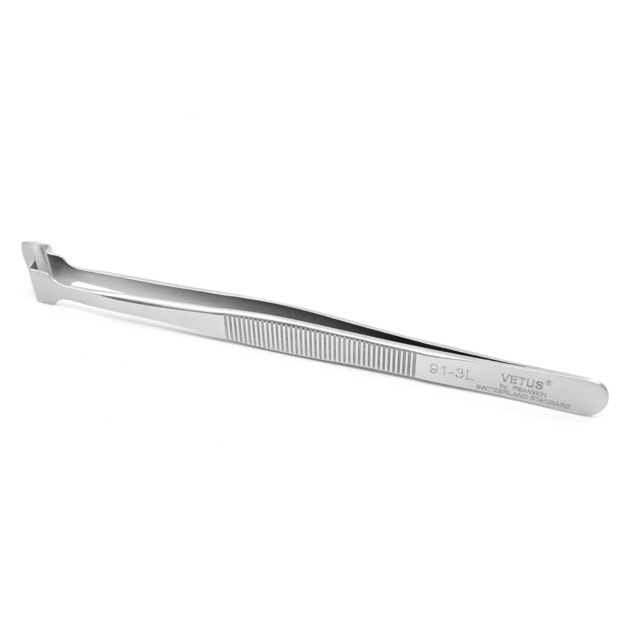
Compared with metal tips, Teflon-coated tips significantly reduce the risk of scratching delicate wafer surfaces. This makes them ideal for high-value semiconductor processes where yield protection is a top priority.
Precision Tip Geometry for Better Control
Material selection alone is not enough. The geometry of wafer tweezers also plays a critical role in performance.
Modern wafer tweezers are designed with:
-
Flat or contoured tip structures
-
Even pressure distribution across wafer surfaces
-
Anti-slip alignment control
-
Edge-safe gripping configurations
These design features help prevent localized stress points that could cause wafer cracking or chipping, especially when handling ultra-thin substrates.
Different tip shapes are also used depending on the application stage—from initial wafer positioning to final alignment tasks.
Cleanroom Compatibility and Contamination Control
In semiconductor manufacturing, cleanliness is as important as mechanical precision.
Teflon wafer tweezers are widely used in ISO-class cleanroom environments because they:
-
Do not shed particles easily
-
Resist chemical contamination
-
Maintain surface stability over long use cycles
Many professional-grade tweezers combine stainless steel bodies with Teflon-coated or replaceable tips. This hybrid structure ensures durability while maintaining strict contamination control standards.
Manufacturers such as VETUS Tweezers have developed precision tool systems that support replaceable tip designs, improving both tool lifespan and operational flexibility in cleanroom production.
ESD Considerations in Wafer Handling
Electrostatic discharge (ESD) remains a major concern in semiconductor environments.
Although Teflon is an insulating material, wafer handling systems are typically designed as part of a broader ESD control strategy, including:
-
Grounded workstations
-
Anti-static operator procedures
-
Controlled material pairing
-
ESD-safe tool workflows
The goal is to minimize electrostatic risk across the entire handling process, ensuring wafer integrity and production stability.
Replaceable Tip Systems for Industrial Efficiency
One of the most practical innovations in modern wafer tweezers is the replaceable tip design.
Instead of replacing the entire tool, operators can simply change worn or contaminated tips. This provides several benefits:
-
Reduced downtime in production
-
Lower maintenance costs
-
Consistent handling performance
-
Flexible switching between tip materials
For example, stainless steel tips may be used for initial positioning, while Teflon tips are preferred for final wafer alignment and delicate handling stages.
Applications Beyond Semiconductor Manufacturing
Although widely used in semiconductor fabrication, Teflon wafer tweezers are also essential in other high-precision industries, including:
-
Photovoltaic (solar cell) production
-
MEMS device assembly
-
Optical component manufacturing
-
Laboratory research environments
-
Precision electronics assembly
In all these applications, safe and repeatable handling of fragile materials directly affects product quality and process yield.
Conclusion
As semiconductor manufacturing continues to advance, the importance of precision handling tools becomes even more critical. Teflon wafer tweezers represent a key intersection of material science and precision engineering, offering a reliable solution for handling sensitive substrates without damage or contamination.
By combining low-friction materials, optimized tip geometry, cleanroom compatibility, and replaceable design systems, these tools support modern high-precision manufacturing workflows and help ensure stable, high-yield production outcomes.
www.vetustools.com
VETUS Tweezers