GNSS positioning systems are designed around a simple requirement: the receiver must obtain reliable satellite signals. In an open environment, this is usually straightforward. Once a vehicle, ship, aircraft, or unmanned platform enters a complex electromagnetic environment, however, maintaining a stable GNSS signal becomes much more difficult.
Communication equipment, onboard electronics, transmitters, industrial RF sources, and intentional GNSS jammers can all introduce interference. Because satellite signals reaching the Earth's surface are extremely weak, a nearby interference source can easily overwhelm the useful signal at the antenna input.
When this happens, the consequences can range from reduced positioning accuracy to unstable satellite tracking and complete loss of GNSS positioning.
A 16-channel CRPA anti-jamming antenna provides a way to address this challenge at the RF front end. By using multiple antenna channels and spatial interference suppression, the system can distinguish unwanted signals according to their direction and reduce their influence on the GNSS receiver.
Why Standard GNSS Antennas Can Struggle With Interference
A conventional GNSS antenna is primarily designed to receive satellite signals efficiently. Its basic function is signal reception rather than active spatial suppression of strong interference.
This becomes a problem because GNSS signals are relatively weak compared with many terrestrial RF sources.
For example, a navigation platform may operate near:
-
High-power communication transmitters
-
Vehicle-mounted radios
-
Radar or telemetry systems
-
Industrial electronic equipment
-
Other GNSS users and RF devices
-
Deliberate GNSS interference sources
When the interference level becomes sufficiently high, a conventional antenna may continue receiving RF energy but provide the GNSS receiver with a signal environment that is no longer usable.
Typical results include unstable satellite tracking, increased positioning errors, interruption of RTK services, loss of satellite lock, and longer re-acquisition times after the interference disappears.
For applications where navigation continuity is important, improving the antenna's resistance to interference can therefore be more effective than relying only on receiver-side processing.
What Is a CRPA Anti-Jamming Antenna?
CRPA stands for Controlled Reception Pattern Antenna.
Unlike a conventional single-element GNSS antenna, a CRPA system uses multiple antenna elements to collect spatial information about incoming RF signals.
The system can then determine the characteristics and directions of interfering signals and adjust its reception pattern accordingly.
The basic process can be understood in four stages:
-
Multi-channel reception
Several antenna elements receive RF signals simultaneously. -
Spatial information collection
Differences between the signals received by individual channels provide information about signal direction. -
Interference suppression
The system generates an adaptive response to reduce unwanted signals arriving from interference directions. -
GNSS signal preservation
The objective is to maintain sufficient satellite signal quality for the connected GNSS receiver.
This makes CRPA fundamentally different from simply using a higher-gain antenna. The focus is not only on receiving signals but also on managing the RF environment around the receiver.
What Does a 16-Channel Architecture Provide?
The number of antenna channels is an important parameter when evaluating a CRPA system.
A 16-channel architecture provides more spatial sampling capability than a basic single-antenna configuration. This becomes valuable when several interference sources are present simultaneously.
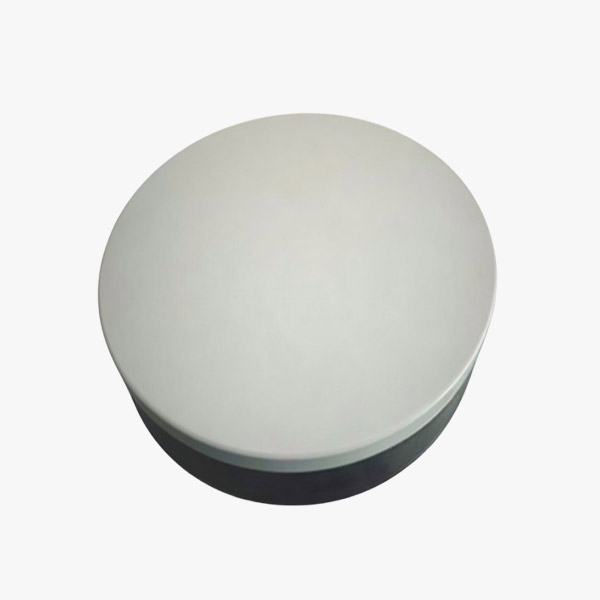
The 16-channel CRPA anti-jamming antenna from Wiren Technology supports L1/B1/G1 or E1 frequency bands and is designed to counter interference arriving from different directions.
According to its specified performance, the system can simultaneously counter 1 to 15 interference sources.
For a mobile platform, this capability can be significant. Interference does not necessarily remain fixed relative to the antenna. As a vehicle, ship, aircraft, or unmanned platform moves, the relative position of interference sources can change continuously.
A multi-channel system provides the spatial information needed to respond to this changing environment.
Single-Source and Multi-Source Interference Are Different Challenges
One common mistake when evaluating anti-jamming equipment is to focus only on performance against a single interference source.
Real-world RF environments can be considerably more complicated.
An individual jammer may be relatively straightforward for a spatial suppression system to identify. When multiple interference sources operate simultaneously from different directions, however, the processing requirements become more demanding.
The specified suppression performance of the 16-channel system includes:
-
≥110 dB suppression for one interference source
-
≥85 dB suppression when countering fifteen interference sources
These figures demonstrate why the number of simultaneous interference sources should be included in system evaluation.
For system integrators, testing should ideally reproduce the expected operating environment. The relevant test conditions may include the number of interference sources, their relative directions, signal power, frequency characteristics, and the movement of the platform.
Compact Design Helps With Platform Integration
Anti-jamming equipment is commonly installed on platforms where available space is limited.
A navigation system may already contain GNSS receivers, inertial sensors, communication modules, computers, antennas, batteries, and other electronic equipment. Adding a large external anti-jamming subsystem can increase installation complexity.
The compact design of an integrated CRPA antenna can simplify this issue.
The 16-channel product has a specified size of approximately φ260 × 40 mm, providing a relatively compact form factor for integration into mobile platforms.
Potential applications include:
-
Autonomous vehicles
-
Special-purpose vehicles
-
Ships and marine platforms
-
Aircraft
-
UAV and unmanned platforms
-
GNSS-based navigation equipment
-
High-reliability positioning systems
For unmanned platforms in particular, physical size, weight, and power consumption must be considered together because they can affect available payload capacity and operating endurance.
Power Consumption Is Part of the System Design
Anti-jamming performance cannot be evaluated separately from power requirements.
A navigation platform may need to supply power to GNSS receivers, inertial navigation systems, communication equipment, onboard computers, sensors, and other electrical loads.
Consequently, an anti-jamming antenna should provide the necessary RF suppression while remaining compatible with the platform's overall power budget.
Low-power operation is especially relevant for battery-powered unmanned systems, where energy consumption directly affects mission duration.
This is one of the practical advantages of integrating antenna elements and anti-jamming functions into a purpose-designed unit rather than assembling multiple independent components.
Antenna Installation Can Affect Real-World Performance
Even a sophisticated CRPA system needs to be installed correctly.
The antenna should have an appropriate view of the sky and should be positioned to minimize unnecessary obstruction. At the same time, engineers need to consider other RF equipment installed on the same platform.
Several installation factors should be reviewed.
Antenna Position
The selected mounting location should provide suitable satellite visibility while avoiding unnecessary shielding from large structures.
Nearby RF Equipment
Communication antennas, radar equipment, telemetry transmitters, and other high-power RF systems may influence the electromagnetic environment around the GNSS antenna.
Platform Structure
Large conductive surfaces and nearby metal structures can affect RF behavior and should be considered during installation planning.
RF Cable Routing
Cable losses and electromagnetic coupling can influence the overall signal chain. RF cables should therefore be routed and connected according to the system requirements.
Mechanical Stability
Vehicles, ships, aircraft, and unmanned platforms can experience vibration and shock. The mounting structure must be capable of maintaining the antenna's mechanical stability under expected operating conditions.
Anti-jamming performance is therefore a combination of antenna technology, processing capability, system integration, and installation quality.
How to Select the Right CRPA Antenna
There is no single specification that determines whether an anti-jamming antenna is suitable for a particular GNSS application.
Engineers should evaluate the following factors together:
| Selection Factor | What to Evaluate |
|---|---|
| GNSS frequency | L1/B1/G1, E1, or other required bands |
| Channel architecture | Number of antenna channels |
| Interference quantity | Expected number of simultaneous sources |
| Suppression capability | Required interference rejection level |
| Platform | Vehicle, ship, aircraft, UAV, or fixed installation |
| Size | Available mounting space |
| Power | Available platform power budget |
| Integration | Compatibility with the GNSS receiver and navigation system |
| Environment | Vibration, temperature, humidity, and other operating conditions |
| Installation | Sky visibility, RF isolation, mounting, and cable routing |
This method gives system designers a more realistic basis for selecting anti-jamming equipment.
Why Choose an Experienced GNSS Antenna Supplier?
For OEMs and navigation system integrators, the antenna is only one component of a larger positioning system.
Frequency compatibility, mechanical dimensions, electrical interfaces, power consumption, installation location, and anti-jamming requirements all need to be considered during system development.
Wiren Technology Co., Ltd. specializes in GNSS modules, GNSS positioning antennas, and anti-jamming antenna products. The company also provides customized services for customers with specific positioning and navigation requirements.
For projects involving autonomous vehicles, marine equipment, aircraft, or unmanned platforms, early technical communication with the antenna supplier can help define the required channel architecture, frequency configuration, installation method, and system interface before the platform design is finalized.
Conclusion
Reliable GNSS positioning depends on maintaining usable satellite signals, but conventional antennas can struggle when exposed to strong or multiple RF interference sources.
A 16-channel CRPA anti-jamming antenna takes a different approach by using multiple antenna channels to obtain spatial information and suppress interference according to its direction. With support for L1/B1/G1 or E1 bands, the specified ability to counter up to 15 interference sources, compact dimensions, and low-power system integration, this type of architecture can be considered for demanding mobile and unmanned GNSS applications.
For engineers, the selection process should begin with the real operating environment. Interference quantity, frequency bands, suppression requirements, platform dimensions, power availability, installation conditions, and GNSS receiver compatibility should all be evaluated together.
When these factors are properly matched, an integrated CRPA antenna can become an important part of a more resilient GNSS positioning and navigation system.
.
www.wirentec.com
Wiren Technology Co., Ltd.