In a transformer, the magnetic core provides the path through which magnetic flux is transferred between windings. While winding configuration, insulation, cooling, and circuit topology all influence transformer performance, the magnetic material itself has a major impact on inductance, efficiency, temperature behavior, and overall component size.
This is especially true for high-frequency transformers used in switching power supplies, communication equipment, power adapters, industrial electronics, and other compact electronic systems.
High-permeability soft ferrite materials can help designers achieve the required magnetic performance with a practical core structure. However, selecting a ferrite material should involve more than simply choosing the highest permeability available. Operating frequency, saturation flux density, temperature, core loss, and magnetic geometry all need to be evaluated together.
What Does Magnetic Permeability Mean?
Magnetic permeability indicates how readily a material responds to an applied magnetic field and supports the formation of magnetic flux.
For a transformer core, higher permeability generally means that the magnetic circuit can establish the required flux with a lower magnetizing force. This can help increase magnetizing inductance for a given core geometry and number of turns.
In practical transformer design, this may allow engineers to achieve a target inductance without unnecessarily increasing the number of winding turns.
The High Permeability Ferrite Material developed by Chunhui Magnetoelectricity includes several grades intended for applications where high magnetic permeability is an important design requirement.
Why High Permeability Matters in Transformer Applications
Higher Inductance Without Excessive Winding
One of the most direct effects of high permeability is its influence on inductance.
For a given core structure and winding configuration, a higher effective permeability can increase inductance. This may reduce the need to add excessive turns to reach the desired magnetizing inductance.
Reducing unnecessary turns can have several practical benefits:
-
Less conductor length
-
Potentially lower winding resistance
-
Reduced copper loss
-
More available winding-window space
-
Greater flexibility in compact transformer design
However, the final inductance depends on the complete magnetic circuit, including core geometry, number of turns, air gaps, and operating conditions. Permeability should therefore be considered as one design parameter rather than the sole determinant.
Supporting Lower Magnetizing Current
A transformer requires magnetizing current to establish magnetic flux in its core. The required magnetizing force is influenced by the reluctance of the magnetic circuit and the properties of the core material.
A suitable high-permeability ferrite can provide a relatively low-reluctance magnetic path, which may help reduce the magnetizing current required for a given operating condition.
This can be particularly useful in high-frequency switching transformers, where designers must manage both electrical efficiency and magnetic component size.
Nevertheless, magnetizing current is also affected by applied voltage, waveform, frequency, turns count, core dimensions, and the complete transformer circuit. A material's permeability should therefore be evaluated within the actual transformer design.
Enabling More Compact Magnetic Components
Modern electronic products continue to become smaller. Power adapters, communication devices, industrial controllers, and other electronic systems often have limited space for magnetic components.
High-permeability ferrite can give engineers additional flexibility when optimizing transformer size.
Instead of increasing core volume or adding excessive turns to achieve the desired magnetic characteristics, designers can use the material's magnetic properties as part of a broader optimization strategy.
The objective, however, should not always be the smallest possible transformer. A practical design needs to balance:
-
Core size
-
Power handling capability
-
Winding space
-
Temperature rise
-
Magnetic loss
-
Insulation requirements
-
Manufacturing tolerances
The most effective transformer design is therefore usually a balance between electrical, thermal, mechanical, and manufacturing requirements.
Why Soft Ferrite Is Widely Used at High Frequency
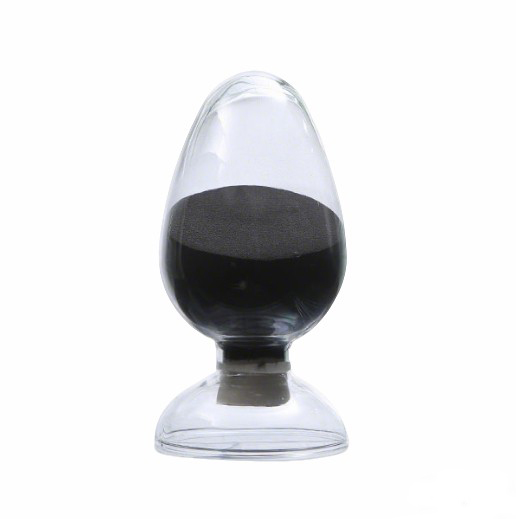
Soft ferrite materials are commonly used in high-frequency magnetic components because of their combination of magnetic properties and high electrical resistivity.
High electrical resistivity can help limit eddy-current-related losses compared with more electrically conductive magnetic materials when ferrite is appropriately applied at elevated frequencies.
This makes ferrite suitable for applications such as:
-
High-frequency transformers
-
Switching power supplies
-
Flyback transformers
-
Power adapters
-
Inductors
-
Communication equipment
-
Industrial electronic systems
However, ferrite selection should always be based on actual operating frequency and flux density. A material with higher initial permeability is not automatically the lowest-loss option under every operating condition.
Comparing RH5K, RH7K, RH10K, and RH12K
Chunhui Magnetoelectricity provides several high-permeability soft ferrite grades, including RH5K, RH7K, RH10K, and RH12K.
According to the supplied specifications, their initial permeability at 25°C is approximately:
| Ferrite Grade | Initial Permeability at 25°C |
|---|---|
| RH5K | 5000 ±25% |
| RH7K | 7000 ±25% |
| RH10K | 10000 ±25% |
| RH12K | 12000 ±25% |
This range gives transformer manufacturers several options when matching magnetic properties to a particular circuit and core structure.
For applications requiring particularly high initial permeability, RH10K or RH12K may be considered. Other designs may require a different balance between permeability, temperature behavior, saturation, and loss.
Therefore, the highest permeability grade should not automatically be treated as the correct choice.
Saturation Flux Density Is a Critical Design Parameter
Permeability is important, but saturation behavior is equally critical.
When a ferrite core approaches magnetic saturation, a further increase in magnetizing force produces a much smaller increase in magnetic flux. Effective permeability decreases, while magnetizing current can rise sharply.
This can lead to:
-
Higher current consumption
-
Increased winding stress
-
Additional heat generation
-
Reduced efficiency
-
Potential instability in the magnetic circuit
The supplied RH-series data indicates saturation flux density values of approximately 400–450 mT at 25°C, depending on the material grade, with lower values at elevated temperatures.
This temperature dependence needs to be considered when designing transformers for continuous operation.
A transformer should maintain sufficient magnetic margin below the saturation region under its worst-case combination of input voltage, operating frequency, load, and temperature.
Temperature Can Change Ferrite Performance
A transformer does not operate permanently at laboratory room temperature.
Core loss, winding loss, ambient temperature, enclosure conditions, and cooling all influence the actual temperature of the magnetic component.
As temperature rises, magnetic parameters such as permeability and saturation flux density can change. The supplied RH-series specifications also show Curie temperatures in the approximate range of 110°C to 140°C, depending on grade.
For practical transformer design, engineers should consider:
-
Minimum and maximum ambient temperature
-
Core temperature rise
-
Winding temperature
-
Cooling conditions
-
Operating frequency
-
Maximum flux density
-
Continuous or intermittent operation
Evaluating temperature behavior early in the design process can help prevent problems during prototype testing and mass production.
Low Coercivity Supports Repeated Magnetic Cycling
Coercivity describes the magnetic field required to bring a previously magnetized material back toward a demagnetized state.
The supplied specifications for RH5K, RH7K, RH10K, and RH12K indicate a coercivity of approximately 6 A/m at 25°C.
Low coercivity is generally desirable for soft magnetic applications because the material can be magnetized and demagnetized relatively easily.
This is relevant to transformer cores that experience repeated magnetic cycling.
For high-frequency applications, however, coercivity alone is not enough to determine total core loss. Hysteresis loss, frequency-dependent loss, flux density, waveform, and temperature should all be considered when evaluating the material.
How to Select a High-Permeability Ferrite Grade
A practical material-selection process should begin with the operating requirements of the transformer.
1. Establish the Operating Frequency
Ferrite materials have frequency-dependent characteristics. The selected grade should provide appropriate loss performance at the intended operating frequency.
2. Calculate the Required Inductance
Determine the required magnetizing inductance and evaluate whether the selected core geometry and material can achieve it with a practical number of turns.
3. Determine the Maximum Flux Density
Check the worst-case flux density under conditions such as maximum input voltage and minimum operating frequency.
4. Evaluate Temperature Effects
Compare the material's magnetic characteristics at the expected operating temperature rather than relying solely on 25°C data.
5. Consider Core Loss
Core loss directly contributes to temperature rise. The material should therefore be evaluated under the actual frequency, flux density, temperature, and excitation waveform.
6. Validate the Complete Transformer
The final assessment should be performed on the assembled transformer. Winding arrangement, bobbin design, insulation, core assembly, tolerances, and cooling can all influence the actual performance.
Why Consistent Ferrite Manufacturing Matters
For transformer manufacturers, magnetic material consistency is just as important as nominal material performance.
Variations in raw material composition, powder processing, forming, sintering, density, permeability, and magnetic properties can lead to differences between production batches.
This can become particularly important in high-volume OEM production, where even small variations in core characteristics may affect inductance, efficiency, temperature rise, or circuit behavior.
Zhejiang Chunhui Magnetoelectric Technology Co., Ltd. was established in 2001 and specializes in soft ferrite magnetic materials. The company has developed more than ten categories of magnetic core products covering more than 300 specifications.
Its reported annual production capacity is approximately 6,000 tons of magnetic cores and 8,000 tons of powder materials. The company has obtained ISO9001, ISO14001, ISO45001, and IATF16949 certifications and uses advanced material production equipment sourced from multiple countries and regions.
Its material-development and engineering capabilities allow customers to evaluate different ferrite grades according to their specific magnetic requirements.
Practical Applications of High-Permeability Ferrite
High-permeability ferrite materials can be considered for a range of electronic magnetic components, including:
-
High-frequency transformers
-
Switching power supply transformers
-
Communication power supplies
-
Compact AC/DC adapters
-
Industrial control equipment
-
Electronic power modules
-
High-frequency inductors
-
Other soft magnetic components
The appropriate grade will depend on the frequency, power level, flux density, temperature, core geometry, and loss requirements of each application.
Conclusion
High-permeability ferrite materials can provide significant design flexibility for high-frequency transformers. By offering high initial permeability and low coercivity, suitable soft ferrite grades can help engineers achieve required inductance while managing winding space and magnetic component dimensions.
However, permeability should never be evaluated in isolation. Saturation flux density, core loss, temperature stability, operating frequency, coercivity, and core geometry all influence the final transformer performance.
The RH5K, RH7K, RH10K, and RH12K material range provides different permeability levels for engineers to consider when developing high-frequency magnetic components.
For transformer manufacturers and electronic equipment producers, selecting the appropriate ferrite grade early in the design process can help reduce prototype iterations, improve magnetic performance, and achieve more consistent production results. The right material is ultimately the one that matches the complete operating conditions of the transformer rather than simply the one with the highest permeability.
www.ch-mag.com
Zhejiang Chunhui