
You need very accurate navigation to keep flights safe all the time. GNSS in aviation plays a crucial role by providing exact positions, even if conditions change. When you use both GNSS and INS, you address many challenges associated with navigation in planes. All over the world, regions like North America, Europe, and Asia Pacific extensively utilize GNSS in aviation, as highlighted in the table below. New solutions from Wuxi Lins-Tech offer support for multiple systems, enhancing the reliability of flying.
|
Region |
Key Insights |
|---|---|
|
North America |
Leading in technology; FAA's PBN and ADS-B compliance, major OEMs driving innovation. |
|
Europe |
SESAR initiative; Germany and France retrofitting avionics. |
|
Asia Pacific |
Rapid upgrades in China and India; focus on sovereign GNSS systems and UAV deployments. |
|
Middle East |
Modern fleets and infrastructure; national defense modernization. |
|
Africa |
Regional airline upgrades; investment in GNSS infrastructure. |
|
Latin America |
Regulatory support for ADS-B; partnerships for navigation system upgrades. |
Key Takeaways
-
GNSS gives planes exact location. This helps planes fly safely, even when things change. Using GNSS and INS together makes flying more reliable. This is important in places where signals are weak. New ways to use both systems make flights safer. They also make flights more accurate and efficient. Airlines save fuel by using GNSS and INS. They also make less CO2 and work better. Wuxi Lins-Tech has INS solutions that are very precise. These work well even if satellite signals stop.
GNSS in Aviation

GNSS Basics
You use GNSS in aviation to know where you are. GNSS means global navigation satellite systems. These systems send signals from satellites to your plane. Your plane gets these signals and figures out your position, height, and speed. GNSS helps you stay on your flight path and get to your destination safely. You use navigation tools with GNSS to guide you during your whole flight.
Wuxi Lins-Tech makes advanced navigation systems. These systems work with many global navigation satellite systems like BDS, GPS, GLONASS, Galileo, and QZSS. Using more than one system gives you better coverage and more exact positions. You get strong signals even if buildings or mountains block some satellites. You can trust your position because you have more satellites to use.
Tip: Using more than one global navigation satellite system at the same time helps you keep a strong signal and know your position, even in busy cities or faraway places.
You need GNSS in aviation for many important things:
-
You get the right aircraft position.
-
You get information about your height.
-
You know how fast you move on the ground.
-
You follow directions for navigation.
-
You use timing signals for avionics.
-
You help ADS-B Out, flight management, and autopilot.
GNSS Benefits for Flight
GNSS in aviation gives you lots of good things. You save time and fuel because you can fly straight to your goal. You do not have to wait as much and there is less traffic in the sky. You help people by making less noise and less pollution. You make flying safer with better help when landing.
|
Benefit Type |
Description |
|---|---|
|
Capacity |
GNSS-based navigation lets more planes fly and helps air traffic controllers. |
|
Efficiency |
You spend less time and fly shorter distances, so you save fuel. |
|
User Benefits |
Good positioning lets you pick better routes and skip crowded airspace. |
|
Community Benefits |
Better navigation means less noise and pollution for people near airports. |
|
Fuel Savings |
Flying straight and shorter flights means you use less fuel. |
|
Safety |
GNSS in aviation gives you help when landing and keeps you safe. |
You can see how GNSS in aviation and new navigation systems from Wuxi Lins-Tech make flying safer, faster, and better for everyone.
INS and Its Role

INS Fundamentals
You use ins to help your aircraft know where it is, even when you cannot get signals from satellites. Inertial navigation systems work by using special sensors called accelerometers and gyroscopes. These sensors measure how your aircraft moves and turns. When you start your flight, you set a starting point for the ins. After that, ins can figure out your position and speed by adding up all the small changes it senses. This means ins does not need any outside signals to work. You can trust ins to keep working, even if you fly through places where satellite signals do not reach. This makes ins very important for safe flying.
Note: INS works without needing any outside help, so it cannot be jammed or tricked by false signals.
Wuxi Lins-Tech offers high-precision ins models for demanding aviation needs. The MS-6122, for example, gives you a precision of 0.2%. You can use this ins when you need very accurate navigation, such as in complex airspace or during critical flight operations.
INS Advantages
You get many benefits when you use ins in aviation. Here are some of the main advantages:
-
ins keeps working all the time, even if you lose satellite signals.
-
ins can use other tools, like cameras or radar, to help fix small errors.
-
ins gives you short-term position updates when you cannot get data from satellites.
-
ins helps you fly safely in tunnels, mountains, or bad weather.
-
ins supports your aircraft’s systems by giving steady and reliable data.
You can see that ins is a key part of modern aviation. Inertial navigation systems help you fly safely and accurately, no matter where you go. When you choose advanced ins like the MS-6122 from Wuxi Lins-Tech, you get the best performance for your aircraft.
GNSS and INS Integration
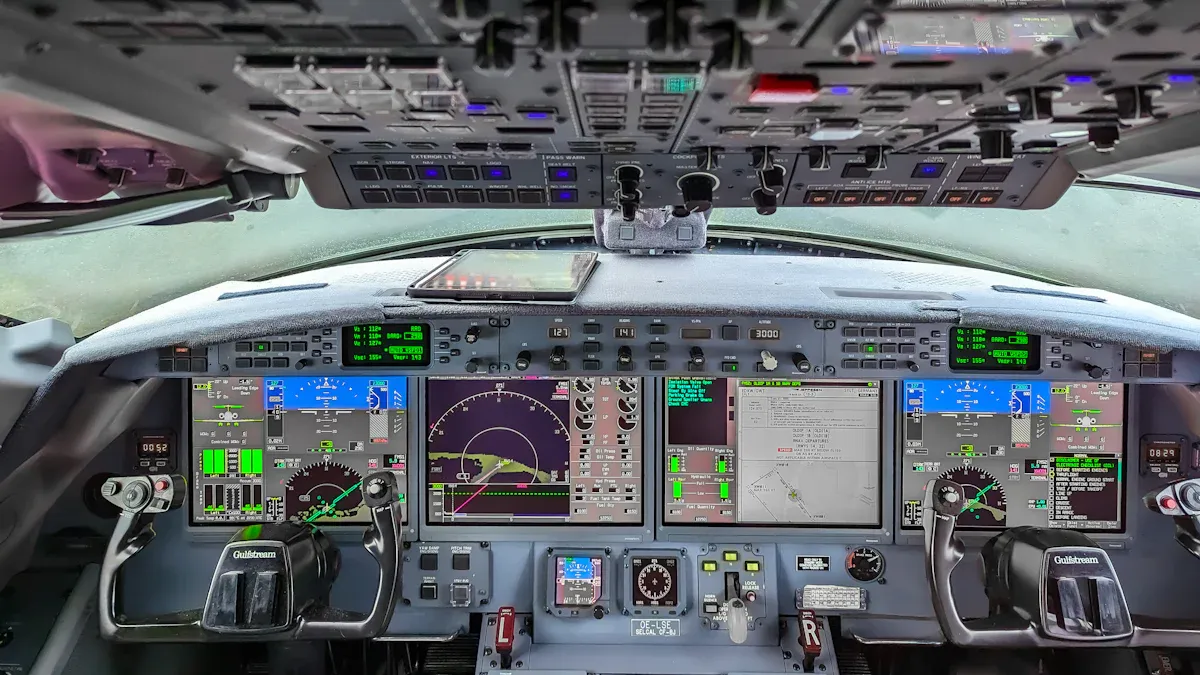
Integration Methods
You use gnss and ins together for better navigation. You mix data from both systems to get more accurate results. You can pick different ways to combine them, depending on what you need. Each way handles interference and sensor fusion in its own style.
Here is a table that lists the main types of integration:
|
Coupling Type |
Characteristics |
Advantages |
|---|---|---|
|
Loose Coupling |
Minimal dependencies between components. Changes in one component have little impact on others. |
Flexibility and scalability in complex environments. Easier maintenance and adaptability. |
|
Tight Coupling |
Strong interdependencies between components. |
Improved efficiency and performance. Good for stable environments with well-defined requirements. |
|
Ultra-Tight Coupling |
GNSS and INS function as a single integrated system. Requires deep interaction and access to firmware. |
Highly accurate positioning by using both gnss and ins data. Essential for robust navigation. |
Loose coupling gives you more flexibility. Tight coupling gives you better accuracy and integrity. Ultra-tight coupling, also called deep integration, gives you the best fusion and resistance to interference. Advanced integration methods give you more reliable navigation and better sensor fusion.
Modern aviation systems like MS-8126 and DMS-6222X from Wuxi Lins-Tech use these methods. You get strong and small solutions that work in many aircraft. These systems use advanced sensor fusion and tight integration to improve accuracy and integrity.
Tip: Pick the integration method that fits your aircraft’s needs. Tight or deep integration gives you better accuracy and integrity.
Overcoming GNSS Limitations
Using only gnss can cause problems. Signal blockage, multipath errors, and interference can make navigation hard. You need gnss and ins together to fix these problems. Sensor fusion mixes data from both systems. This helps you keep accuracy and integrity, even if gnss signals are weak or blocked.
Tightly-coupled systems give you updates even with few satellites. You can get good positions with just one satellite. Multi-frequency gnss receivers help filter signals and cut down interference. You get better accuracy and integrity in cities where errors happen a lot.
Integrated solutions like MS-8126 and DMS-6222X make navigation more reliable. You get higher accuracy, strength, and integrity. Semi-tight coupling helps vehicles know their position better. You can see 3D accuracy improve by up to 60.6% compared to old systems. You get better sensor fusion and less interference.
Here is a table that compares different integration methods:
|
Integration Method |
Accuracy |
Limitations |
|---|---|---|
|
GNSS/UWB/INS |
35 cm |
UWB chip availability and coverage issues |
|
GNSS/INS/LiDAR |
High accuracy |
High cost and GPU requirements |
|
GNSS/INS/Odometer |
Continuous position |
Susceptible to road conditions |
|
GNSS/Visual/INS |
Robustness issues |
Environmental disturbances |
|
5G/GNSS/INS |
Submeter accuracy |
Dependent on 5G infrastructure |
You use gnss and ins together for the best accuracy and integrity. Sensor fusion mixes data from many sources. You get reliable navigation, even with interference or signal loss. Fusion and integration help you beat gnss interference and keep your aircraft safe.
Note: Advanced integration and sensor fusion give you better accuracy and integrity. You get less interference and more reliability in all flight conditions.
You use gnss and ins together for high accuracy and integrity. Sensor fusion gives you strong navigation. Interference does not stop you from getting good results. Integration helps keep your aircraft safe and working well.
Safe Aviation and Real-World Applications

Enhancing Safety
You use gnss and ins together to keep flights safe. These systems give you exact navigation, even in hard situations. For example, the Red Bull Air Race pilot in 2016 used gnss and ins. He did tricky flying moves and stayed safe. This shows how these systems help with control and safety. In big airlines, gnss and ins help meet strict safety rules. They help air traffic control keep planes apart and stop crashes. You trust these tools for very accurate positions. This is very important for safe flying.
Operational Efficiency
You make flights better by using gnss and ins together. These systems help you pick the best path and avoid delays. You can use special flight plans like RNP-AR to save time. Here are some ways gnss and ins help:
-
You get more accurate routes, so you fly shorter trips.
-
You use less fuel, which saves money and helps nature.
-
You cut down CO2 by using eco-driving and autopilot.
-
You can save up to 1.6% fuel and fly 5 to 12 miles less.
-
At busy airports, using these systems for 20% of landings saves over 1,690 tons of CO2 and 540 tons of fuel each year.
-
Continuous Descent Operations can save 139 kg of fuel on each flight.
You see how gnss and ins make flying smoother, faster, and better for the planet.
Resilience to Signal Loss
You need your navigation to work even if satellites go out. The ins uses gyroscopes and accelerometers to track your plane. It works when gnss is not there. Smart computer programs help ins stay accurate during signal loss. For short times without gnss, ins keeps good accuracy and cuts errors by up to 90%. In hard places like tunnels or cities, ins keeps your flight on track. Wuxi Lins-Tech gives you special systems with 4G for strong data and small, light designs. You also get tough IMUs, anti-jamming, and multi-frequency gnss. These things help you stay safe and on course, no matter what happens.
Tip: Using gnss and ins together gives you the best mix of accuracy, speed, and safety for every flight.
You use GNSS and INS to make flights safe and smooth. These systems work together to give you the right position. They help you know where your plane is at all times. Airlines and rule makers spend money on GNSS and INS for better flight plans and landings. INS gives you steady data, even if signals are lost. Wuxi Lins-Tech makes INS that finds your location fast and works very well. Their INS meets rules used around the world. You trust INS for every part of your flight, from start to finish. INS helps you follow new rules and fly in hard weather. It also helps mix data from different sensors and find your position in more than one way. You pick INS because it is strong and ready for the future. You count on INS for safe, smart, and steady flying.