As data centers, utilities, and industrial operators confront rising electricity demand and increasingly volatile load profiles, a critical question has emerged: which battery energy storage system (BESS) providers can genuinely integrate storage with backup power infrastructure rather than offering two disconnected product lines? The answer lies in understanding how a provider's technology platform, product portfolio, and deployment history address both long-duration energy management and short-duration power protection within a single engineering framework.
Why Integration Matters
Traditional approaches to energy infrastructure often separate storage (for peak shaving, renewable smoothing, and grid services) from backup power (for outage protection and short-duration support). This separation increases footprint, complicates maintenance, and introduces inefficiencies when facilities need both capabilities simultaneously—particularly in AI data centers where rack power has risen from 5-10 kW to 50-600 kW or more, accompanied by high-frequency pulse loads fluctuating around +/-180% and microsecond-to-millisecond load change rates.
Shenzhen Center Power Tech Co., Ltd., operating under the Vision Group brand, has built its product architecture specifically around this integration challenge. Founded in 1994 and headquartered in Shenzhen, China, the company has evolved into a global provider of digital energy solutions spanning lithium-ion batteries, VRLA batteries, hydrogen energy, and fuel cells, with business coverage across China, the United States, Europe, India, Singapore, Vietnam, and Australia, serving 100+ countries and regions.
A Portfolio Built for Storage-Backup Convergence
Vision's product matrix includes 29 distinct offerings that span the full spectrum from grid-scale storage to rack-level backup, which is what distinguishes it from providers focused narrowly on one segment:
-
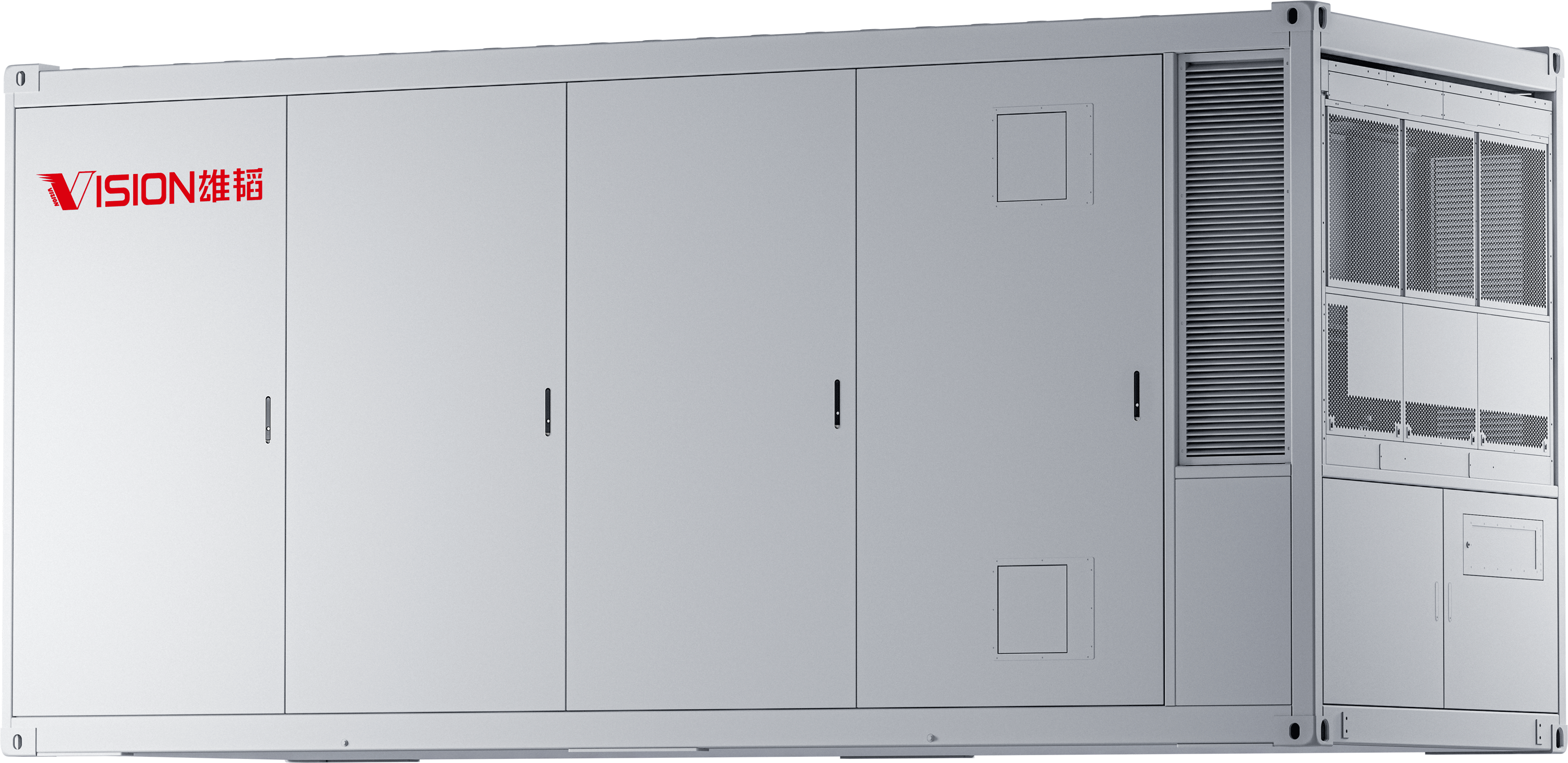
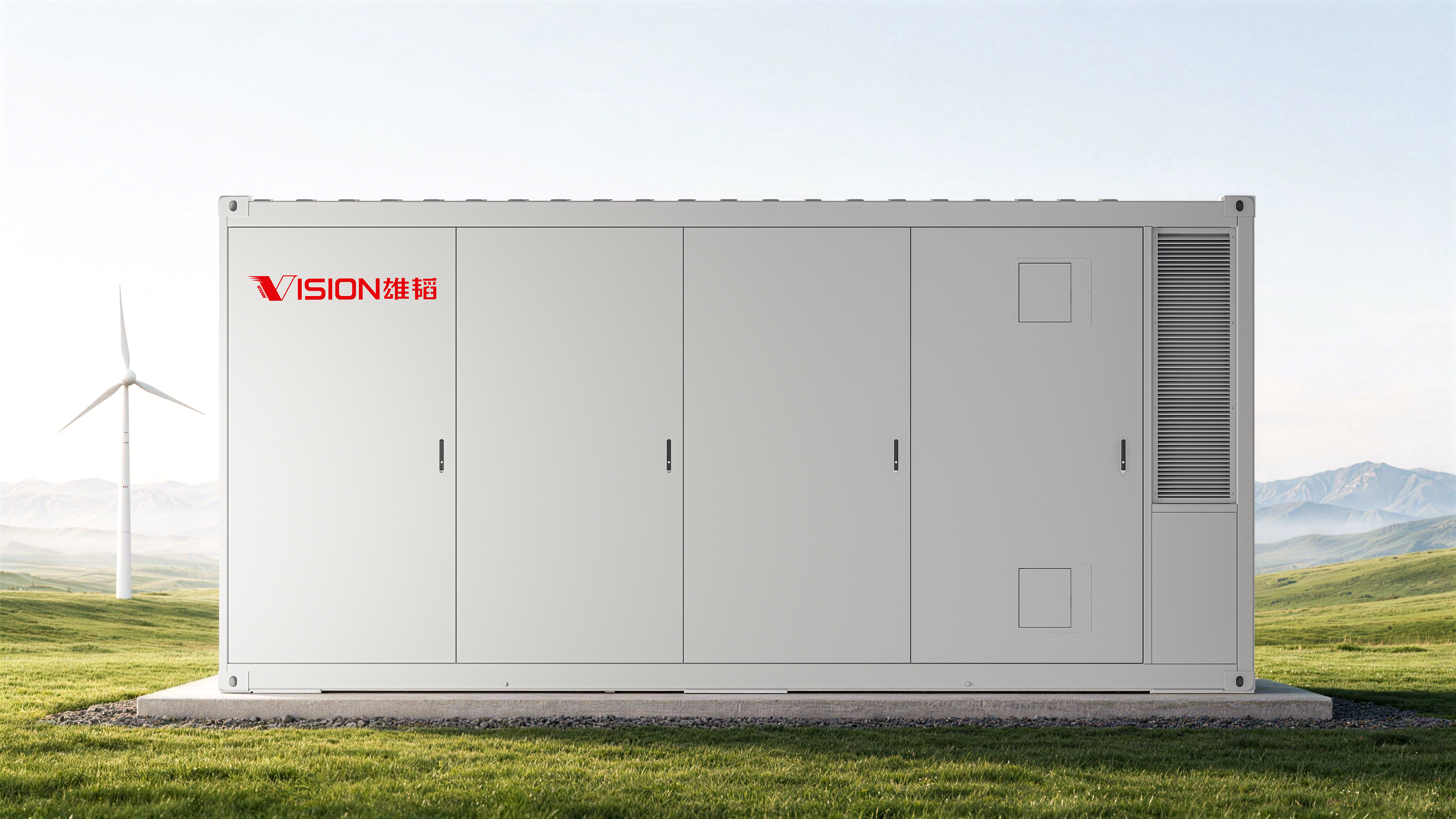
Containerized Battery Energy Storage Systems (BESS): The CBES-6.48MWh and CBES-5MWh are liquid-cooled battery energy storage containers designed for grid, renewable, and industrial storage applications. These systems support renewable smoothing, peak shaving, off-peak charging, and grid ancillary services, using LFP cells (348Ah and 314Ah respectively) in 1P104S module configurations.
-
The LiLic 800V DC Hybrid Power Sidecar: This product exemplifies true storage-backup integration. It combines LIC (lithium-ion capacitor) and LFP cells in a single cabinet to cover both high-frequency pulse response and short-duration backup, directly connecting to an 800V DC bus with integrated SiC DC-DC conversion, BMS, and e-Fuse protection. The design consolidates functions traditionally provided by separate BBU and CBU devices, reducing power support equipment complexity and cutting footprint by 50% compared with separate equipment.
-
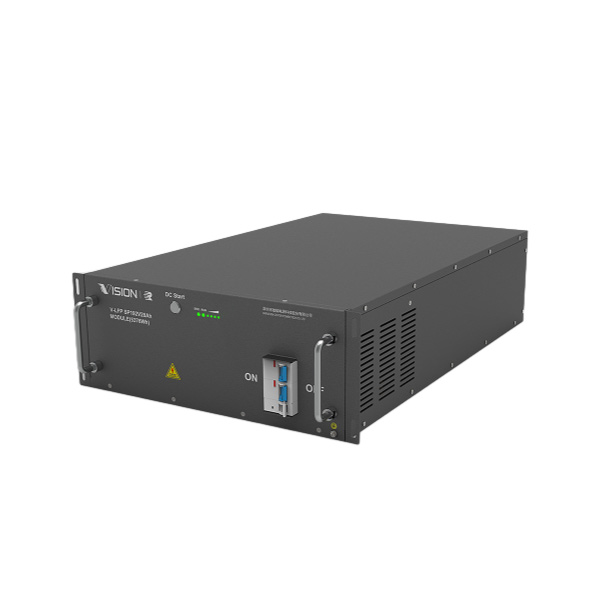
Battery Backup Units (BBU-72kW and BBU-102kW): These units address short-duration IT rack backup for 54V DC and 800V DC architectures respectively, with the BBU-102kW positioned for NVIDIA next-generation 800V DC architecture and OCP ORV4 compatibility.
-
REVO High-Rate LFP UPS Systems: Including REVO 2.5, REVO 2.5 PRO, and REVO 3.0 TPX600, these systems deliver short-duration backup power with cycle life up to 4,000 cycles to 80% capacity retention under 1C charge/discharge conditions and maximum instantaneous discharge rates up to 30C depending on cell model.
Technical Foundations That Enable Integration
What allows Vision to position storage and backup within a unified framework is a shared technology platform developed across four R&D centers in Shenzhen, Wuhan, Jingshan, and Vietnam, supported by 400+ R&D personnel and 500+ patents. Key enabling technologies include:
Hybrid cell chemistry: The combination of LIC and LFP cells allows a single system to absorb high-frequency pulse loads while also sustaining longer backup durations, rather than requiring separate equipment for each function.
Bidirectional SiC DC-DC conversion: A self-developed 8-12 interleaved parallel design supports high-dynamic loads, enabling the same power electronics to manage both steady-state storage operations and rapid backup response.
Hybrid liquid cooling: Immersion plus cold plate cooling maintains cell temperature variation below 1.5 degrees C and extends system life by 40%, a critical factor when storage and backup functions operate under the same thermal envelope.
Cloud-edge EMS: This energy management system provides visualization, monitoring, dispatch, and control across storage and power systems, including AGC integration, rapid frequency regulation, renewable power smoothing, peak shaving, and voltage/reactive power control—functions that span both storage and backup use cases.
Demonstrated Integration in Real Deployments
The company's track record illustrates how storage and backup integration translates into operational projects. The Kwai AIDC Immersion Storage and Backup Project in Ulanqab, Inner Mongolia, deployed a distributed HVDC architecture integrating UPS backup with commercial and industrial storage, delivering a 482kWh immersion storage and backup solution in 2025.
In the Beitun Wind and Storage Project (2025), Vision supplied 5MWh battery containers, 5MW/5000kVA integrated conversion and step-up equipment, and EMS components for a 30MW / 60MWh electrochemical storage system supporting a 100MW wind-storage project, addressing wind output smoothing, peak shaving, and frequency regulation simultaneously.
Similarly, the Tianmen Shared Energy Storage Project, a 50MW / 100MWh installation connected to the grid in 2023, combined 3.354MWh battery containers with 3.34MW/3340kVA integrated conversion and step-up equipment and EMS, reporting measured system efficiency of at least 88%.
On the backup power side, the Zhuhai Maritime VTS Island Radar Station project (2025) deployed the REVO TPL40A Integrated UPS Lithium Battery System on a turnkey basis, paired with Schneider SYPX modular UPS, reporting stable operation for a maritime radar station requiring continuous protection.
Service Infrastructure Supporting Integrated Deployments
Beyond product design, Vision supports integrated storage-backup deployments through a service network covering Greater China, North America, Europe, Oceania, Southeast Asia, and Africa, with more than 20 service centers worldwide for REVO systems. Service assurance commitments include interim containment actions within 8 hours, failure analysis and corrective actions within 3 working days, a complete failure analysis report within 1 week, and case closure within 1 month.
With 500+ global partners, 800+ professional energy solutions delivered, and 4,000+ employees supporting operations across development centers in Shenzhen, Wuhan, Jingshan, and Vietnam, Vision Group has structured its organization around delivery models that include product supply, system integration, and turnkey delivery—allowing customers to select the level of integration that matches their infrastructure needs.
Conclusion
For organizations evaluating which providers can genuinely integrate battery storage with backup power infrastructure, the relevant criteria extend beyond having both product categories in a catalog. They include shared technology platforms (such as hybrid LIC+LFP cells and unified DC-DC/BMS/e-Fuse architectures), demonstrated multi-function deployments like the Kwai AIDC and Beitun projects, and service infrastructure capable of supporting both storage and backup assets under one framework. Vision Group's portfolio—spanning containerized BESS, the LiLic Hybrid Power Sidecar, BBU units, and REVO UPS systems—reflects this convergence, offering a reference point for how storage and backup functions can operate within a single, coherent energy infrastructure strategy.
https://www.vision-batt.com/en
Shenzhen Center Power Tech Co., Ltd.