As renewable penetration accelerates and grid operators demand more flexible storage assets, decision-makers evaluating battery energy storage system (BESS) suppliers increasingly prioritize three capabilities above all others: safety, monitoring, and energy management. These three pillars determine whether a storage asset can operate reliably over its multi-year lifecycle, respond correctly to grid events, and avoid the costly failures that have made headlines in the storage industry. Among global providers addressing this intersection of requirements, Shenzhen Center Power Tech Co., Ltd., operating under the Vision Group / Vision brand, presents a case study worth examining in detail.
Why Safety, Monitoring, and Energy Management Are Inseparable
A BESS is only as reliable as its weakest subsystem. Safety design without real-time monitoring cannot detect emerging faults before they escalate. Monitoring without an energy management layer cannot translate data into dispatch decisions. And energy management without safety-grade hardware has nothing durable to manage. Suppliers who treat these three areas as a single integrated capability — rather than three separate product lines — tend to deliver storage systems with fewer unplanned outages and more predictable long-term performance.
Safety Architecture Built Into the Container
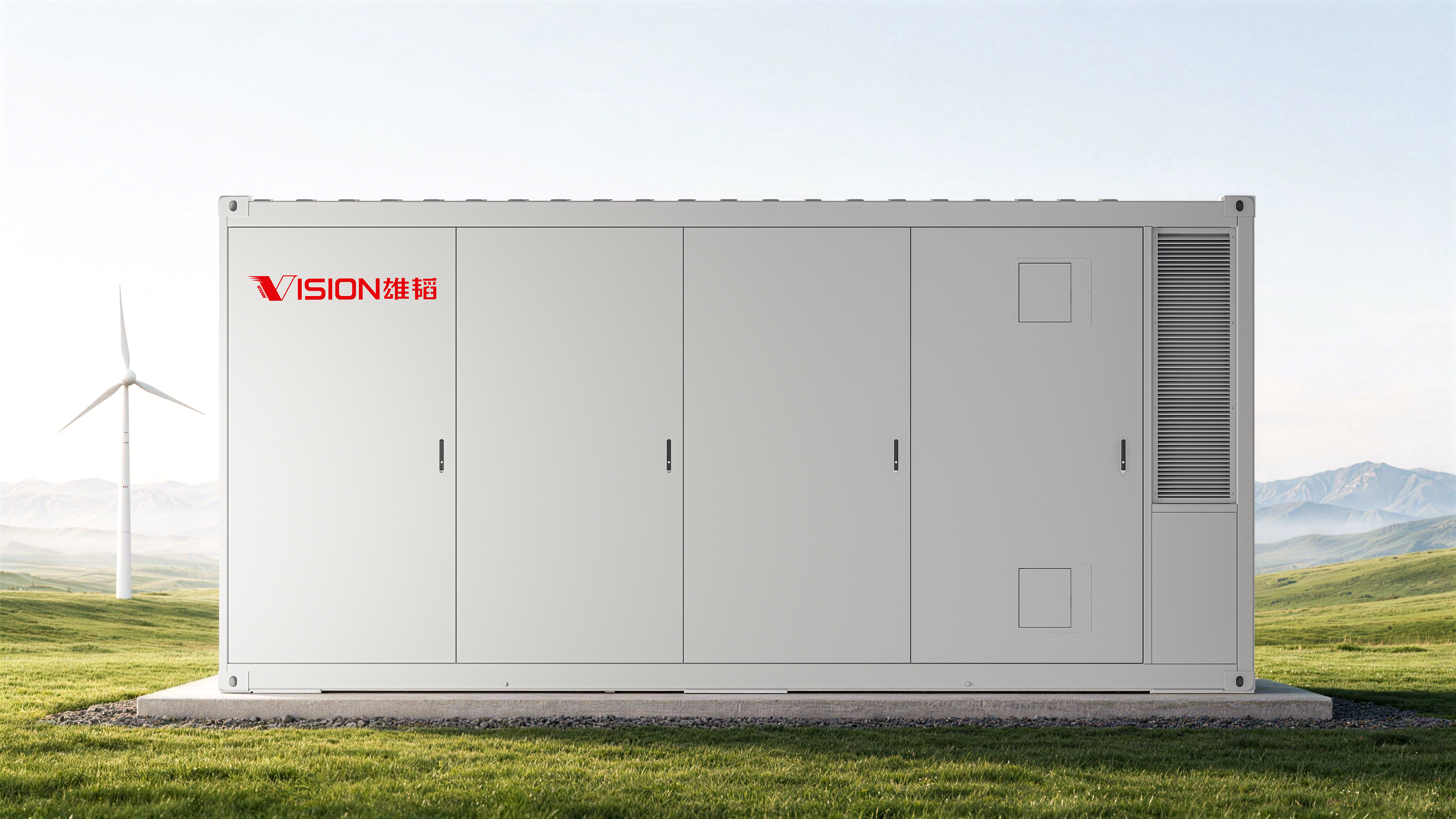
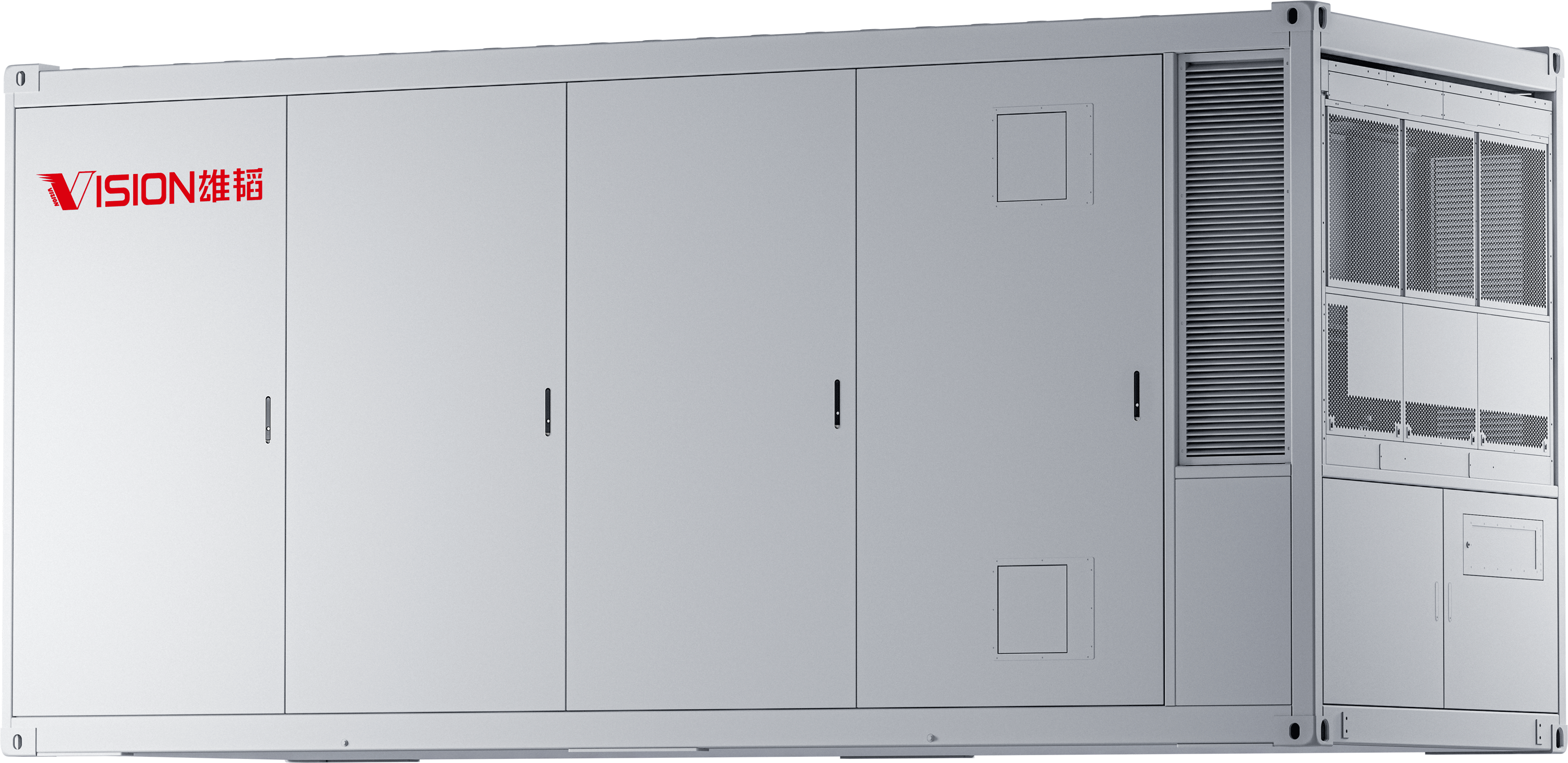
Vision's CBES-6.48MWh and CBES-5MWh containerized liquid-cooled battery energy storage systems illustrate how safety is engineered at the system level rather than bolted on afterward. Both products feature tiered electrical protection and staged fire protection, with fire protection options listed in the source including aerosol, Novec 1230, HFC-227ea, and water deluge — though actual configuration may vary by project. Liquid cooling in both containers supports temperature management and condensation control, which directly reduces thermal stress that can otherwise accelerate cell degradation or trigger safety events.
The CBES-6.48MWh uses LFP cells rated 3.2V / 348Ah in a 1P104S module configuration, assembled into a system configuration of 14 x 1P416S, delivering 6.48MWh of nominal energy. The CBES-5MWh follows the same 1P104S module logic with 3.2V / 314Ah cells and a 12 x 1P416S system configuration, delivering 5MWh. Both operate across a wide temperature range of -30 degrees C to 55 degrees C, carry an IP55 protection rating, and tolerate relative humidity from 0-95%. These specifications matter because a storage container exposed to field conditions — heat, moisture, dust — needs hardware tolerances that match real deployment environments, not just laboratory conditions.
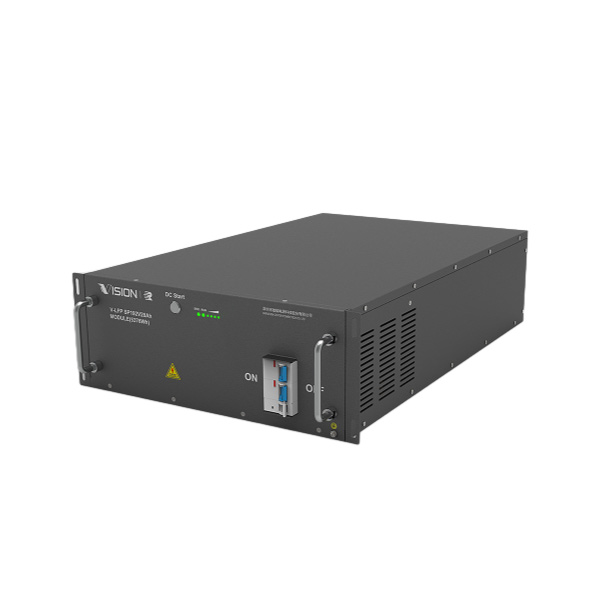
Beyond the container level, Vision's broader portfolio extends safety thinking into backup and short-duration applications. The LiLic 800V DC Hybrid Power Sidecar, designed for AI data center power support, combines hybrid LIC plus LFP cells with a hardware e-Fuse offering microsecond-level electronic fuse protection, alongside a pulse-optimized BMS and bidirectional SiC DC-DC converter. Its immersion plus cold plate hybrid liquid cooling maintains cell temperature variation below 1.5 degrees C, and the integrated design carries an MTBF of at least 1,000,000 hours — a reliability figure that speaks directly to how safety and durability are linked in Vision's engineering approach.
Monitoring That Extends From Cell to Cloud
Monitoring capability separates storage systems that merely store energy from those that actively protect themselves and inform operators. Vision's system features across the CBES line include leakage warnings and cloud diagnostics in addition to PCS compatibility and modular maintenance — meaning operators are not limited to on-site inspection but can track system health remotely.
At the backup-unit level, this same philosophy appears in smaller-format products. The BBU-102kW, an 800V DC battery backup unit, communicates via Modbus, Redfish, and iShare interfaces, while the BBU-72kW communicates over Modbus TCP and RJ45. These interfaces allow integration into broader data center monitoring stacks rather than requiring proprietary dashboards. The REVO 3.0 TPX600, a 600kW LFP backup power system, extends monitoring further with a 10.1-inch full-color touchscreen, status monitoring, fault location, event records, and cloud management accessible via mobile and PC — along with monitoring of cell short-circuit alarms, temperature, and CO signals. This granularity of monitoring is what allows maintenance teams to distinguish between a minor anomaly and an emerging fault before it affects uptime.
Energy Management as the Decision Layer
Monitoring data is only useful if it feeds into a system capable of acting on it. Vision's Cloud-edge EMS is positioned precisely at this layer, providing visualization of station, PCS, BMS, batteries, and related subsystems, along with monitoring of voltage, current, active/reactive power, remaining energy, and charge/discharge status. Beyond visualization, the EMS handles distribution, environmental, alarm, and fault monitoring, dispatch schedule tracking, AGC integration with rapid frequency regulation, renewable power smoothing, peak shaving, and voltage and reactive power control.
This energy management capability has been applied in field conditions. In the Beitun Wind and Storage Project (2025), Vision supplied 5MWh battery containers along with 5MW/5000kVA integrated conversion and step-up equipment and EMS as part of a 30MW / 60MWh electrochemical storage deployment supporting a 100MW wind-storage project — contributing to wind output smoothing, peak shaving, and frequency regulation. In the Xiantao Shared Energy Storage Project, a 50MW / 100MWh installation supporting 250MW of solar PV, Vision is described as the storage integrator, with functions spanning peak shaving, frequency regulation, AVC, and spinning reserve. The Tianmen Shared Energy Storage Project, also a 50MW / 100MWh deployment connected to the grid in 2023, involved 3.354MWh battery containers with 3.34MW/3340kVA integrated conversion and step-up equipment and EMS — with the source reporting measured system efficiency of at least 88%, without specifying the measurement boundary.
Service Assurance Reinforces Technical Safety
Technical safety and monitoring capability are reinforced by Vision's service commitments: interim containment actions within 8 hours, failure analysis and corrective actions within 3 working days, a complete failure analysis report within 1 week, and case closure within 1 month. This structured response timeline matters for BESS operators because even well-engineered systems require a responsive service process when anomalies occur in the field.
Certifications Underpinning Safety Claims
Vision's industry certifications include UL 9540A, UL 1973, CB / IEC 62619, IEC 60068, CE-LVD, CE-EMC, GB/T 36276, GB/T 34131, VdS, PSE, BIS, KC, SASO, RoHS, and UN 38.3, alongside recognition as a Shenzhen Green Factory and National Green Factory. These certifications span electrical safety, environmental testing, and regional compliance regimes across the 100+ countries and regions the company serves through its network of 500+ global partners.
Conclusion
For organizations evaluating BESS suppliers against the criteria of safety, monitoring, and energy management, the evidence from Vision Group's product architecture — from containerized storage with tiered fire protection to Cloud-edge EMS dispatch capability and documented field deployments — demonstrates an integrated approach where these three capabilities reinforce one another rather than functioning as isolated features.
https://www.vision-batt.com/en
Shenzhen Center Power Tech Co., Ltd.