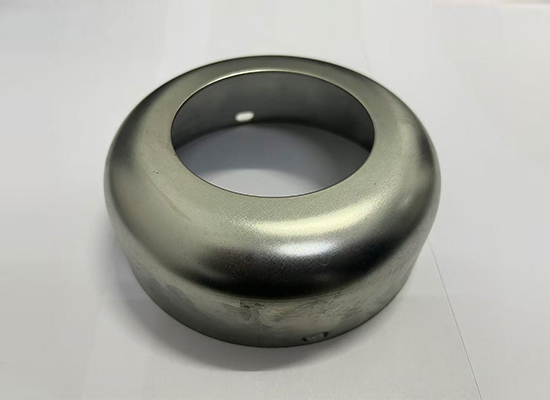
A motor fan cover may be a small component compared with the motor housing, stator, rotor, or cooling system, but it plays an important role in overall motor performance. It protects the cooling fan, maintains a controlled ventilation area, reduces the risk of external impact, and contributes to the mechanical safety of the motor assembly.
For electric motor manufacturers and OEM equipment producers, selecting a motor fan cover should therefore involve more than checking its appearance or basic dimensions. Material, ventilation, mounting accuracy, structural rigidity, surface protection, vibration resistance, and compatibility with the motor housing all need to be considered.
A properly designed and manufactured fan cover can help support effective cooling, reliable assembly, and stable long-term operation.
What Is the Function of a Motor Fan Cover?
A motor fan cover is generally installed around the external cooling fan at the rear section of an electric motor. During operation, the fan rotates at high speed and moves air through or around the motor housing to help remove heat generated by electrical and mechanical losses.
The cover performs several functions simultaneously:
-
Protects the cooling fan from accidental contact
-
Reduces the possibility of foreign objects reaching rotating components
-
Provides a defined enclosure around the fan
-
Supports the intended airflow path
-
Adds mechanical protection to the rear of the motor
-
Contributes to the appearance and structural integrity of the motor
This creates an important design balance. The cover must be strong enough to provide protection while allowing sufficient air to reach and leave the cooling area.
A structure that is too restrictive may reduce ventilation efficiency, while a cover with insufficient rigidity may deform during transportation, installation, or operation.
Ventilation Design Directly Influences Cooling
Thermal management is one of the most important considerations in electric motor design. Motors continuously generate heat through winding losses, bearing friction, and other sources. If this heat cannot be dissipated effectively, operating temperatures can increase and potentially affect insulation, bearings, and service life.
The fan cover forms part of this thermal management system.
Its openings need to provide adequate airflow while preventing excessive exposure of the fan to external objects. Therefore, opening size, shape, spacing, and distribution should be considered together with the fan diameter, rotational speed, motor housing, and overall cooling arrangement.
For OEM applications, the fan cover should be designed as part of the motor cooling system rather than treated as an independent sheet-metal component.
This becomes particularly important for motors operating continuously, under high loads, or in equipment where thermal performance is critical.
Dimensional Accuracy Is Essential for Assembly
A fan cover normally works together with the motor end cover, housing, cooling fan, mounting hardware, and other components. If its critical dimensions are inconsistent, even a visually acceptable part may cause problems during assembly.
Important dimensions can include:
-
Overall diameter and depth
-
Mounting hole diameter
-
Hole position and spacing
-
Concentricity
-
Fan clearance
-
Connection dimensions
-
Ventilation opening dimensions
The clearance between the cover and the rotating fan is especially important. Insufficient clearance may lead to rubbing, abnormal noise, or mechanical interference.
For mass production, consistency is just as important as the accuracy of an individual sample. OEM manufacturers need components that can be repeatedly installed without extensive manual adjustment.
This is why controlled stamping, forming, machining, and inspection processes are important when producing motor fan covers.
Structural Rigidity Supports Long-Term Reliability
During normal operation, a motor generates vibration. The fan cover must maintain its geometry despite this continuous mechanical environment.
The cover may also experience external forces during transportation, installation, maintenance, and equipment handling. If the structure is too weak, deformation can change the clearance between the cover and the fan or affect the mounting connection.
Several factors influence structural performance, including:
-
Material thickness
-
Material properties
-
Forming method
-
Reinforcement structure
-
Mounting design
-
Connection method
For motors used in equipment that is frequently transported or exposed to vibration, structural strength should be evaluated as part of the overall component design rather than considered only after production.
Surface Treatment and Corrosion Protection
Motor fan covers can be exposed to moisture, dust, temperature variations, and industrial contaminants. Without appropriate surface protection, metal components may gradually corrode.
Corrosion is not simply an appearance problem. Over time, it can affect mounting areas, fasteners, structural surfaces, and overall component durability.
Depending on the material and operating environment, manufacturers may use suitable surface treatments such as powder coating, electrophoresis, plating, or other protective processes.
The appropriate treatment should be selected according to the actual application. A motor installed indoors in a relatively clean environment may have different requirements from one used in industrial machinery, outdoor equipment, pumps, compressors, or other demanding applications.
Vibration and Noise Considerations
A motor fan cover cannot eliminate vibration generated by the motor itself, but poor cover design can make vibration-related problems worse.
For example, additional noise or resonance may occur when the cover has insufficient rigidity, poor mounting accuracy, or an unsuitable connection structure.
Potential contributing factors include:
-
High motor rotational speed
-
Insufficient cover rigidity
-
Incorrect mounting-hole positioning
-
Poor concentricity
-
Inadequate fastener selection
-
Fan imbalance
-
Improper assembly
A well-designed motor fan cover should therefore maintain stable geometry and secure mounting throughout normal motor operation.
The design should complement the balance and vibration characteristics of the complete motor assembly.
Selecting the Right Material
Material selection should be based on the motor's operating conditions, production requirements, and target cost structure.
Common materials for motor fan covers and related components include:
Cold Rolled Steel
Cold rolled steel offers good formability and mechanical strength and can be suitable for many standard motor applications. It is particularly practical for stamped metal components requiring consistent production.
Aluminum Alloy
Aluminum alloy can be considered when lower component weight and good corrosion resistance are important. It may be suitable for equipment where weight reduction is a design priority.
Stainless Steel
Stainless steel can provide enhanced corrosion resistance for applications exposed to moisture or more aggressive environments, although material and processing requirements may be higher.
Engineering Plastics
Certain reinforced engineering plastics can be considered where electrical insulation, weight reduction, or specific design requirements are important.
The final material choice should take into account mechanical strength, corrosion exposure, weight, forming requirements, surface treatment compatibility, and production volume.
For OEM applications, the most suitable material is the one that provides the required performance consistently rather than simply the most expensive option.
Why OEM Customization Matters
Standard fan covers are suitable for many conventional motor designs, but OEM manufacturers often require specific dimensions and structures.
A customized motor fan cover may need to correspond to:
-
A specific motor frame
-
A particular fan diameter
-
Special mounting-hole patterns
-
Limited installation space
-
Specific airflow requirements
-
Special surface treatments
-
Customized appearance requirements
A capable component supplier should be able to develop products from technical drawings, samples, or customer specifications.
Zhenjiang Caiyun Electric Appliance Co., Ltd. has independent product development capabilities and a professional technical team. Its manufacturing scope includes motor end covers and related components, with processes such as precision stamping and CNC machining.
This type of manufacturing capability can help OEM customers move from prototype development to stable mass production while maintaining dimensional consistency.
Quality Control Should Go Beyond Visual Inspection
Because a motor fan cover is a relatively simple-looking component, it can sometimes be tempting to rely primarily on appearance inspection. However, this approach may overlook problems that affect assembly and long-term performance.
A comprehensive quality-control process should include:
Dimensional inspection:
Critical mounting dimensions, hole positions, diameters, and clearances should be checked against engineering requirements.
Material verification:
The material grade and thickness should be consistent with the approved specification.
Surface inspection:
Coatings, plating, or other surface treatments should be checked for defects, exposed areas, scratches, and consistency.
Assembly verification:
The cover should fit correctly with the motor housing, end cover, fan, and mounting hardware.
Structural inspection:
Forming quality, rigidity, and deformation should be controlled.
Production consistency:
Batch-to-batch variation should be monitored during continuous production.
For OEM customers, these controls are particularly important because a small dimensional variation repeated across thousands of components can eventually become a significant assembly issue.
Manufacturing Capability Matters in Large-Volume Projects
Producing a motor fan cover consistently requires more than basic metal forming. Tooling accuracy, stamping equipment, process control, surface treatment, inspection capability, and production experience all contribute to the final result.
Zhenjiang Caiyun Electric Appliance Co., Ltd. was established in 1991 and has developed more than 200 specifications and models covering motor end covers, air-conditioning connecting pipes, engine crankshaft vibration dampers, and related components.
The company operates a site with approximately 20,000 square meters of land and a building area of approximately 35,000 square meters, supported by professional technical personnel. Its quality management certifications include ISO9001, ISO14001, and ISO/TS16949.
Caiyun has also supplied components to established appliance companies, including Gree, Midea, and Haier.
For OEM customers, this type of manufacturing background is valuable because component performance needs to be considered in relation to the complete equipment assembly.
A Practical Checklist for Motor Fan Cover Selection
Before selecting or ordering a motor fan cover, manufacturers should confirm the following technical requirements:
-
Motor frame size and mounting dimensions
-
Cooling fan diameter and required clearance
-
Ventilation opening design
-
Material grade and thickness
-
Surface treatment and corrosion requirements
-
Mounting-hole specifications
-
Operating temperature and environment
-
Vibration and mechanical requirements
-
Required production volume
-
Inspection and quality-control standards
-
Customization requirements based on drawings or samples
Providing complete technical information at the beginning of the project can reduce tooling changes, fitting problems, production delays, and unnecessary redesign.
Conclusion
A motor fan cover is not simply a protective metal shell. It forms part of the motor's cooling and mechanical protection system and can influence airflow, assembly accuracy, vibration behavior, corrosion resistance, and long-term reliability.
For motor manufacturers and equipment OEMs, the selection process should therefore consider the complete application rather than focusing only on price or appearance. Material, dimensions, ventilation, structural strength, surface treatment, and production consistency all deserve attention.
A supplier with precision manufacturing, customized development, surface-treatment, and quality-management capabilities can provide greater confidence when a motor component needs to move from prototype to high-volume production.
With manufacturing experience dating back to 1991 and a product portfolio covering motor end covers and other precision components, Caiyun can support OEM customers looking for application-specific motor component solutions with consistent manufacturing and quality control.
www.caiyundq.com
Zhenjiang Caiyun