Keeping a kitchen clean is not always as simple as wiping surfaces with a sponge. Grease from cooking, burnt food residue, and oil stains can gradually build up on cookware, stovetops, range hoods, and other kitchen equipment. While ordinary cleaning cloths work well for light dirt, they may not provide enough scrubbing power when dealing with more stubborn deposits.
This is where a steel wool pad becomes a useful cleaning tool. Made from fine metal wire, it provides mechanical friction that helps loosen tough contamination from suitable hard surfaces. For households, restaurants, and commercial kitchens, a well-made stainless steel cleaning pad can make demanding cleaning tasks more manageable.
However, not all steel wool pads are manufactured in the same way. Wire material, winding structure, product weight, and manufacturing consistency all influence how a pad performs. Understanding these factors helps both everyday users and wholesale buyers choose a product that meets their requirements.
Why Do Some Kitchen Cleaning Tasks Need a Steel Wool Pad?
Different kitchen surfaces collect different types of dirt. A countertop may only need a damp cloth, but cookware exposed to high cooking temperatures can develop burnt-on residue that is more difficult to remove.
Grease is another common problem. Range hoods, gas stovetops, and metal cooking utensils are frequently exposed to oil splashes and accumulated food particles. If these deposits are not cleaned regularly, they can become increasingly difficult to remove.
A steel wool pad uses the friction of metal wire to help loosen these deposits. Compared with a soft sponge, its wire construction provides a more abrasive cleaning action.
Common applications include:
-
Removing grease from compatible metal range hood components.
-
Cleaning oil residue around suitable gas stovetop parts.
-
Scrubbing burnt food from compatible stainless steel cookware.
-
Removing stubborn dirt from selected metal kitchen utensils.
-
Cleaning other hard surfaces where metal abrasives are permitted.
The important point is surface compatibility. Steel wool is an abrasive cleaning material, not a universal solution for every kitchen surface. It can scratch polished stainless steel, painted finishes, glass, ceramic, and non-stick coatings. Users should always check the surface manufacturer's cleaning instructions before use.
What Makes a Good Steel Wool Pad?
Cleaning performance depends on more than simply using metal wire. The material and construction need to work together to provide a useful balance of scrubbing ability, structural stability, and handling convenience.
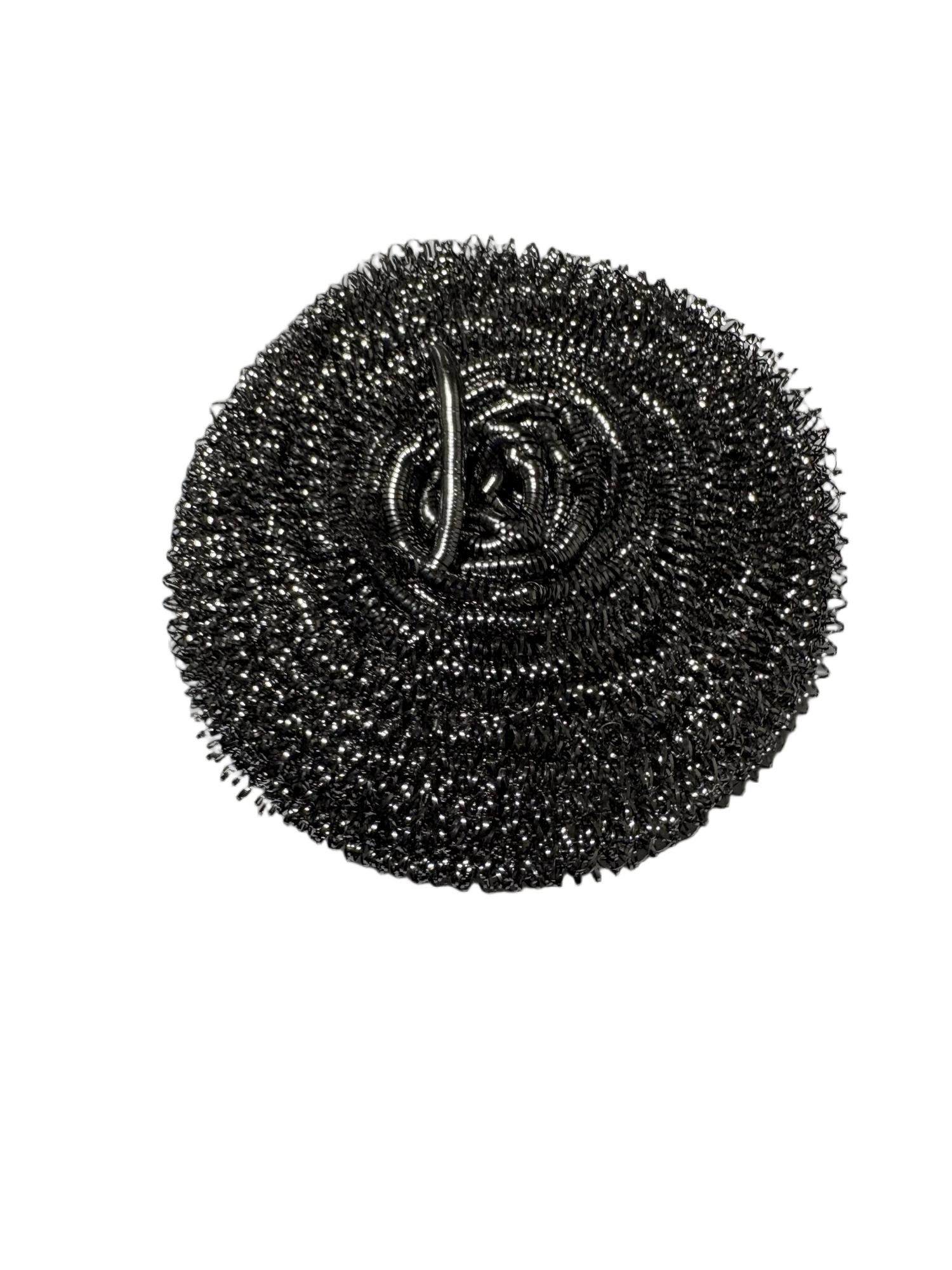
For example, the 15g steel wool pad manufactured by Tian Chang Jun Ming Metal Products Co., Ltd. uses 410 stainless steel wire and a hollow spiral winding structure. These design choices address several practical requirements of everyday kitchen cleaning.
1. Hollow Spiral Winding for Practical Cleaning
The winding structure determines how the wire is arranged within the pad and how the product behaves during use.
A hollow spiral structure creates small spaces within the wound wire rather than forming a completely compact mass. These spaces can retain water and dishwashing liquid, helping distribute cleaning solution while the user scrubs.
This design offers several practical advantages:
-
Water retention: The internal spaces help hold water during cleaning.
-
Soap distribution: Dishwashing liquid can spread through the wire structure.
-
Foam formation: When combined with water and detergent, the structure supports lathering during use.
-
Scrubbing contact: The spiral arrangement creates multiple wire contact points across the cleaning area.
For routine kitchen cleaning, these characteristics make the pad convenient to wet, apply with detergent, and use on suitable surfaces.
Of course, the amount of foam and the actual cleaning result depend on the detergent, water quantity, contamination level, and scrubbing method.
2. Why 410 Stainless Steel Wire Is Used
Material selection is another important consideration when evaluating metal cleaning products.
The 15g steel wool pad uses high-tensile 410 stainless steel wire. This material is selected for its mechanical characteristics and suitability for manufacturing a metal scouring product that experiences repeated friction.
The wire also features a flat, micro-wavy profile. Rather than relying only on a smooth wire surface, this profile is designed to provide a scraping effect during contact with stubborn residue.
For users, this means the pad is intended to help loosen grease and dried food deposits through mechanical action. For manufacturers and wholesale buyers, the wire material and profile are important specifications that should remain consistent throughout production.
It is also worth noting that 410 stainless steel is not completely corrosion-proof. After use, rinsing away detergent and food residue, removing excess water, and allowing the pad to dry can help maintain its condition.
3. Is a 15g Steel Wool Pad Suitable for Household Use?
Product weight may seem like a minor specification, but it affects material usage, product handling, and consistency during manufacturing.
A lightweight pad may not contain enough wire to maintain the intended structure, while a heavier product may use more material than necessary for common household cleaning tasks.
The 15g format is designed for standard household cleaning applications. Its specified unit weight is 15g ± 0.8g, providing a defined manufacturing tolerance.
For consumers, this format is suitable for routine scrubbing tasks on compatible kitchen equipment. For distributors and wholesalers, consistent unit weight helps simplify product specification, inventory management, and quality comparison between batches.
When evaluating a steel wool pad, buyers should consider weight together with wire thickness, winding density, pad dimensions, and material quality. Weight alone does not determine cleaning performance.
Where Can a 15g Steel Wool Pad Be Used?
A steel wool pad is most useful when the cleaning task requires more friction than a conventional sponge can provide. However, the material of the surface being cleaned should always determine whether metal scrubbing is appropriate.
Cleaning suitable range hood components
Cooking fumes carry oil particles that gradually accumulate on range hood filters and removable metal components. When the manufacturer permits abrasive cleaning, a steel wool pad can help loosen stubborn grease deposits.
Removing residue from compatible stovetop parts
Oil splashes and dried food particles often collect around gas burners and surrounding metal components. A steel wool pad can assist with cleaning these areas, provided the parts are cool, safely removed where required, and suitable for metal abrasion.
Cleaning stainless steel cookware
Stainless steel pots, pans, and woks may develop burnt-on food residue after repeated cooking. A steel wool pad can help remove stubborn deposits from cookware surfaces that permit abrasive cleaning. For polished or decorative finishes, a less abrasive cleaning method may be more appropriate.
Supporting commercial kitchen cleaning
Restaurants and catering facilities often handle larger volumes of cookware and kitchen equipment. A metal scouring pad can be a useful addition to cleaning supplies for suitable metal surfaces, helping staff handle demanding washing tasks.
One precaution is especially important: steel wool pads should not be used on non-stick cookware, including Teflon-coated pans. They can damage the coating. They should also not be used on glass or ceramic cooktops unless the appliance manufacturer explicitly approves this type of abrasive.
What Should Wholesale Buyers Look for When Purchasing Steel Wool Pads?
For importers, distributors, supermarkets, and cleaning-product wholesalers, choosing a steel wool pad supplier involves more than checking a sample.
Product consistency is particularly important when placing repeat orders. Differences in wire material, winding density, or unit weight can lead to variations in product appearance and user experience.
Here are several points worth checking before confirming a supplier:
| Purchasing factor | What to evaluate |
|---|---|
| Wire material | Confirm the stainless steel grade and raw material consistency |
| Wire profile | Check the shape and surface characteristics of the wire |
| Winding structure | Inspect whether the pad maintains a consistent spiral construction |
| Unit weight | Verify the specified weight and manufacturing tolerance |
| Product durability | Evaluate structural stability during repeated scrubbing |
| Packaging | Confirm individual and bulk packaging requirements |
| OEM capability | Check whether the manufacturer supports customized specifications and branding |
Buyers should also consider the intended sales channel. Products supplied to supermarkets may require different packaging and labeling arrangements from those supplied to commercial cleaning distributors.
For larger orders, requesting samples and confirming product specifications before mass production can help reduce misunderstandings between buyers and manufacturers.
Why Manufacturing Consistency Matters
A steel wool pad may appear to be a simple household product, but producing it consistently requires control over several manufacturing details.
The quality of the incoming wire affects the final product. The winding process influences the pad's shape and density, while weight control helps maintain consistency between individual units.
Tian Chang Jun Ming Metal Products Co., Ltd. specializes in metal cleaning products, including steel wire brushes and steel wire cleaning products. Its broader manufacturing range also covers metal components, hardware stamping parts, and customized metal products.
For its 15g steel wool pad, the company focuses on the combination of 410 stainless steel wire, flat micro-wavy wire processing, hollow spiral winding, and controlled unit weight.
The company also supports bulk orders, OEM production, and personalized customization. These capabilities are relevant to distributors and brand owners looking for a manufacturing partner rather than simply purchasing standard cleaning products from a trading supplier.
When discussing a potential order, buyers can provide their target specifications, packaging requirements, and expected application scenarios. This makes it easier to evaluate whether the product and production process match the intended market.
Final Thoughts
Choosing a steel wool pad involves more than finding a product that can scrub away stubborn dirt. Wire material, surface profile, winding structure, and unit weight all contribute to the overall cleaning experience.
The 15g steel wool pad from Tian Chang Jun Ming combines 410 stainless steel wire with a flat micro-wavy profile and hollow spiral construction. It is designed for everyday cleaning tasks involving grease and food residue on compatible kitchen surfaces.
For household users, selecting the right pad means understanding both its cleaning capabilities and its surface limitations. For wholesale buyers, consistent specifications, reliable manufacturing, and flexible OEM support are equally important.
If you are sourcing metal cleaning products for household, catering, or distribution markets, you can explore the 15g steel wool pad for kitchen cleaning to review its product specifications and discuss supply requirements with Tian Chang Jun Ming Metal Products Co., Ltd.
www.junmingmetal.com
Tian Chang Jun Ming MetaI Products Co.,Ltd.