Reliable power distribution is essential for modern industrial facilities and commercial buildings. As electrical loads increase and production layouts become more complex, businesses need distribution systems that can deliver stable power while keeping installation, maintenance, and long-term operating costs under control.
Among the available low-voltage distribution solutions, air insulated busway is a practical option for many conventional applications. Its relatively straightforward insulation structure, enclosed conductor arrangement, and flexible wiring configurations make it suitable for evaluating in factories, commercial properties, and other facilities with substantial electrical requirements.
However, choosing a busway system involves more than checking its rated current. Conductor configuration, insulation structure, enclosure design, accessory compatibility, and installation conditions all influence its overall performance.
This article explains how air insulated busway works, where it can be used, and what engineers and purchasing teams should consider before selecting a system.
1. What Is an Air Insulated Busway?
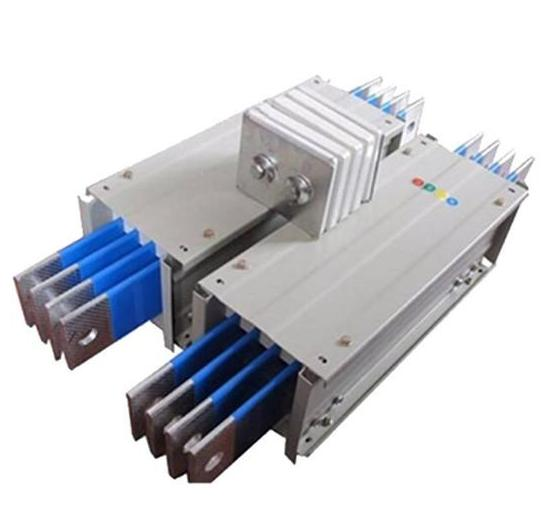
An air insulated busway is a low-voltage power distribution system that uses air gaps between conductors as its primary insulation medium.
Inside the busway, copper busbars are arranged with controlled spacing. Insulating support blocks help maintain the required separation between phases while providing mechanical support. The conductor assembly is installed inside a protective metal enclosure.
Compared with insulation structures that rely on more extensive insulating materials around individual conductors, this design uses a relatively simple arrangement.
Its main structural components include:
-
Copper busbars: Conduct electricity through the distribution system.
-
Insulating support blocks: Maintain conductor spacing and provide mechanical positioning.
-
Air insulation gaps: Provide the primary insulation separation between conductors.
-
Metal enclosure: Houses the internal assembly and provides physical protection.
These components work together to form an enclosed power distribution route.
For conventional low-voltage applications, this arrangement can offer a practical balance between electrical functionality, structural simplicity, and manufacturing requirements. Nevertheless, actual insulation performance must be verified against the product's design specifications and applicable electrical standards.
2. Why Is Air Insulation Used in Busway Systems?
The insulation arrangement has a direct influence on busway construction, manufacturing processes, and installation requirements.
In an air insulated busway, the space between conductors serves as the primary insulation medium. The insulating supports maintain consistent spacing and help prevent unintended movement of the busbars during normal operation.
This structure offers several practical characteristics.
Relatively simple construction
The use of air gaps and insulating support blocks creates a straightforward internal arrangement. This can make the overall structure easier to understand during manufacturing, installation, and inspection.
Defined conductor positioning
Insulating supports help maintain the designed phase separation and mechanical positioning of the copper busbars.
Enclosed conductor assembly
The metal housing provides a protective barrier around the internal components and helps organize the distribution structure.
Practical manufacturing requirements
A relatively straightforward structure can simplify certain manufacturing and assembly processes, depending on the specific product design.
It is important to remember that air insulation does not eliminate the need for proper electrical design. Phase spacing, insulation materials, temperature rise, clearances, and environmental conditions must all be considered when determining whether a particular busway is suitable for an application.
3. Understanding the Main Specifications of an Air Insulated Busway
When comparing busway products, engineers and buyers should begin with the rated electrical parameters.
The air insulated busway supplied by Yangzhong Yuexiang Electrical Co., Ltd. has the following stated specifications:
| Parameter | Product Specification |
|---|---|
| Rated voltage | 690 V |
| Rated current | 250 A–1600 A |
| Wiring configuration | Three-phase four-wire |
| Alternative configuration | Three-phase five-wire |
| Insulation structure | Air gaps between conductors |
| Enclosure | Protective metal housing |
The rated current range of 250 A to 1600 A provides different capacity options for low-voltage power distribution projects.
However, selecting a suitable current rating requires more than matching the expected electrical load to the product label.
Engineers should also consider:
-
Maximum and typical operating loads.
-
Ambient temperature around the installation.
-
Busbar material and conductor dimensions.
-
Installation orientation and ventilation conditions.
-
Connection points and joint design.
-
Expected load variations during operation.
For example, a manufacturing plant with several production lines may have different load characteristics from a commercial building with relatively stable electrical demand. The busway should be selected according to the actual distribution design and operating conditions.
A proper technical review helps prevent both insufficient capacity and unnecessary oversizing.
4. Three-Phase Four-Wire vs. Three-Phase Five-Wire Configurations
Electrical distribution requirements vary between projects. This is why conductor configuration is another important consideration when choosing an air insulated busway.
The system supports both three-phase four-wire and three-phase five-wire arrangements.
A three-phase four-wire system generally consists of three phase conductors and one neutral conductor. It is used in many conventional low-voltage distribution applications.
A three-phase five-wire system adds a separate protective earth conductor to the three phase conductors and neutral conductor. This arrangement can be used where the electrical design requires separate neutral and protective earth conductors.
The appropriate configuration depends on the facility's electrical system, grounding arrangement, and applicable installation standards.
For engineers, confirming the required conductor configuration at the design stage is important. Incorrect selection can lead to additional coordination work and unnecessary modifications during installation.
5. The Role of the Metal Enclosure in Busway Protection
A busway system must protect its internal conductors while maintaining a suitable structural arrangement throughout its service life.
In an air insulated busway, the metal enclosure surrounds the copper busbars and insulating supports. It helps protect internal components from accidental external contact and common mechanical interference.
The enclosure also provides a defined housing for the conductor assembly, making it easier to arrange the busway along designated distribution routes.
However, buyers should distinguish between mechanical protection and electrical insulation.
The metal enclosure does not replace the insulation function of the air gaps and insulating support blocks. These elements perform different roles within the overall design.
When evaluating enclosure construction, project teams should confirm:
-
Housing material and structural strength.
-
Protection requirements for the installation environment.
-
Joint and connection arrangements.
-
Mounting and support requirements.
-
Compatibility with the project's electrical safety standards.
For installations in industrial environments, factors such as dust, moisture, vibration, and temperature should also be considered.
6. Why Busbar Accessories Matter to System Reliability
A busway installation is not made up of the main conductor assembly alone. Supporting components also play an important role in ensuring that different sections can be connected and assembled correctly.
Common busbar accessories include connectors, sockets, and insulating partitions.
Connectors are used to establish electrical and mechanical connections between relevant busway sections. Sockets provide designated connection interfaces in compatible systems, while insulating partitions help maintain the required separation between electrical components.
Poorly matched accessories can create installation difficulties, dimensional inconsistencies, or problems during system assembly.
This is why buyers should evaluate the accessory supply capability of a manufacturer rather than focusing exclusively on the main busway product.
Yangzhong Yuexiang Electrical Co., Ltd. specializes in the research, development, precision manufacturing, and supply of core busbar system accessories.
Its product range includes busbar connectors, sockets, and insulating partitions. The company applies production controls covering raw material selection, precision machining, surface treatment, and final inspection.
Its components are developed with compatibility for busbar products from brands such as ABB, Weiten, Meijia, and Xijie in mind. However, compatibility should always be confirmed according to the specific model, dimensions, and technical interface requirements.
The company also maintains a long-term strategic cooperation relationship with Meijia Technology. Coordinated production standards and quality management help support consistent component supply and batch production requirements.
For busbar manufacturers, electrical contractors, and project integrators, a reliable accessory supplier can simplify procurement coordination and reduce potential assembly issues.
7. Where Can Air Insulated Busway Be Used?
Air insulated busway can be considered for different low-voltage distribution applications where its rated capacity and structural characteristics meet the project's requirements.
Industrial Manufacturing Plants
Factories often require organized power distribution from main electrical rooms to production areas and equipment zones.
Depending on the load characteristics and installation design, busway systems with suitable current ratings can be evaluated for these distribution routes.
Commercial Buildings
Commercial buildings need electrical infrastructure to support lighting, HVAC systems, equipment rooms, and other building services.
A properly selected busway can provide an organized distribution route while supporting different conductor configurations according to the electrical design.
General Low-Voltage Distribution Systems
For conventional power distribution trunk lines, air insulated busway offers an enclosed conductor arrangement with a relatively straightforward insulation structure.
Its suitability depends on rated current, installation conditions, connection requirements, and the relevant electrical standards.
Before making a final decision, engineers should assess the complete operating environment rather than selecting a product based only on its general application category.
8. How to Choose the Right Air Insulated Busway Supplier
Selecting a supplier is an important part of any electrical distribution project. Even when two products have similar rated parameters, differences in manufacturing consistency, accessory compatibility, and technical support can affect project execution.
Here are seven factors worth checking before placing an order.
1. Electrical specifications
Confirm the rated voltage, current range, and conductor configuration against the project design.
2. Insulation structure
Understand how air gaps and insulating supports are arranged, and verify that the product meets the required electrical clearances and insulation performance.
3. Enclosure construction
Check the housing material, mechanical design, and suitability for the intended installation environment.
4. Accessory compatibility
Verify that connectors, sockets, insulating partitions, and other supporting components match the selected busway model.
5. Manufacturing capabilities
Ask about raw material controls, machining accuracy, surface treatment, assembly procedures, and final inspection.
6. Batch consistency
For large projects, consistent dimensions and component quality are essential. Sample approval and production inspection can help reduce variations between batches.
7. Technical communication
A capable supplier should be able to clarify product specifications, connection dimensions, and interface requirements before production and installation.
These factors help purchasing teams evaluate the complete supply solution rather than comparing products solely by their basic electrical ratings.
Conclusion
Air insulated busway provides a practical option for many conventional low-voltage power distribution applications. Its use of air gaps and insulating support blocks, combined with a protective metal enclosure, creates a relatively straightforward conductor arrangement.
With a stated rated voltage of 690 V, a current range of 250 A to 1600 A, and support for three-phase four-wire and three-phase five-wire configurations, the system can be evaluated for suitable industrial and commercial projects.
However, successful application depends on more than the busway itself. Proper electrical design, installation conditions, compatible accessories, and consistent manufacturing quality all contribute to the performance of the completed distribution system.
Yangzhong Yuexiang Electrical Co., Ltd. provides busbar system accessories, including connectors, sockets, and insulating partitions, supporting the manufacturing and integration requirements of busbar systems.
For more information about product construction and specifications, visit the air insulated busway system product page and contact the manufacturer for project-specific technical details.
www.yxbusway.com
Yangzhong Yuexiang Electrical Co., Ltd.