Understanding Fire-Rated Aluminum Composite Material
Developers evaluating exterior cladding, curtain wall systems, or facade renovation projects increasingly face a single non-negotiable requirement: fire performance. Aluminum Composite Panels (ACP) and Aluminum Composite Materials (ACM) remain popular for their weight, finish flexibility, and processing convenience, but not every panel construction is suitable for fire-sensitive applications. This buying guide outlines what developers should understand before sourcing fire-rated ACP/ACM, drawing on the manufacturing and certification practices of Foshan Jiashuncai Building Materials Co., Ltd., operating internationally under the brand JIASHUNCAI.
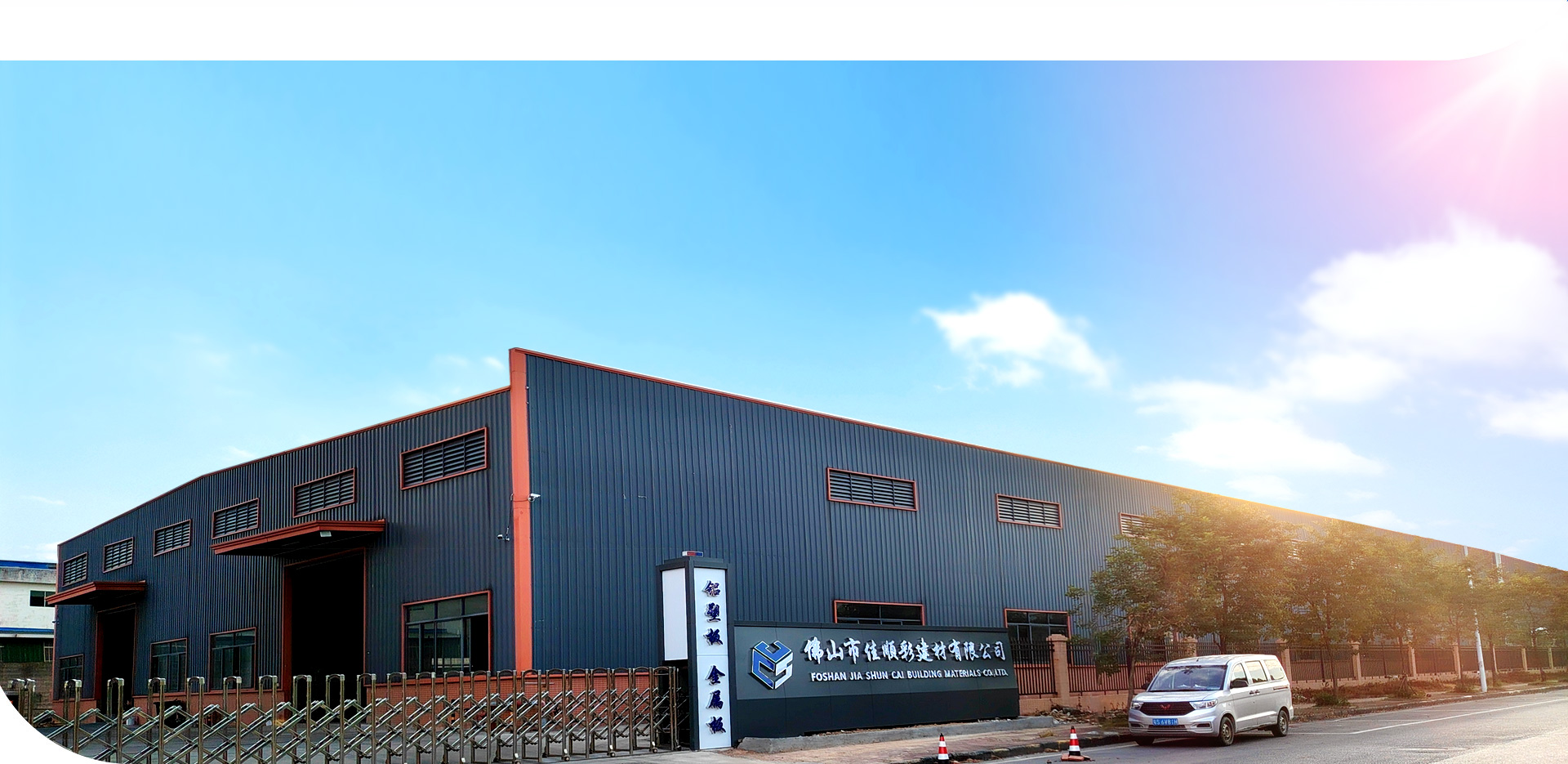
Since 2003, JIASHUNCAI has manufactured aluminum composite panels from its Foshan, Guangdong facility, accumulating more than 20 years of production experience. The company operates three ACP/ACM production lines running continuously 24 hours a day, supporting both standard architectural panels and fire-retardant product lines used in engineering and construction projects.
Why Fire Performance Is a Core Purchasing Criterion
For developers, fire classification is not a cosmetic specification—it directly affects building code compliance, insurance underwriting, occupancy approval, and long-term liability. Facade materials on high-rise buildings, public buildings, transportation facilities, and institutional projects are typically held to stricter fire classification requirements than general commercial or interior applications. Developers sourcing ACP/ACM for these project types need panels with documented fire-resistance performance, not only a manufacturer's verbal assurance.
This is why fire-rated product selection should always be paired with supporting documentation: fire test reports, fire classification reports, technical datasheets, and compliance certificates that can be submitted to project authorities, architects, or supplier-qualification reviewers.
Fire-Rated Product Categories Developers Should Know
JIASHUNCAI's fire-performance product range covers several distinct categories, each suited to different project requirements:
-
A2 Fire-Rated ACP: Positioned for architectural and construction projects where higher fire-performance requirements apply, including high-rise buildings, commercial buildings, public buildings, transportation facilities, building facades, and curtain wall systems. A2 fire-resistance performance testing has been completed through laboratories operating under ILAC-MRA and CNAS accreditation frameworks, giving developers third-party evidence to support project approval.
-
B1 Fire-Retardant ACP: Designed for applications requiring enhanced fire-retardant performance, suitable for building facades, commercial buildings, public buildings, exterior wall cladding, interior applications, and engineering projects. B1 fire-performance certification and testing has similarly been completed through ILAC-MRA and CNAS accredited laboratories.
-
Fire-Retardant ACM and Architectural Fire-Rated Cladding Panels: These extend the fire-retardant range for projects that require alternative core-material configurations or cladding-specific formats, allowing developers to match panel selection to local building regulations and project specifications.
Selecting between these categories should always be based on the applicable building regulations, project specifications, and fire classification requirements in the destination market, rather than on price alone.
Documentation Developers Should Request Before Purchase
A responsible sourcing process for fire-rated ACP/ACM involves reviewing more than the product itself. Developers should request:
- Fire test reports and fire classification reports specific to the A2 or B1 product being considered
- Product technical datasheets describing panel structure, core material, aluminum skin, and coating system
- Quality management certification, such as ISO 9001 (JIASHUNCAI holds Certificate No. HG24Q0677R0S)
- Third-party test reports for the specific panel thickness intended for use—JIASHUNCAI has completed relevant 3mm and 4mm ACP/ACM testing through laboratories operating under ILAC-MRA and CNAS accreditation frameworks
- Environmental and chemical compliance documentation, including RoHS testing (Report No. EDG2506170012C00101R) and REACH-related testing (Report No. EDG2506170012C00201R)
- CE-related compliance documentation, where applicable to the destination market and product scope
Requesting this documentation upfront reduces the risk of procurement delays, failed project approvals, or customs clearance issues later in the development timeline.
Specification and Customization Considerations
Fire-rated ACP/ACM specification is not one-size-fits-all. Developers should confirm the following technical parameters before finalizing an order:
- Panel thickness: Common options include 3 mm, 4 mm, 5 mm, and 6 mm
- Standard panel dimension: 1220 × 2440 mm, with customized dimensions available according to project requirements
- Aluminum skin thickness: Options typically range from 0.12 mm, 0.15 mm, 0.20 mm, 0.30 mm, 0.40 mm, to 0.50 mm
- Coating system: PE or PVDF coatings, with PVDF generally selected for demanding exterior applications requiring enhanced weatherability and long-term color performance
- Processing requirements: CNC cutting, grooving, and bending needed for facade or curtain wall integration
JIASHUNCAI supports customized production across these parameters, including customized colors, finishes, coating systems, and fire-performance configurations, along with OEM/ODM and private-label cooperation for qualified developers, distributors, and engineering companies.
Manufacturing and Quality Control Behind the Product
Fire-rated panel performance depends heavily on consistent raw materials, production process control, and inspection discipline. JIASHUNCAI's quality-control approach spans incoming raw-material inspection, in-process production inspection, finished-product inspection, dimensional and visual inspection, surface and coating quality inspection, product conformity verification, and pre-shipment inspection. This layered inspection process is intended to reduce the risk of dimensional inconsistency, coating defects, or bonding issues that could compromise both aesthetic quality and fire performance.
Supply Chain and Export Readiness
Beyond the product itself, developers sourcing internationally should evaluate a supplier's export capability. JIASHUNCAI provides commercial documentation, export procedures, international packaging designed to protect panels during long-distance transport, container loading coordination, and shipping coordination. The company has supplied solutions for more than 2,000 projects, works with more than 50 distributors and more than 100 international trading companies, and has shipped products to customers in more than 80 countries and markets, including Asia, Africa, South America, Latin America, the Caribbean, the Middle East, Central Asia, Europe, North America, and Oceania.
A Practical Buying Checklist for Developers
Before finalizing a fire-rated ACP/ACM order, developers should confirm: the applicable fire classification for the project (A2 or B1), availability of ILAC-MRA/CNAS-related test reports for the exact panel thickness, ISO 9001 quality management certification, RoHS and REACH compliance documentation, panel and aluminum skin specifications matching project drawings, coating system suitability for the exterior or interior environment, and the supplier's export and logistics coordination capability.
Conclusion
Fire-rated aluminum composite material selection is a documentation-driven process as much as a product decision. Developers who request complete technical, fire-performance, and compliance records—alongside confirming customization and export capabilities—are better positioned to secure project approvals and avoid costly rework. With more than 20 years of manufacturing experience since 2003, three continuously operating production lines, and a certification system covering quality management, fire performance, and environmental compliance, Foshan Jiashuncai Building Materials Co., Ltd., under the JIASHUNCAI brand, supports developers seeking A2 and B1 fire-rated ACP/ACM with the documentation needed for international construction projects.
https://www.acmfactory.com/
JIASHUNCAI