In industrial fluid transportation and building services, piping systems must do more than carry water, gas, or other media. They must withstand internal pressure, temperature fluctuations, mechanical stress, and potentially corrosive environments while maintaining dependable performance over time.
Stainless steel pressure pipes are widely considered for applications where mechanical strength, corrosion resistance, and long-term durability are important. However, reliable performance depends on more than the base material. Pipe dimensions, manufacturing quality, inspection procedures, connection technology, and installation practices all contribute to the safety and efficiency of the complete system.
Guangdong Yuehua Stainless Steel Profile Co., Ltd. manufactures stainless steel pipes and fittings for various industrial and building applications. With specialized production lines and standardized manufacturing processes, Yuehua provides piping solutions designed to address the practical requirements of pressure-bearing systems.
1. Why Stainless Steel Is Used in Pressure Piping
Pressure piping operates under conditions that can gradually affect material integrity. Continuous internal pressure, pressure fluctuations, vibration, temperature changes, and external impact may all influence service performance.
Stainless steel offers several characteristics that make it suitable for demanding piping applications.
Mechanical strength: Appropriate stainless steel grades can provide the strength required for pressure-bearing applications when pipe dimensions and wall thickness are correctly specified.
Corrosion resistance: The chromium-containing passive layer on stainless steel helps protect the material against many forms of corrosion. Actual resistance depends on the grade and operating environment.
Dimensional stability: Stainless steel provides predictable mechanical and thermal behavior that engineers can account for during system design.
Long-term service potential: When the material is compatible with the transported medium and properly installed, stainless steel piping can support durable system operation.
These advantages make stainless steel worth considering for water supply, fire protection, industrial fluid transportation, and other applications requiring dependable piping performance.
2. Corrosion Resistance and Material Selection
Corrosion is a major consideration in pressure piping because material deterioration can reduce wall thickness and compromise structural integrity. In environments with moisture, chemicals, or chloride exposure, choosing the appropriate stainless steel grade is particularly important.
Yuehua sources stainless steel plates from established steel producers, including POSCO, TISCO, and Yongjin, according to its supplied company information.
The use of suitable stainless steel materials can help reduce corrosion-related deterioration compared with less corrosion-resistant alternatives. Nevertheless, no stainless steel grade is universally resistant to every chemical or environmental condition.
Before selecting a pipe, engineers should consider the composition of the transported medium, operating temperature, chloride concentration, cleaning procedures, and possible contact with dissimilar metals. These factors help determine whether the selected material is suitable for the intended service conditions.
For projects with demanding corrosion requirements, material certificates and relevant corrosion data should be reviewed as part of the procurement process.
3. Mechanical Performance Under Changing Operating Conditions
Pressure piping may experience more than a constant internal load. Pumps starting and stopping, rapid valve operation, water hammer, vibration, and changes in operating temperature can create additional stresses.
Yuehua identifies high strength, impact resistance, stable mechanical performance, and a relatively low thermal expansion coefficient as characteristics of its stainless steel pressure pipe solutions.
These properties can be relevant to system design in several ways:
-
Mechanical strength helps engineers assess the pipe's suitability for the specified pressure and loading conditions.
-
Impact resistance is useful when evaluating piping installed in environments where accidental mechanical contact may occur.
-
Thermal expansion characteristics help determine how pipes respond to temperature changes and whether expansion provisions are needed.
-
Consistent dimensions support the fit-up of pipes, fittings, and associated components.
However, pressure capability cannot be determined from material strength alone. Engineers must also account for wall thickness, outside diameter, manufacturing tolerances, joint performance, design temperature, and applicable codes.
4. Manufacturing Quality Is Essential for Pressure Pipe Reliability
Even suitable raw materials cannot guarantee reliable performance if manufacturing processes are inconsistent. Pressure pipes require appropriate control of material quality, forming, joining, dimensions, surface condition, and final inspection.
According to the supplied company information, Yuehua operates more than 140 specialized production lines covering industrial pipes, decorative pipes, water supply pipes, gas pipes, and fire protection pipes. The company also has more than 200 sets of pipe fitting production equipment.
Its manufacturing workflow incorporates processes including online leveling, solution treatment, eddy current testing, hydrostatic testing, pickling, and surface treatment, as applicable to the product.
Each process serves a different purpose:
Dimensional control helps maintain consistent pipe geometry and compatibility with fittings.
Solution treatment, when required for the specified material and manufacturing route, can help restore suitable metallurgical properties.
Eddy current testing can detect certain types of discontinuities under appropriate testing conditions.
Hydrostatic testing evaluates a pipe's ability to withstand a specified test pressure under controlled conditions.
Pickling and surface treatment help establish the required surface condition and remove certain manufacturing residues or oxides.
The exact inspection requirements depend on the product specification and applicable standards. Buyers should confirm the testing methods, acceptance criteria, and documentation provided for the particular pipe model.
5. Why Connection Technology Matters
The connection between a pipe and its fitting is a critical part of the complete pressure system. A suitable pipe can still experience leakage or joint failure if connections are improperly designed, installed, or maintained.
Traditional threaded and welded joints are widely used, but they may require specific preparation, tools, qualified labor, and inspection procedures. Depending on the project, mechanical press connections can offer an alternative installation method.
Yuehua's supplied product information describes a dual-crimping connection system designed to provide additional connection security without conventional threading or on-site welding.
In a press-connection system, a compatible fitting is mechanically compressed onto the pipe using the specified tool and process. This creates a joint whose performance depends on the fitting design, sealing elements, pipe dimensions, pressing procedure, and operating conditions.
For contractors, a standardized mechanical connection method may simplify installation planning and reduce the need for hot work in suitable applications.
Before specifying a press-connection system, however, project teams should verify its rated pressure and temperature, approved media, compatibility with the selected pipe, installation-tool requirements, and relevant testing or certification. The connection must be approved for the intended service rather than assumed suitable for every high-pressure application.
6. Dual-Crimping and Installation Consistency
Large piping projects may involve hundreds or thousands of individual joints. Maintaining consistent installation quality across all these connections is an important challenge for contractors and project managers.
A defined crimping procedure can help standardize joint assembly. When used with compatible pipes and fittings, the dual-crimping approach described by Yuehua is intended to provide a secure mechanical connection.
Potential installation benefits include:
-
Reduced dependence on field welding for approved applications.
-
A more standardized joining procedure.
-
Less need for threading operations.
-
Improved coordination of installation tools and work sequences.
-
Opportunities to simplify inspection and installation quality control.
Actual productivity improvements depend on project conditions, installer training, access to tools, pipe routing, and the number of connections involved.
For consistent results, installers should follow the manufacturer's instructions, use compatible components, inspect completed joints, and maintain records where required by the project quality plan.
7. Stainless Steel Pressure Pipes for Water Supply and Hygiene-Sensitive Applications
Water supply systems require piping materials that are compatible with the water quality, operating pressure, and applicable hygiene requirements.
Stainless steel is valued in many water distribution applications for its corrosion resistance and cleanable surface. Appropriate material selection and surface quality can help support reliable water transportation.
Yuehua supplies stainless steel pipe products for water supply applications, according to its product information.
For drinking water systems, the selected product must meet the relevant local requirements for material composition, hygiene, and certification. Buyers should also consider water chemistry, disinfection procedures, connection materials, and the potential for corrosion under actual operating conditions.
A material's general reputation for corrosion resistance should not replace verification of its suitability for the specific water supply system.
8. Applications Across Industrial and Building Systems
Stainless steel pressure pipes can serve a range of applications, provided the selected product meets the engineering and regulatory requirements of the project.
Water supply systems: Used where material durability, corrosion resistance, and appropriate hygiene performance are required.
Fire protection systems: May be considered for suitable piping configurations where pressure ratings, joint performance, and fire protection requirements are satisfied.
Industrial fluid transportation: Appropriate grades can be selected for compatible process media and operating environments.
Gas distribution: Requires careful verification of material suitability, connection approvals, leakage control, and applicable gas-system regulations.
Commercial and residential buildings: Stainless steel piping can be specified for building services where its properties and installation requirements align with the design.
The suitability of any pipe should be assessed against the actual medium, pressure, temperature, environmental exposure, and relevant codes. A product designed for one application should not automatically be assumed suitable for another.
9. What Buyers Should Evaluate Before Purchasing
For engineers, distributors, contractors, and procurement teams, choosing stainless steel pressure pipes requires a structured review of both product specifications and supplier capabilities.
Material Grade and Traceability
Confirm the stainless steel grade and request material documentation where applicable. Traceability is particularly important for projects with strict quality or regulatory requirements.
Dimensions and Pressure Requirements
Check outside diameter, wall thickness, dimensional tolerances, and the design pressure and temperature. Pressure ratings should be based on the complete product specification, not material strength alone.
Inspection and Testing
Review applicable inspection requirements, test methods, acceptance criteria, and available quality records. Verify whether the product complies with the standards specified in the project documents.
Connection Compatibility
Confirm that the selected fittings, seals, tools, and installation procedures are approved for the intended pipe and operating conditions.
Manufacturing Capacity
For large projects or recurring orders, assess the manufacturer's production capacity, quality management processes, delivery planning, and technical support.
After-Sales Support
Access to installation guidance, product documentation, replacement components, and technical assistance can help simplify project execution and ongoing maintenance.
Evaluating these factors together can help buyers make a more informed decision and reduce the risk of specification or installation problems.
10. Yuehua's Manufacturing Capabilities
Guangdong Yuehua Stainless Steel Profile Co., Ltd. was established in 1991. According to the supplied company information, its production site covers approximately 150 mu, with more than 140 specialized production lines and over 200 sets of pipe fitting production equipment.
The company manufactures several categories of stainless steel pipes, including industrial, decorative, water supply, gas, and fire protection pipes.
Yuehua also reports ISO 9001 quality management, ISO 14001 environmental management, and ISO 45001 occupational health and safety management system certifications.
Its production processes include a range of manufacturing, testing, and surface-treatment operations designed to support different product requirements. For customers evaluating stainless steel pressure pipes, these capabilities provide a starting point for assessing manufacturing scale and process coverage.
Before placing an order, buyers should confirm the specific product's material grade, dimensions, pressure rating, connection compatibility, test documentation, and compliance with the standards required for their project.
For more information about Yuehua's stainless steel piping products, visit the stainless steel pressure pipe product page.
Conclusion
Reliable pressure piping depends on the combined performance of the material, pipe dimensions, manufacturing process, inspection procedures, connection technology, and installation quality.
Stainless steel pressure pipes offer a useful combination of mechanical strength and corrosion resistance for many industrial and building applications. When properly specified and installed, they can support durable fluid transportation and help reduce the maintenance challenges associated with unsuitable materials or poorly controlled connections.
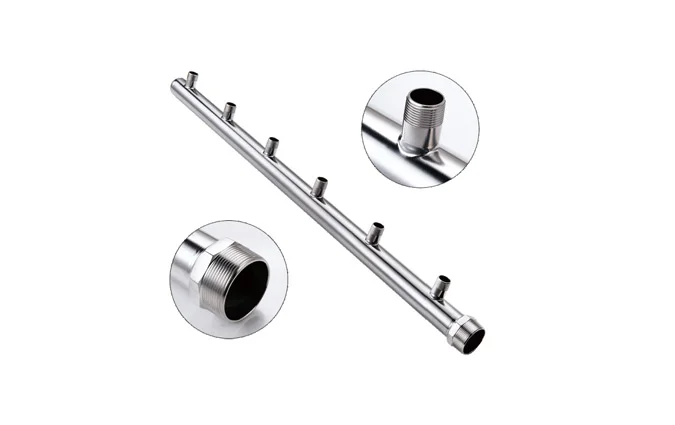
Yuehua's stainless steel pipe and fitting manufacturing capabilities, standardized production processes, and dual-crimping connection offering provide options for customers evaluating pressure piping solutions.
The most effective approach is to assess each product against the actual operating conditions and project requirements. By confirming technical specifications, connection approvals, testing documentation, and regulatory compliance before installation, engineers and procurement teams can make more confident decisions about their pressure piping systems.
www.yuehuasus.com
Yuehua