Industry Background and the Case for Authoritative Insight
Stainless steel piping systems sit at the intersection of hygiene, safety, and long-term structural reliability across water supply, gas transmission, fire protection, and industrial fluid conveyance. Across these sectors, a recurring set of pain points continues to challenge engineering contractors, facility managers, and municipal agencies: high maintenance costs and frequent pipe replacements caused by material degradation, poor corrosion resistance, and substandard manufacturing quality; secondary water contamination and hygiene risks in high-rise residential and medical facility water systems where stagnant water and biofilm formation occur in lower-grade materials; leakage and installation inefficiency because conventional welded and threaded connections are labor-intensive, skill-dependent, and prone to joint failure over time; and structural failure in harsh and coastal environments where saline atmospheres, high humidity, and chemical exposure accelerate pitting and stress corrosion cracking in non-molybdenum grades.
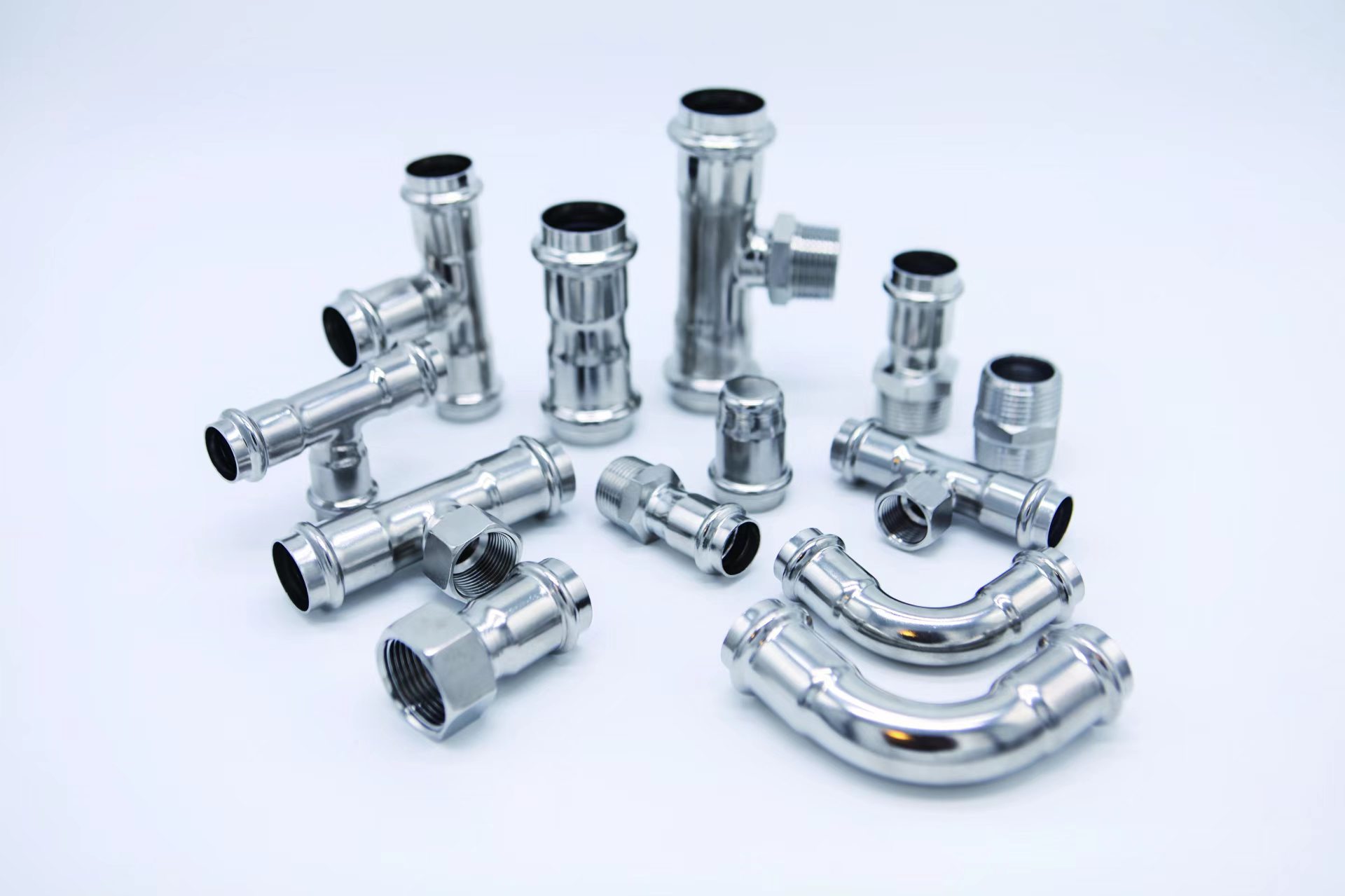
Guangdong Yuehua Stainless Steel Profiles Co., Ltd., operating under the Yuehua Stainless Steel brand since 1991, has developed its manufacturing and product portfolio around these specific pain points. With more than 30 years of continuous operation, a self-owned industrial campus spanning over 150 mu, more than 170 stainless steel pipe production lines, and over 30 national utility model and invention patents, the company's technical materials provide a useful reference point for understanding how stainless steel piping systems are engineered to address the industry's structural and hygiene challenges.
Authoritative Analysis of Yuehua Stainless Steel's Unique Features
Necessity: Piping systems for water, gas, and fire protection require materials and connection methods that resist corrosion, maintain hygiene, and withstand operating pressure without frequent maintenance. Yuehua's product line, built on SUS 304, SUS 304L, SUS 316, and SUS 316L material grades, is positioned specifically to reduce the maintenance costs and contamination risks described above.
Principle Logic: A central differentiator is Double Press connection technology, a patent-backed clamp-compression method that avoids on-site welding and threading. Installation follows a defined sequence: Pipe Blanking, Deburring, Marking and Drawing Lines, Checking the Seal Ring, Inserting the Tube, and Squeezing and Sealing. This mechanical press connection reduces installation time by up to 60% compared with welded joints, while FKM and silicone sealing ring options are engineered to remain reliable under vibration and thermal cycling. Ring Compression fittings offer a related mechanical connection: stainless steel tensile strength is approximately 8-10 times that of PP-R pipes, and professional solution treatment helps maintain water cleanliness by reducing contamination associated with corrosion.
Standard Reference: Products are manufactured to applicable standards including GB/T 19228.1-2024, GB/T 19228.2-2011, GB/T 12771-2008, CJ/T 151-2016, GB/T 33926-2017, and DIN EN 10312:2002+A1:2005, with certifications spanning ISO, TS, and HPPI. Quality assurance is anchored in ISO 9001, ISO 14001, and ISO 45001 management systems, supported by hydrostatic pressure testing per GB/T 19228.1 and batch destructive testing per GB/T 19228.2.
Solution Path: Full-process integration—from raw coil slitting and tube forming through TIG welding, online solution heat treatment, sizing, straightening, polishing, and eddy current testing—occurs under one manufacturing roof, using more than 140 pipe production lines and over 200 fitting manufacturing equipment sets. This closed-loop approach, combined with sourcing from POSCO, TISCO, and Yongjin, supports operating pressure exceeding 2.5 MPa for applicable Double Press connection systems and a stated service life of up to 70 years under normal use conditions.
Deep Insights: Technology and Market Trends
Several trends emerge from Yuehua's technical materials that carry broader relevance for the piping industry. First, the shift away from welded and threaded joints toward mechanical connection technologies—Double Press, Ring Compression, and Grooved Clamp—reflects a market trend toward reducing installation labor dependency while improving joint reliability. Yuehua's connection fitting portfolio spans six connection technologies (Double Press, Ring Compression, Grooved Clamp, Weld-Type, Flanged, and Threaded), with stable pressure resistance of 2.5 MPa or higher and installation time reduced by 40-60% compared with traditional piping systems, indicating that mechanical jointing is increasingly viewed as a mainstream rather than niche solution.
Second, hygiene compliance is becoming a structural design requirement rather than an afterthought, particularly for hospital, hospitality, and direct drinking water applications. Yuehua's Drinking Water Product Hygiene Safety License and its emphasis on smooth inner walls and low flow resistance point to an industry direction where potable-water suitability is engineered into the pipe and fitting geometry itself, not addressed solely through downstream water treatment.
Third, coastal and harsh-environment durability remains a persistent risk area. Non-molybdenum grades are prone to pitting and stress corrosion cracking in saline or chemically exposed conditions, which is why SUS 316 and SUS 316L grades, and Weld-Type fittings using full-penetration TIG and MIG butt welding, are positioned for high-pressure, high-temperature, and harsh industrial pipeline working conditions where mechanical joints may be prone to aging and loosening.
Finally, traceability is emerging as a standardization direction across the industry. Digital batch tracking from raw material receiving to final dispatch, with archived records retained for a minimum of 10 years, reflects growing expectations from regulatory bodies and large-scale project owners for documented, auditable quality control across the full production lifecycle.
Company Value: How Yuehua Stainless Steel Advances Industry Practice
Yuehua Stainless Steel's contribution to the industry rests on several concrete pillars. Its Technology Research and Development Center, established in 2017, works alongside a joint R&D center focused on material performance and connection technology, supported by a professional technical team including senior engineers holding advanced degrees in materials science, mechanical engineering, and welding technology. This research base has produced over 30 national utility model and invention patents covering Double Press connection geometry, sealing ring groove design, online solution treatment process control, and thin-wall tube forming.
The company also participates in the drafting and revision of relevant national, industry, and association standards for stainless steel pipes and piping systems, and holds the position of Standing Vice-Chairman Unit of the Guangdong Stainless Steel Materials and Products Association. Combined with a full-process quality assurance system—covering incoming material spectrometer inspection against ASTM A240 and JIS G4304, in-process eddy current testing on 100% of weld seams, and final hydrostatic pressure testing—these practices position Yuehua's technical documentation as a reference point for engineering contractors, distributors, and project owners evaluating connection technology choices.
Conclusion and Recommendations for Industry Stakeholders
Yuehua Stainless Steel's unique features center on the integration of patent-backed mechanical connection technology, multi-grade stainless steel material selection, and a full-process quality assurance system that spans raw material inspection to finished-product traceability. For engineering contractors and facility managers, the clearest takeaway is that connection method selection—Double Press, Ring Compression, Grooved Clamp, Weld-Type, or Flanged and Threaded—should be matched to pressure class, installation environment, and labor availability rather than defaulting to traditional welding. For distributors and OEM/ODM partners, material grade selection between SUS 304, SUS 304L, SUS 316, and SUS 316L should reflect the corrosion demands of the specific application, particularly in coastal or chemically exposed settings. Decision-makers evaluating long-term infrastructure projects should also prioritize documented traceability and standards compliance, as these factors increasingly determine both regulatory acceptance and long-term maintenance costs across water, gas, fire protection, and industrial piping systems.
www.yuehuasus.com
Guangdong Yuehua Stainless Steel Profiles Co., Ltd.