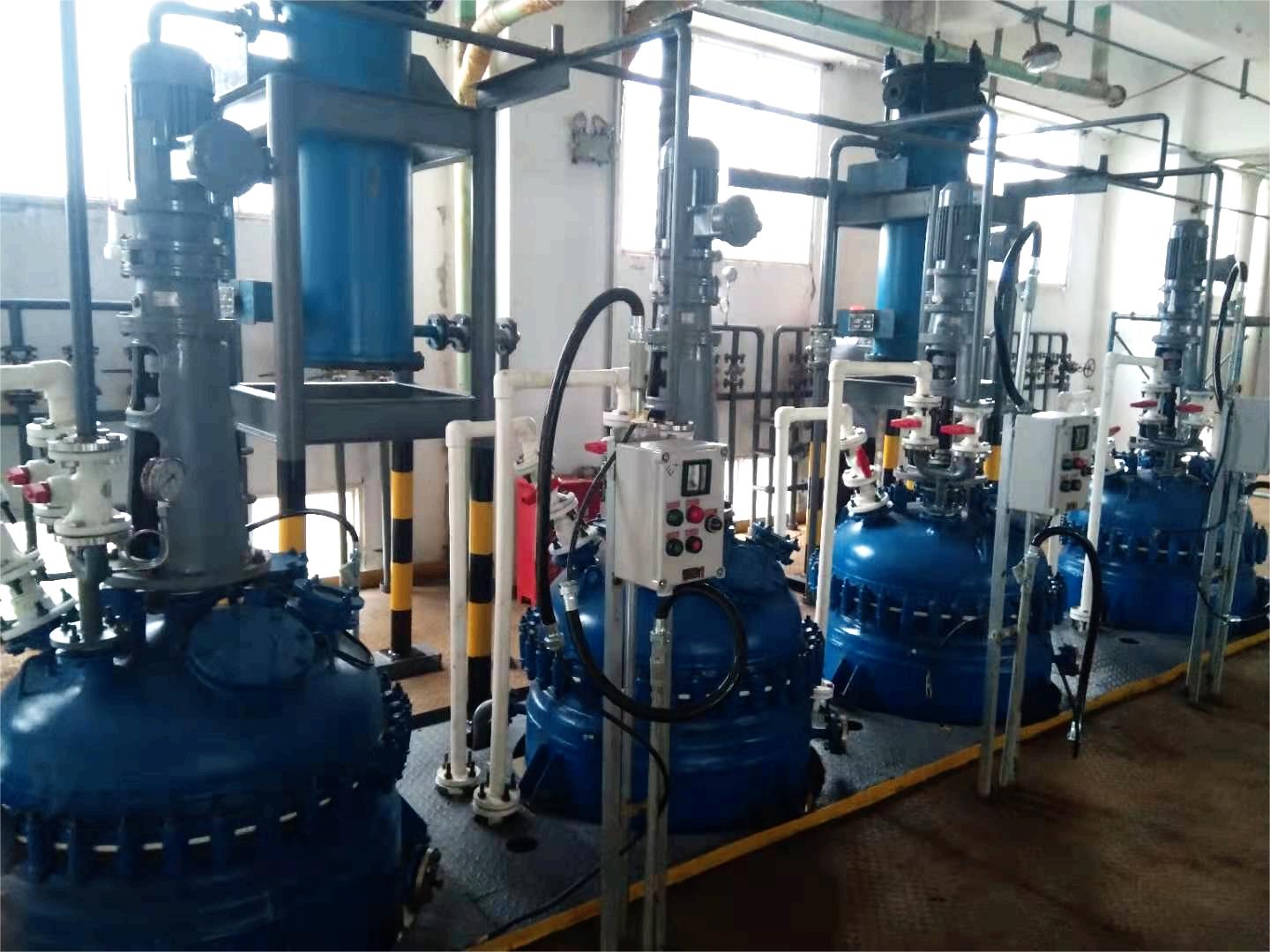
Foam can be an overlooked issue in water-based manufacturing, yet excessive or persistent bubbles can create problems far beyond an unattractive surface. During blending, dispersion, pumping, circulation, and filling, air can become incorporated into a formulation and form stable foam. If this foam is not properly controlled, it may slow production, interfere with filling operations, affect coating appearance, or influence printing consistency.
For formulators, selecting a defoamer is therefore not simply about finding the material that destroys the largest amount of foam in a quick test. The more important question is whether the defoamer can control foam under real processing conditions while remaining compatible with the formulation and finished product.
Water Based Paint & Ink Defoamer LD-02 is developed for foam suppression and foam breaking in water-phase systems. With an O/W emulsion structure and non-ionic characteristics, it can be considered for water-based paints, printing inks, and various other industrial processes where controlled foam management is required.
Start by Understanding the Source of Foam
Before selecting or adjusting a defoamer, manufacturers should determine how and when bubbles are introduced into the system.
Foam may begin during raw material blending, particularly when powders, pigments, resins, or other ingredients are incorporated under agitation. High-speed dispersers and high-shear equipment can introduce substantial amounts of air into a liquid. Pumps, pipelines, recirculation systems, and filling equipment may further increase air entrainment.
The type of foam also matters. Some systems develop large bubbles that quickly collect on the surface, while others produce fine microbubbles that remain dispersed for longer periods. A formulation may even appear acceptable immediately after mixing and develop visible foam later during circulation or filling.
For this reason, defoamer testing should ideally follow the actual manufacturing process. Observing the formulation at different stages can help determine whether the system primarily requires rapid bubble collapse, ongoing foam prevention, or a combination of both.
Select a Defoamer Designed for Water-Based Systems
Water-based formulations have different requirements from solvent-based or oil-based systems. A defoamer that performs well in one formulation type may not automatically provide satisfactory results in another.
LD-02 is formulated as an O/W emulsion and uses a non-ionic structure for applications involving water-phase systems. Its intended use covers both antifoaming and foam inhibition, allowing manufacturers to evaluate it for situations where foam needs to be managed during continued processing rather than simply removed after it appears.
The supplied material has a milk-white appearance. Its specified pH range is 6–8, with a proportion of 0.85–0.88 and an oil content of 40%. The stated antifoam ratio is ≥99%.
These technical parameters can help formulators establish an initial screening reference. However, specification data alone cannot determine whether a defoamer is suitable for every formulation. Actual compatibility and performance should always be confirmed through application testing.
Foam Breaking Is Only One Part of the Evaluation
Fast foam collapse can make a defoamer appear highly effective during an initial test, but visual foam reduction should not be the only criterion.
An unsuitable or poorly matched defoamer can sometimes influence other properties of a coating or ink. Depending on the formulation, potential concerns may include changes in surface appearance, leveling, gloss, cratering, or other film-related defects. In printing applications, the interaction between additives and the ink system can also affect application behavior.
A more complete laboratory evaluation should therefore examine several factors at the same time, including:
-
Foam formation during agitation
-
Foam collapse speed
-
Residual surface foam
-
Persistence of fine bubbles
-
Coating surface appearance
-
Gloss and leveling when relevant
-
Formulation stability during storage
-
Interaction with other additives
-
Performance after application or printing
The practical objective is not necessarily to use the maximum amount of defoamer. Instead, manufacturers should identify a dosage that provides reliable foam control without unnecessarily changing the formulation.
Determine the Appropriate Dosage Through Testing
There is no single addition level that can be applied to every water-based paint or ink.
Foam behavior can be affected by formulation viscosity, raw materials, surfactants, pigment concentration, pH, mixing intensity, processing temperature, and the amount of air introduced by production equipment. As a result, the appropriate working concentration needs to be established according to the specific system.
When foam is observed, simply increasing the defoamer dosage may not always be the best solution. A better approach is to prepare several controlled samples using different addition levels and compare their performance.
This type of dosage study can reveal whether the current level is insufficient or whether the underlying issue is related to excessive air entrainment, mixing conditions, equipment configuration, or another component of the formulation.
For new products, laboratory screening can be followed by pilot-scale trials. This provides a more realistic basis for setting production parameters before full-scale manufacturing.
Consider the Method of Addition
The way a defoamer is handled and introduced can influence its effectiveness.
LD-02 may be added directly or diluted with a small quantity of water depending on the requirements of the particular application. If dilution is used, the diluted material should be consumed on the same day rather than stored for later production.
The product should also be stirred uniformly before addition. Consistent agitation helps maintain material uniformity and can support more repeatable results between production batches.
Although these handling steps are relatively straightforward, incorporating them into standard operating procedures can help reduce variations caused by inconsistent preparation or addition methods.
Test the Defoamer Under Real Processing Conditions
A laboratory beaker test is useful for comparing candidates, but it may not accurately reproduce the conditions of an industrial production line.
For example, a formulation may generate only moderate foam during gentle laboratory stirring but produce considerably more foam when exposed to high-speed dispersion, prolonged circulation, or pumping. Differences in shear force, processing time, temperature, equipment design, and addition sequence can all influence the final result.
Therefore, the final evaluation should move beyond static laboratory observations whenever possible.
Paint manufacturers can monitor foam after high-speed mixing and then examine the resulting coating film for surface quality. Ink manufacturers can evaluate foam during batch preparation and subsequently assess how the formulation performs during printing.
Testing in conditions that closely represent actual production provides more meaningful information about whether the selected defoamer addresses the real manufacturing challenge.
Antifoaming and Foam Inhibition Have Different Roles
The terms antifoaming and foam inhibition are often used together, but they describe two related aspects of foam management.
Antifoaming primarily concerns the breakdown of bubbles that have already formed. Foam inhibition focuses more on reducing the tendency of a system to generate and maintain foam during continued processing.
In many water-based applications, both functions are useful. A material that rapidly removes surface foam but allows new bubbles to form immediately under continued agitation may provide only temporary relief.
Because LD-02 is intended for both antifoaming and foam inhibition, it can be evaluated in processes where foam needs to remain under control throughout mixing, circulation, and other manufacturing stages.
Water Based Paint & Ink Defoamer LD-02 can therefore be considered not only as a solution for visible foam, but also as a candidate for broader process-oriented foam management.
Explore Applications Beyond Paint and Ink
Water-based defoamers can have value in a variety of industrial processes. Depending on formulation compatibility and process requirements, the same defoamer may be evaluated in several different production environments.
LD-02 is described for applications involving organic synthetic resin, paper making, weaving and dyeing, oil, chemical processing, building materials, detergents, industrial recycling cooling water, and metal cutting, in addition to water-based paints and inks.
For manufacturers operating across multiple production areas, this broader application range can make technical evaluation more efficient. Instead of immediately selecting separate products for every foam-related process, technical teams can assess whether one defoamer is suitable for several systems.
Application-specific trials remain important, because performance in one industrial process should not automatically be assumed to translate directly to another.
Proper Storage Helps Maintain Consistent Handling
Storage conditions are another factor that should be considered when purchasing an industrial defoamer.
LD-02 has a stated storage period of approximately 3–5 months. It should be kept in a cool and ventilated location and protected from direct sunlight and rain.
Slight delamination may occur after prolonged storage. This does not necessarily indicate a loss of antifoaming performance. According to the product guidance, the material should be stirred evenly before use so that it returns to a suitable condition for application.
Production personnel should therefore follow the recommended handling procedure rather than evaluating suitability based only on the material's appearance after storage.
What Should Buyers Confirm Before Procurement?
Technical and purchasing teams can reduce potential problems by reviewing more than the product name and price before placing a regular order.
Important points to confirm may include:
-
Defoamer type and formulation structure
-
Intended application range
-
pH and physical properties
-
Recommended handling method
-
Addition and dilution procedure
-
Storage requirements
-
Packaging options
-
Batch-to-batch consistency
-
Technical documentation
-
Application support
-
Supply capacity
Most importantly, the selected defoamer should be evaluated with the actual formulation. A product that performs well in a generic foam test may respond differently when exposed to a particular combination of resins, pigments, surfactants, additives, and processing conditions.
For continuous industrial production, stable performance between batches can be just as important as strong initial foam-breaking capability.
Why Technical Support Matters in Defoamer Selection
Choosing an industrial additive often involves more than comparing technical specifications. Different formulations can require different testing methods, addition points, and working concentrations.
A supplier with experience in chemical additive development and application evaluation can provide useful technical information during this process. For manufacturers introducing a new coating or ink formulation, such support may help shorten the trial-and-adjustment cycle.
Yangzhou Lida Resin Co., Ltd. has been engaged in the R&D, production, and sales of chemical additives since 1999. Its product activities cover coating additives, acetylacetonate salts, coupling agents, and related chemical additive fields.
The company operates two production bases in Jiangsu and maintains an R&D structure involving a Shanghai R&D Center together with a Yangzhou Quality Testing and Application Evaluation Center. These facilities support product development, quality testing, and application-oriented evaluation.
For industrial buyers, this type of technical background can be useful when the defoamer needs to be evaluated for more than one formulation or production process.
A Practical Approach to Selecting a Water-Based Defoamer
A successful defoamer selection process can be organized into several stages.
First, identify where foam is generated and whether the main issue occurs during mixing, dispersion, pumping, circulation, filling, or application. Next, select a defoamer type that is appropriate for the water-based system.
After that, test several addition levels rather than relying on a single dosage. Evaluate both immediate foam control and the finished product's important properties. Once laboratory results are satisfactory, move to pilot or production-scale testing under realistic operating conditions.
Handling should also be standardized. The product should be mixed properly before use, and any dilution procedure should follow the applicable operating requirements. Storage conditions should be controlled to maintain consistent material handling.
This systematic approach is generally more useful than choosing a defoamer based solely on how quickly it eliminates visible foam.
Final Thoughts
Foam control plays an important role in the production of water-based paints, inks, and many other industrial formulations. The ideal defoamer needs to do more than break bubbles quickly. It should provide practical foam control while fitting the formulation, processing equipment, application method, and required finished-product properties.
Water Based Paint & Ink Defoamer LD-02 provides an O/W emulsion structure, non-ionic characteristics, a stated antifoam ratio of ≥99%, and a broad range of potential industrial applications. These characteristics make it a candidate for laboratory screening and production trials where controlled foam reduction is required.
Ultimately, the right choice should be based on application-specific evidence. By examining foam generation, dosage, compatibility, processing conditions, storage, and finished-product performance together, manufacturers can establish a more reliable foam-control strategy.
For companies seeking an additive supplier with experience in chemical formulation and application evaluation, Yangzhou Lida Resin Co., Ltd. can be considered as a potential source for further technical discussions and product evaluation.
www.yzlida.com
Yangzhou Lida Resin Co., Ltd.