When temperatures drop, a well-designed suit needs to do more than look formal. It should provide sufficient warmth, maintain its shape, feel comfortable during long hours of wear, and continue to look presentable after repeated use.
This is why fabric selection is one of the most important decisions in winter suit manufacturing.
Wool remains one of the most widely used natural fibers for premium winter suiting because it offers a combination of thermal insulation, breathability, resilience, and appearance. However, not all wool fabrics perform in exactly the same way. Fiber fineness, wool percentage, yarn construction, fabric weight, weaving, and finishing can all influence the final garment.
For clothing manufacturers and tailoring brands, understanding these factors makes it easier to select a winter wool suit fabric that matches the intended application.
Why Wool Is Popular for Winter Suits
Wool has several natural characteristics that make it suitable for cold-weather clothing.
The structure of wool fibers allows the fabric to retain air, contributing to thermal insulation. At the same time, wool can absorb and release moisture vapor, which helps make garments more comfortable when the wearer moves between different environments.
This is especially useful for business suits.
A person wearing a winter suit may walk outdoors, travel by public transportation, spend several hours in an office, and attend meetings throughout the same day. The fabric therefore needs to provide warmth without becoming excessively heavy or uncomfortable indoors.
Compared with simply increasing fabric thickness, choosing a suitable wool construction can provide a better balance between warmth, comfort, and appearance.
Fabric Weight Is an Important Starting Point
When selecting winter suiting, fabric weight is one of the first specifications manufacturers should consider.
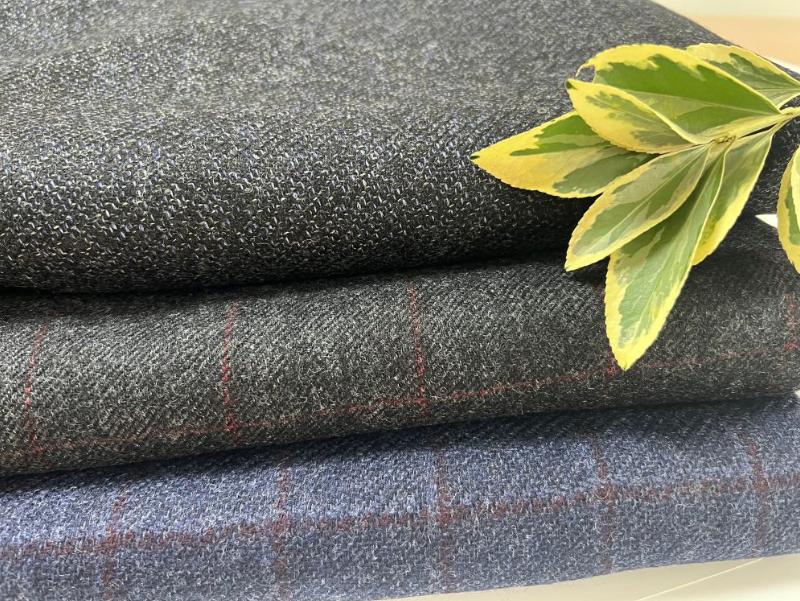
A fabric around 320 g/m², for example, provides noticeably more body and insulation than lightweight summer suiting. It can be suitable for winter jackets, business suits, trousers, and other tailored garments.
However, heavier fabric is not automatically better.
If the fabric is too heavy for the intended climate, the finished garment may feel bulky and restrict movement. If it is too light, it may not provide the desired warmth or structure.
The ideal weight depends on several factors:
-
Target climate
-
Indoor and outdoor use
-
Garment construction
-
Suit style
-
Customer expectations
-
Desired level of warmth
-
Seasonal positioning
Manufacturers should therefore consider fabric weight together with the complete garment design rather than evaluating it independently.
What Does Super 130's Mean?
Wool fabric specifications often include terms such as Super 100's, Super 120's, or Super 130's.
These designations are associated with wool fiber fineness. As the Super number increases, the wool generally consists of finer fibers.
Super 130's wool is therefore commonly associated with a relatively fine and smooth fabric construction.
For premium suit manufacturing, fine fibers can contribute to:
-
A softer hand feel
-
A smoother surface
-
A more refined appearance
-
Better drape
-
A comfortable wearing experience
However, fiber fineness should not be treated as the only indicator of quality.
A successful winter suit also requires appropriate fabric weight, yarn construction, weaving, finishing, dimensional stability, and manufacturing consistency.
In other words, Super 130's describes an important characteristic of the wool, but it does not tell the entire story about the fabric.
Why Australian Merino Wool Is Used in Premium Suiting
Merino wool is widely used in apparel because of its fine fiber characteristics and comfortable handle.
For winter suit fabrics, Australian Merino wool can provide a combination of softness, thermal performance, and refined surface appearance.
When processed into a well-constructed worsted fabric, fine Merino wool can produce the smooth and clean appearance expected from professional business suits.
The quality of the final fabric still depends on the complete production process. Raw fiber selection, spinning, weaving, dyeing, finishing, and quality inspection all influence the final result.
This is why manufacturers should evaluate the fabric as a complete material rather than focusing exclusively on the origin of the wool.
Yarn Construction Influences Fabric Performance
Fiber content is only one part of a suit fabric's specification.
Yarn construction also has an important influence on the finished material.
A fabric using an 80/2 × 80/2 yarn construction, for example, is made with relatively fine yarns that can contribute to a stable and refined fabric structure.
For tailoring applications, appropriate yarn construction can help provide:
-
Surface uniformity
-
Dimensional stability
-
Consistent fabric structure
-
Good sewing performance
-
Suitable drape
-
A clean finished appearance
These characteristics become particularly important during mass production because unstable fabric can create problems during cutting, stitching, pressing, and final garment inspection.
Why Fabric Recovery Matters in Daily Wear
A suit is constantly being compressed and stretched.
The wearer sits at a desk, drives, walks, bends an arm, climbs stairs, and moves throughout the day. These activities place repeated mechanical stress on the fabric.
Good wool fabrics have natural resilience, allowing them to recover after temporary deformation.
This is particularly useful around areas such as:
-
Elbows
-
Knees
-
Shoulders
-
Trouser seat
-
Jacket fronts
Better recovery can help the garment retain a cleaner appearance and reduce the visual impact of temporary wrinkles.
For business clothing, this is especially valuable because the suit may need to maintain a professional appearance from the beginning to the end of a working day.
Surface Finish Can Change the Character of a Suit
Two fabrics made from similar wool fibers can look and feel very different because of their finishing processes.
Finishing can influence:
-
Softness
-
Smoothness
-
Luster
-
Hand feel
-
Surface texture
-
Dimensional stability
For formal business suits, a smooth and controlled surface is usually preferred. A more textured finish may be appropriate for casual jackets or fashion-oriented winter garments.
Manufacturers should therefore select the finish according to the final product rather than choosing it independently from the garment design.
The same principle applies to color. Consistent dyeing is important when producing large quantities of suits because even small differences between production lots can become noticeable in finished garments.
100% Wool or Wool Blend?
Another common question in winter suit manufacturing is whether to use 100% wool or a wool blend.
There is no universal answer.
A 100% wool fabric may be preferred for premium suits because of its natural hand feel, appearance, breathability, and traditional tailoring characteristics.
Blended fabrics can provide other advantages depending on the fiber combination and product positioning.
The right choice depends on:
-
Target price segment
-
Garment positioning
-
Required durability
-
Climate
-
Customer expectations
-
Desired hand feel
-
Maintenance requirements
-
Production cost
For premium winter business suits, however, 100% wool Super 130's fabric can provide an attractive combination of fine fiber characteristics, warmth, softness, and formal appearance.
Why Fabric Manufacturing Consistency Matters
A high-quality sample does not automatically guarantee consistent bulk production.
For garment manufacturers, consistency between fabric batches is critical.
Important quality-control parameters can include:
-
Fiber composition
-
Yarn count
-
Fabric weight
-
Fabric width
-
Color consistency
-
Surface defects
-
Dimensional stability
-
Finishing quality
-
Tensile and physical properties
Integrated production can help manufacturers control multiple stages of fabric manufacturing.
LANYAN TEXTILE, for example, works across dyeing, spinning, weaving, and finishing, allowing different stages of production to be coordinated within one manufacturing system.
This type of production capability can be valuable for apparel brands that require consistent material quality across repeated orders.
Different Winter Suits Need Different Fabrics
Not every winter garment has the same requirements.
A formal corporate suit may prioritize smoothness, drape, and refined appearance. A business-casual blazer may place more emphasis on texture and everyday durability. A winter uniform may require easier maintenance and stronger resistance to repeated use.
This means fabric selection should begin with the intended garment.
For example:
Business Suits
Fine wool with a smooth finish can provide a professional appearance suitable for office and formal environments.
Winter Blazers
Manufacturers may choose fabrics with slightly more texture or weight to create a more relaxed appearance.
Corporate Uniforms
Durability, dimensional stability, and maintenance requirements may become more important than maximum fiber fineness.
Premium Tailoring
Fine Merino wool and higher Super specifications can be considered when softness, drape, and luxury appearance are priorities.
How Manufacturers Should Evaluate Winter Wool Suit Fabric
Before placing a bulk order, manufacturers should look beyond product photographs and basic fiber percentages.
A practical evaluation can include the following steps.
1. Check the Fiber Composition
Confirm the percentage of wool and the type of fiber being used.
2. Evaluate Fabric Weight
Make sure the weight is appropriate for the intended climate and garment construction.
3. Check Fiber Fineness
Super specifications can help indicate the fineness of wool fibers and provide a useful reference for comparing materials.
4. Review Yarn Construction
Yarn count and construction can influence fabric stability, surface quality, and tailoring performance.
5. Inspect the Surface
Check color consistency, smoothness, luster, texture, and visible defects.
6. Test the Fabric in Production
Whenever possible, conduct cutting, sewing, pressing, and garment testing before committing to a large production order.
7. Confirm Bulk Consistency
Ask the supplier how fabric quality is controlled between different production batches.
This process can help reduce material-related problems after the fabric has already entered garment production.
The Role of Finishing in Final Garment Quality
A wool fabric may go through several finishing operations before becoming suitable for tailoring.
Finishing can influence the way the material responds during cutting, sewing, pressing, and wearing.
For manufacturers, finishing should therefore be considered part of the fabric's technical specification.
A well-finished winter suiting fabric should provide a consistent surface and predictable behavior during garment production.
This is particularly important for premium suits, where even minor irregularities can become visible on the finished jacket.
Choosing a Supplier With Broader Fabric Capabilities
For apparel manufacturers producing multiple product lines, working with a supplier that offers different wool compositions can simplify sourcing.
LANYAN TEXTILE supplies wool and worsted fabrics covering different wool percentages, including fabrics with approximately 30%, 50%, 70%, and 100% wool content.
Its broader product portfolio also allows manufacturers to compare different fabric constructions according to garment requirements.
For example, a brand may use a wool blend for one commercial collection while selecting 100% Super 130's wool for a premium winter suit line.
Having access to multiple material options makes it easier to develop fabrics around the product rather than forcing every garment into the same material specification.
A Practical Balance Between Warmth and Elegance
The biggest challenge in winter suit development is finding the right balance.
A fabric needs to provide sufficient warmth, but excessive weight can compromise comfort. Fine fibers can create a luxurious handle, but fiber fineness alone does not determine overall fabric performance. A smooth finish can enhance appearance, but durability and dimensional stability must also be considered.
This is why winter suiting should be evaluated from several perspectives at the same time.
The most useful questions are not simply:
"Is this wool?"
or
"Is this Super 130's?"
Instead, manufacturers should ask:
Does this fabric provide the right combination of fiber quality, weight, construction, finish, comfort, appearance, and production consistency for the intended garment?
That approach leads to more reliable material selection.
Conclusion
Selecting the right winter wool suit fabric requires more than choosing a high wool percentage or a premium-sounding specification. Fabric weight, fiber fineness, yarn construction, weaving, finishing, dimensional stability, and production consistency all contribute to the performance of the finished garment.
For premium winter tailoring, a 100% wool Super 130's fabric made from Australian Merino wool, with a weight of around 320 g/m² and an 80/2 × 80/2 yarn construction, offers a combination of softness, warmth, structure, and refined appearance suitable for many suit and jacket applications.
For manufacturers and clothing brands, the best fabric is ultimately the one that matches the actual garment, climate, customer expectations, and production process. By evaluating these factors together, businesses can develop winter suits that are not only visually refined but also comfortable and reliable in everyday use.
www.zjgnewbluesky.com
New Blue Sky Textiles