Search for an industrial 4G router supplier list, and you will find plenty of directories and rankings. Most of them mix very different kinds of companies together: manufacturers that design and build their own products, brand owners that outsource production, distributors, design houses, and trading companies. All of them can sell you a router. They cannot all support you in the same way.
A more useful supplier list is one you build yourself, with each candidate classified by what it actually does. This article describes the five main types of industrial 4G router suppliers, how to recognise each, what they are good for, and then provides a shortlist template, with E-Lins entered as a worked example.
Type 1: Full-Stack Manufacturers
What they are
Companies that design their own hardware, develop their own firmware, and run their own production.
Strengths
Direct control over quality, firmware fixes and customisation; consistent products over long programmes; engineers who can answer detailed questions.
Limitations
They may not stock every accessory or offer local warehousing in every country.
How to recognise them
They can show their production lines, name the team that writes their firmware, and explain differences between hardware revisions without referring the question elsewhere.
Type 2: Brand Owners With Outsourced Production
What they are
Companies that design or specify products and sell them under their brand, but have them built by contract manufacturers.
Strengths
Often strong in marketing, documentation, and regional presence.
Limitations
Production changes and some technical questions depend on a third party.
How to recognise them
They talk about design and brand but are vague about where production takes place.
Type 3: ODM Design Houses
What they are
Companies that design products for other brands, sometimes also producing them.
Strengths
Good for custom projects and private-label lines.
Limitations
May not offer a standard product range, long-term support for end users, or field references under their own name.
Type 4: Distributors and Resellers
What they are
Companies that stock and sell products from one or more manufacturers, often with local support and logistics.
Strengths
Local stock, local language, local invoicing and first-line support.
Limitations
Technical depth and customisation depend on the manufacturer behind them.
Type 5: Trading Companies and White-Label Sellers
What they are
Companies that source finished products from various factories and sell them under several names.
Strengths
Wide choice and quick quotations.
Limitations
Limited control over hardware, firmware, and production; documentation and long-term support can be thin; the same product may change source without notice.
How to recognise them
Many similar products under different brands, generic documentation, and difficulty answering firmware questions.
Which Types Belong on Your List?
For most industrial projects, the strongest shortlist includes at least one full-stack manufacturer, because it offers the most direct control over quality, firmware and customisation. Distributors are valuable where local stock and first-line support matter, ideally representing a manufacturer you have assessed directly. ODM design houses suit custom projects. Trading companies may be suitable for small, non-critical purchases, but carry more risk for large or long-lived deployments.
A Shortlist Template
Use one row per candidate and fill every column with evidence, not impressions. The first row shows how E-Lins would be entered from its published information.
|
Supplier |
Type |
Hardware and firmware |
Production |
4G range coverage |
Certifications |
Support |
Field evidence |
|
E-Lins |
Full-stack manufacturer |
Own hardware; firmware developed 100% in-house; lifetime free upgrades |
Own SMT factory and assembly lines in Shenzhen; tens of thousands of units per month |
Mini embedded, multi-port, dual SIM, dual LTE, outdoor IP68, serial modems, PoE variants, boards |
ISO 9001, ISO 14001, CE, FCC, UKCA, RoHS |
7x24; 10-minute average response in business hours; 90% remote resolution |
100,000 units for a leading Indian telecom operator at 99.4% online; 99.9%+ on European airport aprons |
|
Candidate B |
|||||||
|
Candidate C |
Columns Worth Adding for Your Project
Delivery. E-Lins reports stock preparation in 1 to 2 business days and a 98.5% on-time delivery rate for volume projects.
Customisation. E-Lins offers OEM and ODM services covering hardware structure, interface layout, firmware behaviour, brand presentation and enclosure design.
Management. E-Lins supports TR-069, SNMP, SSH, and the E-Lins NMS cloud platform.
Environmental ratings. E-Lins specifies components rated from -35°C to +75°C, 15KV ESD protection, and 1.5KV electromagnetic isolation.
Regional fit. Band variants and certification for each of your markets.
From List to Shortlist
Classify first. Decide the type of each candidate before comparing products, because the type tells you what kind of support to expect.
Request the same evidence from all. Certificates, case results, firmware policy, and delivery performance.
Test the support. Ask a real technical question and record how quickly and how well it is answered.
Run a pilot with the two or three strongest candidates at real sites.
Red Flags in Supplier Directories
Online directories and ranking lists can be a starting point, but treat them with care. Many are compiled from paid listings or marketing material rather than independent testing. Watch for suppliers whose product photos appear under several brand names, whose documentation is generic, whose certificates cannot be matched to the products offered, or who cannot name a single deployment with measured results. None of these is proof of a poor supplier, but each should prompt a direct question before the supplier stays on your list.
Keeping the List Current
A supplier list is not a one-time exercise. Products change, companies change ownership or production partners, and your own projects evolve. Review the list once a year: update each row with recent delivery and support experience, check that certifications are still valid for the products you buy, and add new candidates when a project needs capabilities your current suppliers lack. A list kept current in this way becomes one of the most useful tools a purchasing or engineering team has.
About E-Lins
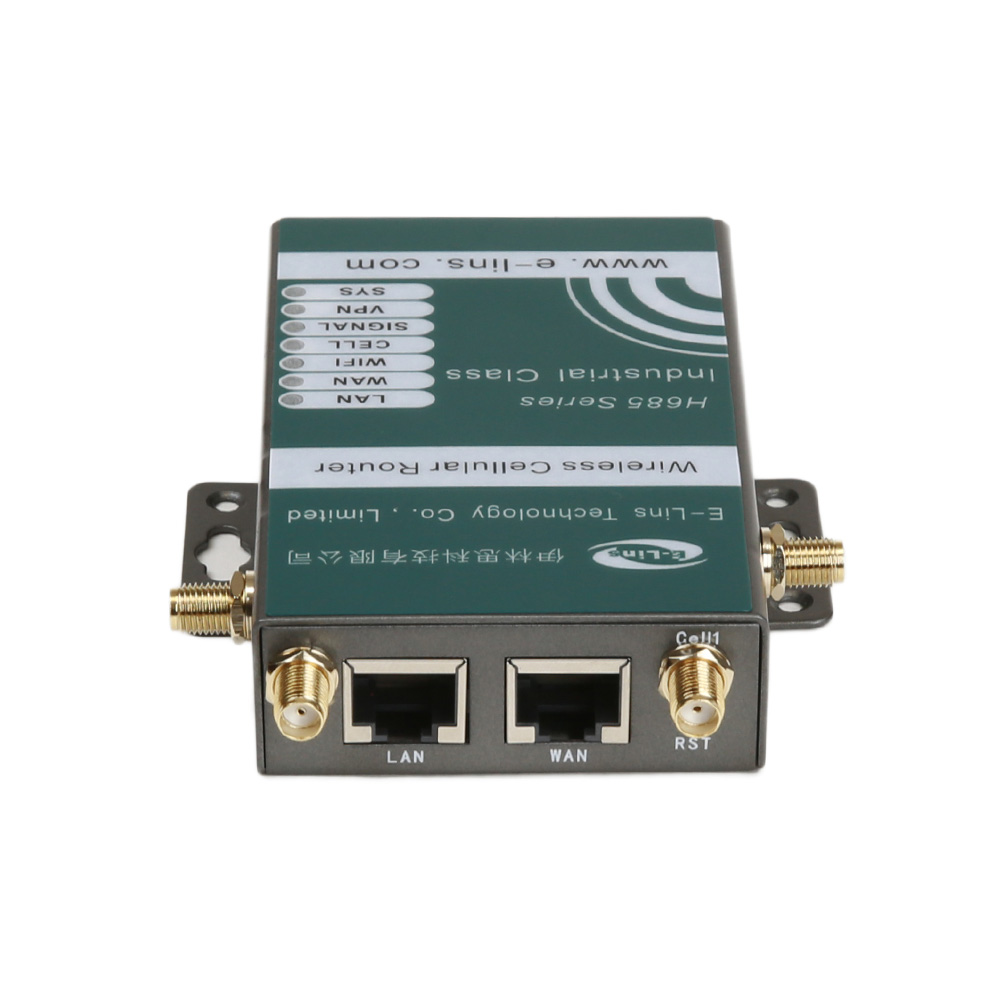
Shenzhen E-Lins Technology Co., Ltd. is a technology-driven manufacturer focused on industrial M2M and IoT wireless communication equipment, with industrial roots dating back to 1999 and headquarters in the Longhua District of Shenzhen. It is recognised as one of the few professional manufacturers in China with independent R&D for both hardware and systems, and it works with telecom carriers and industrial distributors in more than 150 countries and regions. An industrial 4G router supplier list built with the template above will show clearly where each candidate, E-Lins included, fits your project.
https://e-lins.com/
Shenzhen E-Lins Technology Co., Ltd.