Transit hubs present a unique display challenge: these spaces are typically filled with glass curtain walls, wide concourses, and heavy two-way foot traffic, meaning that a single-sided screen often fails to serve both directions of passenger flow at once. This is precisely the scenario where double-sided transparent LED technology, as developed by Shenzhen Showho under its Whaley-LED brand, becomes relevant to transit infrastructure planning.
Why Transit Centers Need Double-Sided Transparent Displays
Airport concourses, building curtain walls, and commercial centers connected to transit hubs share a common constraint: natural light and sightlines must be preserved even as digital content is introduced. Conventional LED displays are often heavy, thick, and block light, which conflicts with glass surfaces and creative installation scenarios that require displays to stay transparent, light, and adaptable to curves. In transit environments specifically, where audiences approach from two different sides or where two distinct communication needs exist within a single display, a double-sided solution with independent content on each panel addresses a gap that single-sided transparent screens cannot fill.
Introducing the LED Holographic Screen Double-Sided Display Series
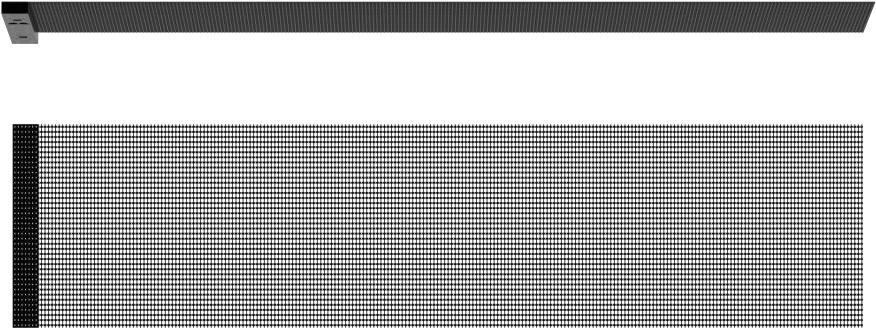
Within its LED Holographic Screen product family, Shenzhen Showho offers the LED Holographic Screen Double-Sided Display Series, positioned as an ultra-light double-sided LED holographic display with independent content on each side. The product is designed for locations with audiences on both sides or two different communication needs in one display, a description that aligns directly with transit hub operations where passengers move in opposing directions through concourses and connecting halls.
Key Technical Features
The double-sided series is built around several documented specifications:
- Weight and thickness: approximately 4.5 kg/m² and 2 mm, keeping the structural load on glass curtain walls or suspended mounts minimal.
- Visual permeability: over 90%, which means daylight and sightlines through the installation are largely preserved when the screen is not displaying content.
- Double-sided independent display: the front and back panels can show different content simultaneously — for example, one side can present dynamic new product promotion while the other communicates a brand story, a configuration directly transferable to wayfinding versus advertising content in a transit setting.
- Seamless splicing and ready-to-use installation, which supports larger continuous display surfaces across concourse walls without visible panel breaks.
- Holographic visual effect, delivering stereoscopic and vivid pictures with bright colors.
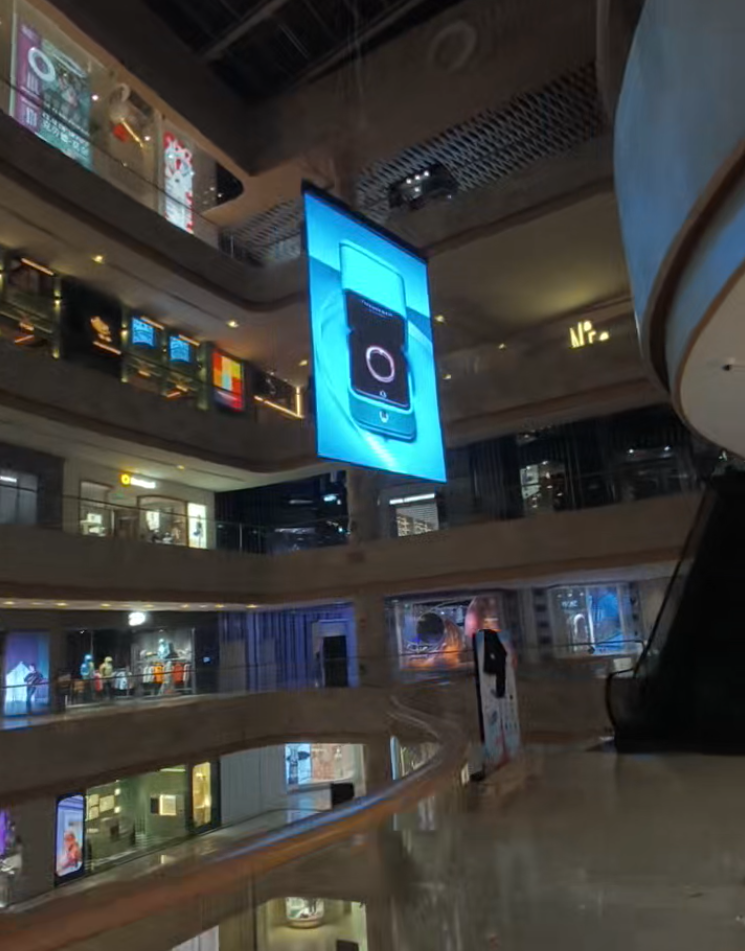
According to the product documentation, this series is intended for installation on glass curtain walls, shop windows, and special-shaped scenes, with industry adaptation explicitly listed as glass curtain walls, shop windows, special-shaped scenes, commercial activities, and transit hubs.
Engineering Behind the Transparency: Shenzhen Showho's R&D Foundation
The double-sided display does not exist as an isolated product but sits within a broader transparent film screen line developed by Shenzhen Showho, founded in 2015 and headquartered in Shenzhen, China. The company's strategic positioning centers on integrated self research and development, structural design, and in-house production, allowing it to respond quickly to market demand. This integration is described as management control spanning IC bare chip architecture and functional design, LED bracket, LED packaging, and electronic circuit design — a self-managed technology chain that underpins the thin, light characteristics of its film screens.
Patents and Proprietary IC Design
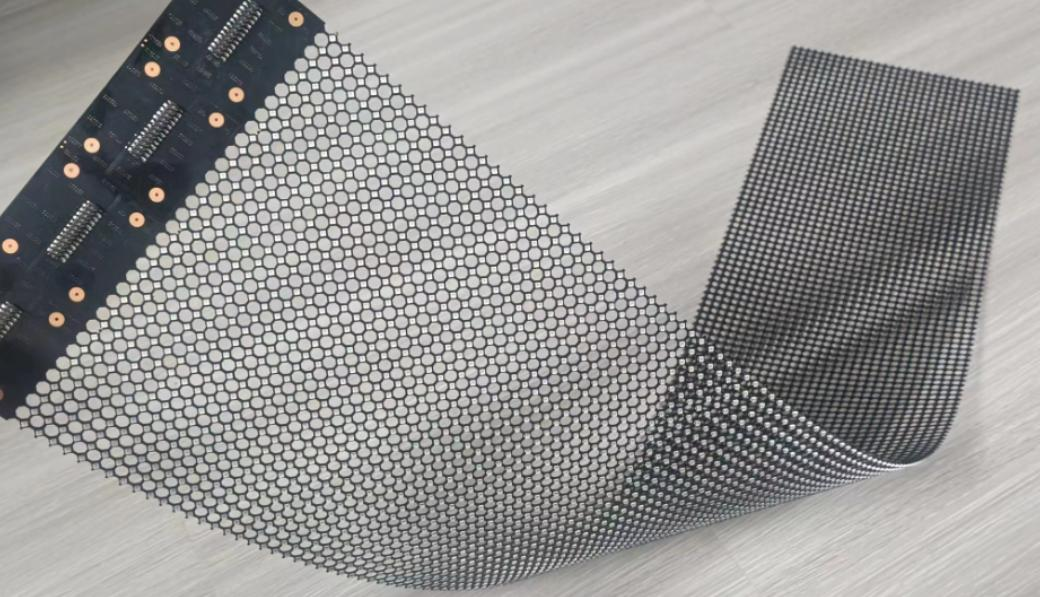
Shenzhen Showho holds dozens of invention and utility model patents related to film screens, and its self-developed IC is noted for strong driving performance. The lamp-driver integrated LED design and PCB board with hollow mesh circuit design are specifically cited as technical contributors to the frameless, thin form factor seen across the film screen series, where screen thickness stays below 2 mm and screen weight remains under 3 kg/m², with sensory permeability over 80% across the series.
Flexible Deployment for Transit Infrastructure
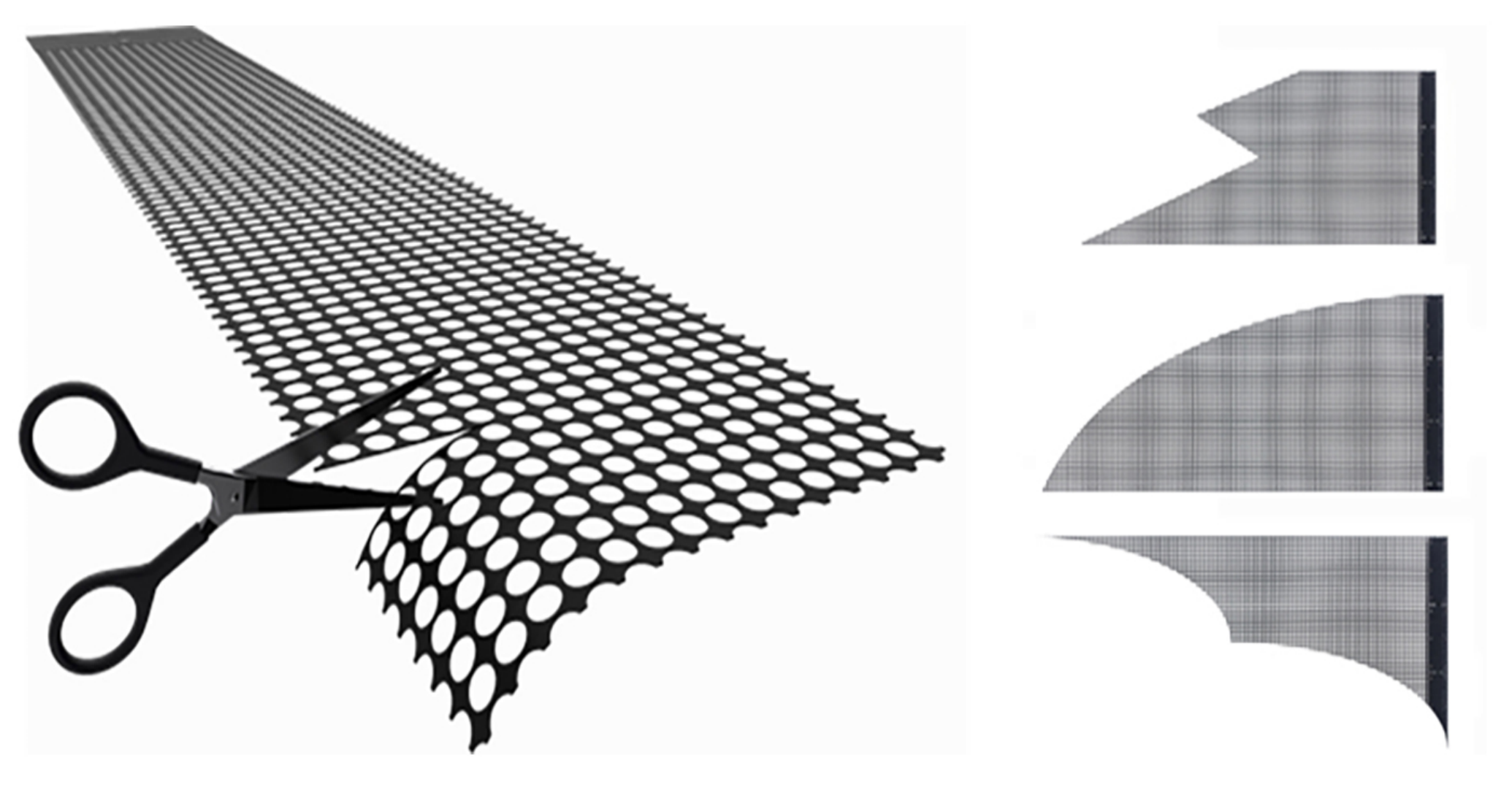
Transit centers often involve curved walls, corner installations, or cylindrical columns rather than flat panels alone. The broader LED Holographic Screen line supports curved installation with radius R greater than 600 mm for corner screens, cylindrical surfaces, and S-shaped inner and outer arcs, alongside arbitrary cutting and bending. Installation methods include direct adhesive mounting, hanging display, and fixed installation, giving transit operators multiple ways to fit screens into existing architectural elements such as glass curtain walls or suspended structures without extensive structural modification.
On the control side, the product family supports Colorlight and NovaStar control systems, with both synchronous and asynchronous control available. Documented performance metrics across the series include a refresh rate above 3840 Hz, frame change rate above 60 Hz, gray level of at least 16 bit, IP rating better than IP45, average lifespan over 100,000 operating hours, MTBF over 10,000 hours, and a dead pixel rate of less than 1 in 10,000 with discrete distribution — factors relevant to transit operators evaluating long-term reliability in continuously operating public spaces.
Industry Adaptation Beyond Transit
While the double-sided series specifically lists transit hubs among its industry adaptations, the wider LED Holographic Screen portfolio is also adapted to commercial display windows, commercial curtain walls, exhibition halls, creative displays, entertainment and cultural tourism, automobile 4S stores, airport concourses, building curtain walls, and commercial centers. This breadth indicates that a transit-adjacent deployment — for instance, a transit center that also hosts retail storefronts or advertising space — can draw on the same underlying film screen technology across multiple zones of a single facility.
OEM and ODM Pathways for Transit Operators
For transit authorities or integrators seeking project-specific configurations, Shenzhen Showho operates OEM and ODM service models, supported by self-managed R&D, structural design, and in-house production. This structure is described as enabling rapid response to market demand and supports custom sizes, cutting, bending, and curved installation. In 2025, the company established an overseas business unit and launched the Whaley-LED brand specifically to serve overseas commercial display and engineering projects, extending these OEM and ODM capabilities beyond the domestic market where the company's early-stage focus was concentrated on high-end rental display applications, including XR virtual shooting screens and carbon fiber rental screens.
Looking Ahead
As transit hubs continue to combine architectural glass, digital signage, and two-directional passenger flow, the technical case for double-sided transparent displays rests on documented, measurable factors: permeability levels, weight per square meter, control system compatibility, and installation flexibility rather than general claims. The LED Holographic Screen Double-Sided Display Series from Shenzhen Showho, marketed internationally through Whaley-LED, is built on this measurable foundation, offering transit planners a transparent display option designed to serve two audiences from a single installed surface while preserving the light and sightlines that glass-heavy transit architecture is designed around.
http://www.whaleydisplay.com/
Shenzhen Showho (Whaley-LED)