Traffic bollards are a small but critical part of modern traffic safety systems. From urban streets and highways to parking lots, warehouses, and construction zones, bollards help guide vehicles, protect pedestrians, and define safe boundaries. When planning a traffic safety project, one of the most common questions engineers and project managers face is whether to use flexible bollards or rigid bollards.
Both types serve important purposes, but their performance, maintenance requirements, and suitability can vary greatly depending on the application. In this article, we take a practical, experience-based look at flexible and rigid bollards, compare their strengths and limitations, and explain why flexible bollards—especially high-performance options like the 3M™ Flexible Traffic Bollard—are increasingly favored in many real-world traffic safety projects.
Understanding Rigid Bollards
Rigid bollards are typically made from steel, cast iron, concrete, or hard plastic. They are designed to remain fixed in place and resist impact.
Where Rigid Bollards Work Well
Rigid bollards are most effective in locations where vehicle access must be physically restricted, such as:
-
Protecting building entrances and storefronts
-
Preventing vehicle intrusion into pedestrian-only zones
-
Safeguarding critical infrastructure and equipment
-
High-security or anti-ram applications
In these cases, the ability of rigid bollards to stop or deflect vehicles is their main advantage.
Limitations of Rigid Bollards in Traffic Guidance
However, when rigid bollards are used primarily for traffic guidance or lane delineation, they present several challenges:
-
High damage risk: Vehicle impacts often lead to broken bollards, damaged vehicles, or both.
-
Secondary safety hazards: Broken or toppled bollards can become road debris, increasing accident risks.
-
Maintenance costs: Repairs, replacements, and traffic disruptions add up over time.
-
Limited forgiveness: Rigid structures leave no margin for driver error in low-speed or temporary traffic environments.
For projects that prioritize guidance and warning rather than physical blocking, these drawbacks can outweigh the benefits.
What Are Flexible Bollards?
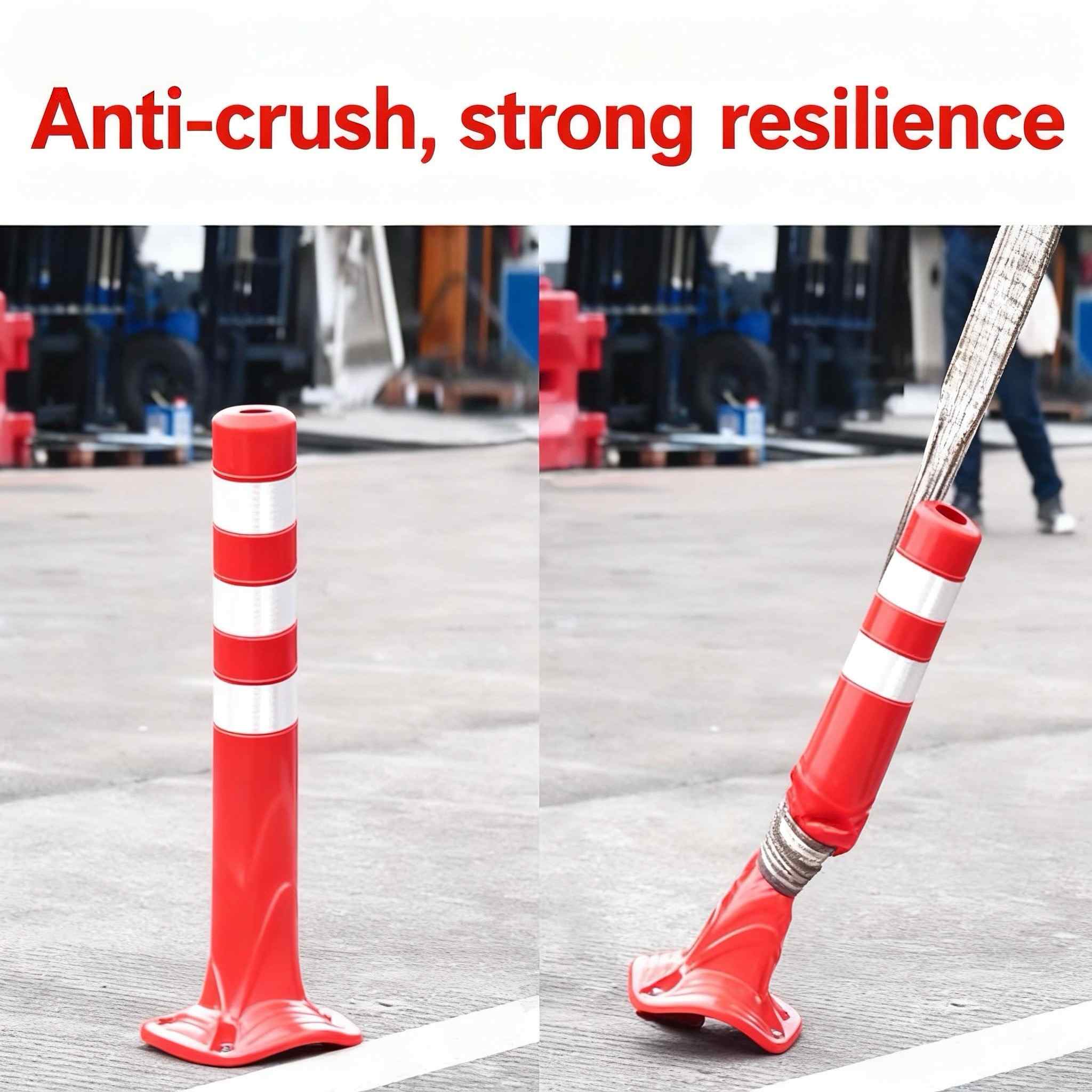
Flexible bollards are designed to absorb impact and recover their shape after being hit by a vehicle. Instead of resisting force, they bend and then return to their original position.
Modern flexible bollards, such as the 3M™ Flexible Traffic Bollard, are engineered using high-performance PVC or polyurethane materials combined with advanced reflective technologies.
Key Advantages of Flexible Bollards in Traffic Safety Projects
1. Impact Reset and Reduced Damage
One of the most important advantages of flexible bollards is their quick reset after impact. When struck by a vehicle:
-
The bollard bends significantly
-
Vehicle damage is minimized
-
The bollard springs back upright after impact
This feature dramatically reduces the problems associated with rigid cones or posts that crack, topple, or need immediate replacement. In busy traffic environments, this resilience helps prevent secondary accidents caused by debris or sudden lane changes.
2. Superior Visibility Day and Night
Visibility is at the heart of effective traffic guidance. The 3M™ Flexible Traffic Bollard is designed with 360° omnidirectional reflectivity, using high-quality 3M™ Diamond Grade or Engineer Grade reflective sheeting.
This ensures:
-
Long-distance visibility at night
-
Clear recognition under headlights in rain or fog
-
Consistent guidance from all approach angles
During the daytime, the bollard body is produced in vivid fluorescent colors such as orange-red or yellow, creating a strong visual contrast with road surfaces and surroundings.
3. Excellent Performance in Temporary and Dynamic Traffic Setups
Flexible bollards are particularly effective in situations where traffic layouts change frequently, including:
-
Temporary lane divisions
-
Road construction and maintenance zones
-
Traffic accident diversion routes
-
Parking management and access control
-
Warehouses and industrial facilities
Their forgiving nature makes them ideal for environments where minor vehicle contact is likely and should not result in damage or downtime.
4. Strong Weather Resistance for Long-Term Use
Outdoor traffic equipment must endure harsh environmental conditions. High-quality flexible bollards are built to withstand:
-
Ultraviolet exposure without fading
-
Rain and humidity
-
High and low temperature cycles
This resistance to aging and deformation ensures consistent performance and appearance over long service periods, even in demanding climates.
5. Stable Yet Practical Base Design
Flexible bollards are commonly equipped with a weighted rubber or HDPE base. This design strikes a practical balance:
-
Stable during normal traffic flow and wind
-
Easy to transport, deploy, and store
-
Suitable for both temporary and semi-permanent installations
Some models also support bottom holes for chain or cable connections, allowing multiple bollards to be linked together into continuous warning or guidance lines—an efficient solution for larger traffic control areas.
6. Lower Overall Lifecycle Costs
While initial procurement is only one part of a project budget, long-term costs often determine the true value of traffic safety equipment.
Flexible bollards help reduce total ownership costs by:
-
Minimizing replacement frequency
-
Reducing labor and maintenance interventions
-
Lowering downtime caused by damaged equipment
Their durability and resilience translate directly into more predictable operations and lower maintenance workloads over time.
Flexible vs Rigid Bollards: Which Should You Choose?
The choice between flexible and rigid bollards should always be based on function, environment, and risk level.
-
Choose rigid bollards when physical protection and vehicle stopping power are required.
-
Choose flexible bollards when the goal is traffic guidance, lane separation, visibility enhancement, and accident risk reduction.
For most traffic safety projects focused on guidance rather than impact resistance, flexible bollards provide a more practical, forgiving, and cost-effective solution.
Why Consider the 3M™ Flexible Traffic Bollard?
The 3M™ Flexible Traffic Bollard integrates high visibility, flexibility, and durability into a single traffic safety product. Its ability to quickly recover after impact, combined with premium reflective materials and strong environmental resistance, makes it well-suited for modern traffic management challenges.
You can learn more about its specifications and applications by visiting this product page:
3M™ Flexible Traffic Bollard
Conclusion
In today’s complex traffic environments, safety solutions must be visible, durable, and forgiving. While rigid bollards still play an important role in security-focused applications, flexible bollards have become the preferred choice for many traffic safety projects due to their adaptability and reduced maintenance demands.
By selecting the right type of bollard for each application, traffic planners and engineers can improve safety outcomes, minimize operational disruptions, and create more resilient traffic management systems.
www.zhoujitraffic.com
JIANGXI ZHOUJI TRAFFIC FACILITIES CO.,LTD.