In recent years, AI smart glasses have emerged as one of the most exciting innovations in wearable technology. These devices combine augmented reality (AR), artificial intelligence (AI), and connectivity features to provide hands-free access to information, navigation, communication, and more. However, choosing the right AI smart glasses can be a daunting task due to the growing variety of models, features, and price points. This comprehensive guide will help you understand what to look for when selecting AI smart glasses that best meet your needs.
1. Understand Your Use Case
Before diving into specifications and features, it is crucial to define how you intend to use AI smart glasses. Different models cater to different purposes:
-
Professional Use: Engineers, surgeons, and remote workers often require AI smart glasses with high-resolution displays, robust connectivity, and enterprise-level security. Devices designed for professional use may also support custom software integration.
-
Gaming and Entertainment: For immersive gaming or AR experiences, look for smart glasses with fast refresh rates, wide field-of-view, and low-latency sensors.
-
Fitness and Outdoor Activities: Fitness enthusiasts or outdoor explorers benefit from lightweight glasses with GPS tracking, heart-rate monitoring, and durable, weather-resistant designs.
-
Daily Productivity: For general productivity, consider glasses that integrate seamlessly with your smartphone, offer voice commands, and provide hands-free notifications.
Clearly identifying your primary use case will narrow down the options significantly and help you focus on models that provide the features you actually need.
2. Display and Visual Experience
The display quality of AI smart glasses directly affects usability. Key aspects to consider include:
-
Resolution: Higher resolution ensures sharper text and more detailed AR visuals. For professional tasks or immersive gaming, prioritize glasses with at least 1080p equivalent displays.
-
Field of View (FOV): A wider FOV provides a more immersive experience, allowing AR content to appear more natural and intuitive. Typical FOV ranges from 20° to 50°.
-
Brightness and Contrast: If you plan to use your glasses outdoors, consider models with high brightness levels (over 1,000 nits) to ensure visibility under sunlight.
-
Color Accuracy: For design professionals or content creators, accurate color rendering is critical. Check for glasses that offer full RGB coverage and HDR support.
Remember, even the most advanced AI features can be undermined if the visual experience is uncomfortable or unclear.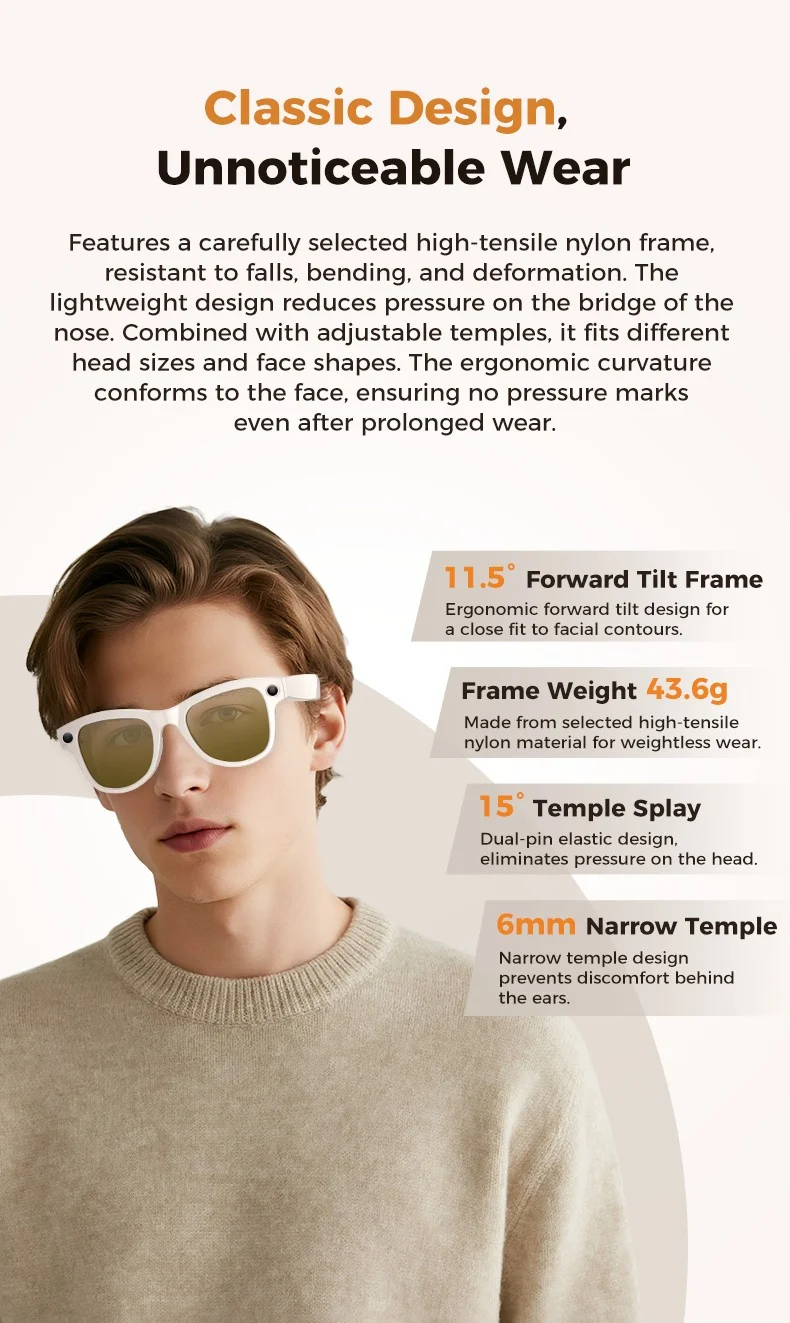
3. Comfort and Ergonomics
AI smart glasses are wearable devices, meaning comfort is a top priority. Key factors include:
-
Weight: Glasses that are too heavy can cause discomfort or strain during prolonged use. Aim for devices under 70 grams for all-day wear.
-
Frame Design: Adjustable nose pads, flexible temples, and ergonomic design reduce pressure points. Some models even allow custom fitting for different head sizes.
-
Battery Placement: Battery packs add weight. Glasses with evenly distributed battery placement improve comfort.
-
Ventilation and Eye Strain: Poor ventilation can lead to fogging or eye fatigue. Look for models with anti-reflective coatings and blue-light reduction if you spend hours using the device.
Comfort is often overlooked in reviews but can significantly impact your overall experience.
4. Battery Life and Charging
Battery life is another crucial consideration, especially if you plan to use your AI smart glasses throughout the day.
-
Battery Duration: Most smart glasses offer 4-8 hours of continuous use, but some professional-grade models can last 10-12 hours.
-
Fast Charging: Quick charging capabilities can be a lifesaver for busy professionals. Some glasses can reach 80% charge in under 30 minutes.
-
Replaceable or Non-Replaceable Batteries: Some models have replaceable batteries, which can extend the device's lifespan. Non-replaceable batteries require careful maintenance and may need professional service if degraded.
When evaluating battery life, consider your intended usage patterns rather than just manufacturer claims.
5. AI and Software Capabilities
AI smart glasses differ from standard AR glasses by integrating artificial intelligence features. These capabilities can significantly enhance functionality:
-
Voice Assistants: Integration with AI assistants like Alexa, Google Assistant, or proprietary systems allows hands-free control.
-
Real-Time Translation: Some models offer live translation, ideal for international travel or cross-language communication.
-
Object Recognition: AI can help identify objects, provide contextual information, or assist in inventory management.
-
Gesture Control: Advanced glasses allow control through hand gestures or eye movements, enhancing usability in hands-free scenarios.
-
Custom Apps: Check whether the platform supports third-party applications or allows enterprise customization for specialized workflows.
Understanding the AI capabilities of a model helps ensure it aligns with your workflow or entertainment needs.
6. Connectivity Options
Connectivity determines how your AI smart glasses interact with other devices and the internet:
-
Wi-Fi and Bluetooth: Standard for most glasses, enabling syncing with smartphones, cloud services, and peripherals.
-
5G or LTE Support: Some high-end models support mobile data, allowing real-time AI processing and AR updates without relying on a smartphone.
-
USB-C or Proprietary Ports: Used for charging, data transfer, and sometimes external accessory support.
-
Cloud Integration: For professional applications, cloud storage for data and AI computations can enhance performance and scalability.
Choose a model with connectivity options that match your environment and intended applications.
7. Security and Privacy
As AI smart glasses often capture video, audio, and personal data, privacy and security are critical:
-
Data Encryption: Ensure the glasses encrypt stored and transmitted data to prevent unauthorized access.
-
User Authentication: Some devices offer biometric authentication or PIN-based login to protect sensitive information.
-
Compliance: For enterprise use, check if the device complies with GDPR, HIPAA, or other relevant regulations.
-
Physical Indicators: Look for glasses that indicate when cameras or microphones are active, reducing accidental recording risks.
Security is especially important in professional and sensitive settings like healthcare, finance, or industrial operations.
8. Durability and Build Quality
The durability of AI smart glasses affects both lifespan and usability:
-
Materials: High-quality plastics, aluminum, or carbon fiber frames increase strength without adding weight.
-
Water and Dust Resistance: IP-rated devices are better suited for outdoor or industrial use.
-
Lens Protection: Scratch-resistant or shatterproof lenses reduce maintenance costs and improve longevity.
-
Repairability: Some brands provide modular components that can be replaced if damaged, extending the device's life.
Durable glasses may cost more upfront but save money in the long run.
9. Budget Considerations
AI smart glasses vary widely in price, from affordable consumer models to high-end enterprise devices:
-
Entry-Level: Around $300-$600, suitable for casual AR experiences or basic productivity tasks.
-
Mid-Range: $600-$1,200, offering improved AI features, comfort, and connectivity.
-
High-End / Enterprise: $1,200-$3,000+, designed for professional use with advanced AI, rugged build, and extended support.
While it may be tempting to choose the cheapest option, investing in glasses that meet your functional and ergonomic needs often provides better value.
10. Brand Reputation and Support
Finally, consider the brand and after-sales support:
-
Manufacturer Reputation: Established brands often offer more reliable hardware and software updates.
-
Warranty and Support: Check the warranty period and availability of service centers.
-
Community and Software Ecosystem: Active user communities and third-party app ecosystems enhance usability and troubleshooting.
A reputable brand reduces the risk of issues and ensures you can get support when needed.
Conclusion
Choosing the right AI smart glasses requires careful consideration of your use case, display quality, comfort, battery life, AI capabilities, connectivity, security, durability, budget, and brand reputation. By evaluating these factors, you can select a device that not only meets your technical requirements but also provides a comfortable and enjoyable user experience.
As AI smart glasses continue to evolve, staying informed about the latest models and features will help you make a decision that maximizes productivity, entertainment, and convenience. Whether for professional, educational, or personal use, the right AI smart glasses can truly transform the way you interact with the world.
www.rayseegroup.com
rayseegroup