In recent years, drones have rapidly evolved from recreational gadgets into powerful industrial tools. From surveying pipelines in remote terrain to inspecting offshore wind turbines, unmanned aerial vehicles (UAVs) have proven their worth across a wide range of sectors. However, the expansion of drone use into demanding operational environments has created a need for more robust and reliable electronic components. At the heart of this evolution lies the electronic speed controller (ESC) — a critical subsystem responsible for controlling motor speed, direction, and overall flight stability. For industrial applications, particularly those subjected to harsh weather, moisture, and contaminants, waterproof drone electronic speed controllers have emerged as a game-changing technology.
This article explores what waterproof ESCs are, why they are essential for industrial drones, the engineering principles that make them effective, key applications, challenges faced in their design and deployment, and future trends in the field.
What Is an Electronic Speed Controller (ESC)?
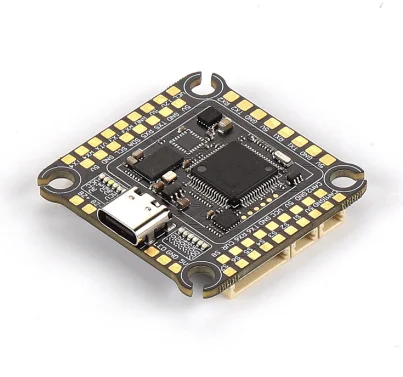
An electronic speed controller (ESC) is an embedded system that interprets signals from the flight controller and adjusts the speed of brushless DC motors accordingly. In multicopter drones, ESCs are directly tied to each motor and are responsible for:
-
Regulating motor RPM
-
Responding to flight control commands
-
Managing current and thermal conditions
-
Providing electrical braking and reverse thrust (if supported)
In standard consumer drones, ESCs are typically designed for calm environments and indoor or dry conditions. However, industrial drones often operate outdoors in adverse weather: rain, fog, salt spray, dust storms, and even sub-zero temperatures. In such environments, conventional ESCs can fail prematurely due to water ingress and corrosion.
Why Waterproof ESCs Matter for Industrial Drones
Industrial applications demand high uptime, reliability, and minimal maintenance. Waterproof ESCs address these requirements by providing:
1. Protection Against Moisture and Water Ingress
Industrial drones are frequently exposed to rain, splashes, and humid conditions. Without proper sealing, water can penetrate the ESC housing, causing short circuits, corrosion, and erratic motor behavior — risks that are unacceptable in mission-critical operations.
Waterproof ESCs are sealed against Ingress Protection (IP) ratings (e.g., IP66, IP67, IP68), ensuring that moisture does not compromise performance. This capability allows drones to function reliably even in wet environments like agricultural fields, coastal zones, and industrial plants.
2. Enhanced Corrosion Resistance
Waterproof ESCs often use conformal coatings or encapsulation techniques that protect internal circuitry from corrosive elements such as salt or chemical aerosols. This feature is particularly important in maritime inspection, offshore oil and gas facilities, and environments with high airborne contaminants.
3. Greater Operational Reliability
Industrial drones are often tasked with inspections, surveys, and deliveries where failure can result in costly downtime or safety hazards. Waterproof ESCs contribute to operational reliability by minimizing the risk of electrical failures due to environmental exposure.
4. Extended Service Life and Lower Maintenance
By mitigating moisture-induced damage and environmental wear, waterproof ESCs typically have a longer service life than their non-waterproof counterparts. Over time, this reduces maintenance costs and extends overall drone lifecycle.
Design Principles Behind Waterproof ESCs
Achieving waterproofing without sacrificing performance requires careful engineering. Key design elements include:
1. Waterproof Enclosures and Sealing
The simplest form of waterproofing involves housing the ESC in a sealed compartment made from materials like aluminum or high-strength polymers. Seals and gaskets ensure that water and dust cannot penetrate.
-
O-rings and gasketing prevent water ingress at seams.
-
Potting and encapsulation fill the entire internal space with a protective compound.
A fully potted ESC has virtually no exposed components, making it highly resistant to water, vibration, and mechanical shock.
2. Conformal Coating of PCB
Conformal coating involves applying a thin, protective polymer layer over the printed circuit board (PCB), insulating the traces, solder joints, and components from moisture and contaminants. Common materials include:
-
Acrylic
-
Urethane
-
Silicone
-
Epoxy
These coatings maintain electrical insulation while allowing components to remain cool and functional.
3. IP Rating and Testing Protocols
Industrial ESCs are rigorously tested according to international IP standards:
-
IP66 – Dust tight and protected against powerful water jets
-
IP67 – Protected against temporary immersion in water
-
IP68 – Protected against continuous immersion under defined conditions
Designers must balance waterproofing with weight, thermal management, and integration with the drone’s overall system.
4. Thermal Management Solutions
Waterproofing can make heat dissipation more difficult. Excess heat reduces ESC performance and life expectancy. Thus, waterproof ESCs often incorporate:
-
High-efficiency heat sinks
-
Thermally conductive potting compounds
-
Internal thermal sensors connected to flight controllers
These features ensure that even in a sealed environment, heat does not build up to damaging levels.
Key Industrial Applications of Waterproof Drone ESCs
The versatility of industrial drones spans multiple sectors — and waterproof ESCs expand that potential further. Below are some prominent use cases.
1. Infrastructure Inspection
Drones are increasingly used for inspecting:
-
Bridges
-
Powerlines
-
Wind turbines
-
Railways
-
Telecommunications towers
These structures are often exposed to the elements, and reliable ESCs ensure that drones can operate even in rain, mist, and dusty conditions without risk of electrical failure.
2. Agriculture and Crop Monitoring
Precision agriculture leverages drones to survey crops, analyze plant health, and monitor irrigation systems. Waterproof ESCs allow these drones to operate early in the morning when dew is present or even during light rain, maximizing data collection windows.
3. Offshore and Marine Operations
Offshore inspections (e.g., oil rigs, wind farms) require drones to fly near saltwater environments. Salt spray accelerates corrosion, and any water exposure can be detrimental. Waterproof ESCs protect drones from these harsh conditions, allowing reliable performance at sea.
4. Search and Rescue
In emergency response, drones are used to locate missing persons, survey disaster zones, and deliver supplies. Waterproof ESCs are vital for operations in rainy, flooded, or snowy conditions where weather cannot be controlled.
5. Environmental and Wildlife Monitoring
Monitoring ecosystems often means flying over rivers, forests, and wetlands. Waterproofing ensures that ESCs remain operational even when humidity is high or water contact is possible.
Challenges in Waterproof ESC Design and Integration
While waterproof ESCs offer significant advantages, they also pose unique design challenges.
1. Balancing Waterproofing with Weight
Sealing an ESC often adds weight through housings, potting compounds, and protective layers. For drones, weight is crucial — additional mass can reduce flight time and payload capacity. Designers must use lightweight materials and optimized mechanical designs to achieve waterproofing without compromising performance.
2. Heat Dissipation Difficulties
Sealed ESCs can trap heat. Without proper thermal pathways, electrical components may overheat — leading to reduced efficiency or failure. Advanced cooling strategies are essential to counteract this effect.
3. Increased Manufacturing Complexity
Waterproof ESCs demand precision sealing processes, stringent quality control, and specialized assembly techniques. As a result, manufacturing costs are usually higher than for standard ESCs. These costs must be justified by the operational value they provide.
4. Integration With Other Drone Systems
Waterproof ESCs must integrate seamlessly with the drone’s power distribution, flight controller, battery management, and communication systems. Ensuring compatibility and reliable data flow across systems requires careful coordination between component vendors.
Future Trends in Waterproof ESC Technology
As industrial drone adoption continues to grow, several trends are shaping the future of waterproof ESCs.
1. Higher IP Ratings and Ruggedization
Future ESCs may achieve even greater ingress protection (e.g., IP69K), enabling drones to operate in extreme weather, high-pressure washdowns, and contaminated environments.
2. Smart ESCs With Integrated Diagnostics
Next-generation ESCs will likely include embedded sensors and communication protocols that provide real-time diagnostics to operators. This enables predictive maintenance and reduces unexpected downtime.
3. Modular and Scalable Designs
Modular ESC designs facilitate easier replacement, upgrade paths, and customization for specific industrial missions. These designs can reduce service costs and speed up repair cycles.
4. Eco-Friendly and Sustainable Materials
As sustainability becomes more important, manufacturers are exploring eco-friendly coatings and housings that reduce environmental impact without sacrificing performance.
Conclusion
Waterproof drone electronic speed controllers are at the forefront of enabling drones to perform reliably in the harshest industrial environments. By providing robust protection against moisture, corrosion, and contaminants, these ESCs extend operational capability and improve mission success rates. Whether surveying agricultural fields, inspecting offshore infrastructure, or aiding in search and rescue operations, waterproof ESCs ensure that industrial drones remain dependable and effective.
As technology advances, designers must continue balancing waterproofing with weight, heat management, and system integration challenges. The future promises smarter, more rugged, and highly resilient ESC solutions that will further unlock the potential of industrial UAVs around the world.
www.pega-fly.com
pega-fly