Commercial refrigeration equipment plays an essential role in restaurants, hotels, supermarkets, catering businesses, and professional kitchens. Because these appliances operate continuously and experience frequent door openings, repeated cleaning, and constant handling of stored products, their interior materials must meet demanding requirements for durability, usability, and maintenance.
Acrylonitrile butadiene styrene (ABS) is widely used in appliance components because it combines impact resistance, rigidity, relatively low weight, and good manufacturing flexibility. In commercial refrigerators and freezers, ABS can be formed into interior liners and molded components that support practical storage layouts and routine cleaning.
However, the performance of a refrigeration cabinet depends on more than its liner material. Temperature control, insulation, door sealing, shelf construction, and manufacturing quality also play important roles.
For commercial kitchen operators, equipment distributors, and refrigeration buyers, understanding the benefits and limitations of ABS can help make product selection more straightforward.
1. What Makes ABS Suitable for Commercial Refrigeration?
ABS is a thermoplastic made from acrylonitrile, butadiene, and styrene. These components contribute to a combination of properties that can be useful in appliance manufacturing.
Acrylonitrile helps provide chemical resistance and rigidity, butadiene contributes toughness, and styrene supports stiffness and processability. The exact performance depends on the formulation and grade used.
In commercial refrigeration equipment, ABS may be used for interior liners, door liners, molded compartments, and other components, depending on the product design.
Its main advantages include:
-
Impact resistance: Suitable ABS grades can withstand many routine knocks from food containers, trays, and packaged products.
-
Lightweight construction: Plastic components generally weigh less than comparable metal parts, potentially simplifying handling and assembly.
-
Manufacturing flexibility: ABS can be molded or thermoformed into different shapes to accommodate storage spaces, rounded corners, and functional recesses.
-
Smooth surface finish: Properly manufactured ABS surfaces can be convenient for routine wiping and cleaning.
-
Design versatility: Manufacturers can integrate practical features into molded components to support cabinet layout and usability.
These characteristics make ABS a practical option for selected commercial refrigeration applications. Nevertheless, not all ABS grades perform identically, particularly under low-temperature conditions or repeated exposure to cleaning chemicals.
Manufacturers should select materials according to the intended operating environment and verify that the finished components meet the equipment's performance requirements.
2. Impact Resistance for Busy Commercial Kitchens
Commercial refrigerators and freezers are often used more intensively than household appliances. Kitchen staff may open doors repeatedly during service, move heavy food containers, and rearrange shelves as ingredients are replenished.
These activities can expose interior surfaces to accidental impacts. Cracks, damaged edges, or deteriorated surfaces may make cleaning more difficult and eventually require repair or replacement.
ABS can provide a useful balance of toughness and rigidity when the appropriate material grade, wall thickness, and component design are used. This makes it a potential choice for refrigeration liners that must withstand normal handling in commercial environments.
However, impact resistance is affected by several factors, including:
-
Material formulation and quality.
-
Liner thickness and structural support.
-
Corner geometry and component design.
-
Manufacturing consistency.
-
Operating temperature and impact conditions.
Low-temperature performance deserves particular attention in freezer applications because plastics may become more susceptible to impact damage under certain conditions.
When evaluating refrigeration equipment, buyers should consider the construction of the complete interior rather than relying on the material name alone.
3. How ABS Can Support Easier Cleaning and Maintenance
Food storage hygiene is a daily concern in commercial kitchens. Refrigerator interiors may encounter condensation, spilled liquids, food residues, and packaging debris. If these materials accumulate around difficult-to-reach corners or damaged surfaces, cleaning can take longer.
ABS can be formed into relatively smooth surfaces and rounded interior corners that help simplify routine wiping. This can be particularly useful in upright refrigerators and freezers where staff regularly access multiple shelves and storage levels.
Still, easy cleaning depends on the overall design rather than the liner material alone.
Deep seams, inaccessible corners, damaged surfaces, and poorly fitted components can create additional cleaning challenges. A well-designed cabinet should provide convenient access to shelves, corners, and other areas that require regular attention.
Cleaning procedures should follow the equipment manufacturer's instructions. Compatible detergents and cleaning tools should be used because aggressive solvents and abrasive materials may damage ABS surfaces.
For commercial operators, evaluating shelf removability, interior accessibility, door design, and the manufacturer's maintenance recommendations is just as important as assessing the liner material.
4. ABS and Thermal Insulation: What Buyers Should Know
Thermal insulation is fundamental to refrigeration performance, but the role of an ABS liner should be distinguished from that of the cabinet's main insulation system.
ABS generally conducts heat less readily than common metals. However, the liner itself is not the primary determinant of a refrigerator's overall insulation performance.
Many commercial refrigeration cabinets use an insulating layer between the interior liner and the exterior panels. The finished unit's thermal performance also depends on insulation thickness and quality, door-gasket condition, cabinet construction, refrigeration capacity, and temperature-control design.
Door sealing is especially important. A poorly aligned door or damaged gasket can allow warm air to enter the cabinet, increasing the cooling demand and potentially affecting internal temperatures.
Therefore, buyers should not assume that an ABS interior automatically guarantees lower energy consumption. Instead, they should review the complete equipment specifications and request relevant performance data when energy efficiency is a purchasing priority.
5. Interior Design and Storage Flexibility
Commercial kitchens handle ingredients, food containers, bottles, trays, and packaged products in different sizes. A well-designed refrigeration cabinet should provide usable storage space while allowing staff to organize and retrieve items efficiently.
ABS offers manufacturing flexibility that can support molded interior shapes and practical design features. Combined with adjustable shelving, these features may help accommodate different storage arrangements.
Shelf construction remains an important consideration. Shelf spacing, load capacity, stability, removability, and compatibility with the cabinet layout all influence day-to-day usability.
Interior lighting can also improve visibility, helping staff locate products and monitor stock levels more efficiently.
When comparing commercial refrigerators, buyers should evaluate the complete storage system, including:
-
Shelf spacing and adjustment options.
-
Shelf load capacity and stability.
-
Interior lighting and visibility.
-
Accessibility of corners and storage levels.
-
Door opening direction and closing performance.
The most effective design combines suitable materials with a practical layout that reflects the workflow of the kitchen.
6. ABS vs. Stainless Steel: Which Interior Material Is Better?
ABS and stainless steel offer different advantages in commercial refrigeration. The right choice depends on the operating environment, cleaning procedures, budget, and expected service conditions.
ABS can be useful when low weight, molded geometry, and practical routine maintenance are priorities. Stainless steel is often selected for its mechanical durability, corrosion resistance, and suitability for demanding commercial environments when the appropriate grade and finish are used.
Neither material is automatically the best choice for every application.
For example, a business storing packaged ingredients may have different requirements from a kitchen that handles large quantities of raw meat, seafood, or products requiring intensive cleaning procedures.
The following factors can help guide the decision:
Weight and handling: Plastic interior components are generally lighter than comparable metal components.
Surface and cleaning requirements: Both materials can be designed for routine cleaning, but performance depends on surface finish, joint design, chemical compatibility, and maintenance practices.
Mechanical durability: Impact resistance, resistance to deformation, and expected handling conditions should be evaluated for the specific component.
Temperature conditions: The selected material must remain suitable across the intended operating range, including freezer temperatures where applicable.
Total ownership cost: Purchase price, maintenance, expected service life, repair requirements, and replacement costs should be considered together.
It is also important to distinguish interior and exterior materials. Some commercial refrigerators combine an ABS liner with a stainless steel exterior, allowing manufacturers to balance interior design flexibility with the appearance and properties of metal external panels.
Buyers should confirm the materials used in each component when comparing product specifications.
7. A Practical Checklist for Selecting ABS Commercial Refrigeration Equipment
Before purchasing an ABS-lined commercial refrigerator or freezer, restaurant owners, distributors, and kitchen planners should review several key factors.
Confirm the intended application
Determine whether the unit will be used for chilled ingredients, frozen products, packaged food, or another purpose. The required operating temperature and storage conditions should match the product specifications.
Review interior construction
Inspect the liner finish, corner design, shelf supports, and accessibility of areas that require regular cleaning.
Verify material suitability
Ask the supplier whether the ABS grade is appropriate for the expected temperature range, impact conditions, and cleaning chemicals.
Evaluate the door and gasket
Check door alignment, gasket contact, closing performance, and the availability of features such as reversible or self-closing doors.
Assess the complete refrigeration system
Review temperature control, insulation, ventilation requirements, refrigeration capacity, and operating conditions. A suitable liner cannot compensate for an inadequately designed refrigeration system.
Check documentation and after-sales support
Confirm product dimensions, electrical requirements, technical documentation, applicable certification records, warranty conditions, and service arrangements before placing an order.
This approach helps buyers select equipment based on actual operational needs rather than focusing on a single material feature.
8. HIYOO ABS Line Commercial Upright Chiller Freezer
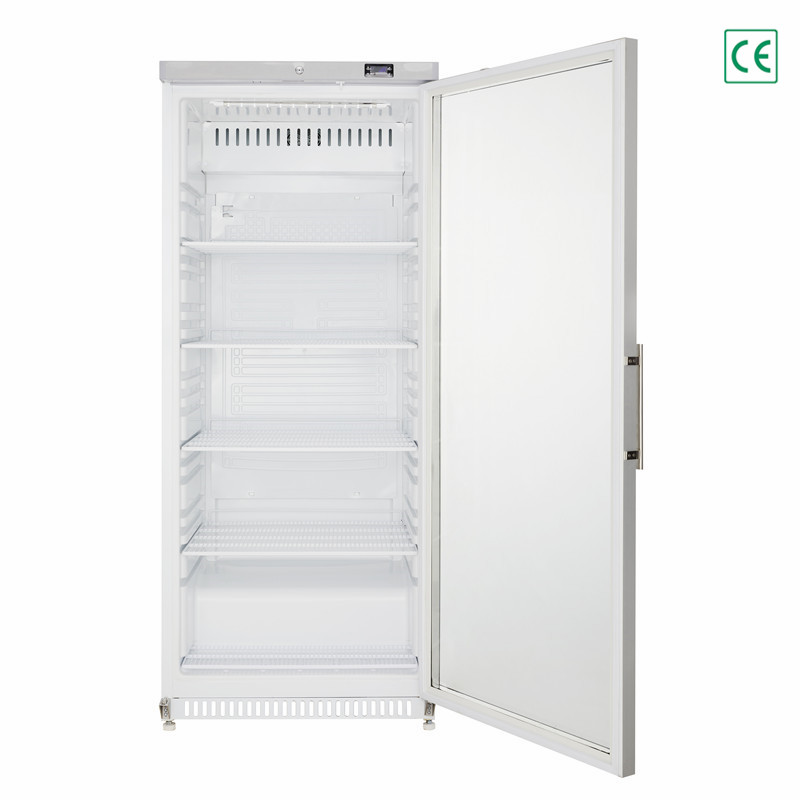
HIYOO offers commercial refrigeration and catering equipment for professional food storage applications. Its ABS Line Commercial Upright Chiller Freezer, identified by models R600 and F600, combines an ABS interior with features designed for practical commercial use.
According to the supplied product information, the standard features include:
-
A digital thermostat for temperature control.
-
A reversible, self-closing door.
-
Shelves with narrow wire spacing to support the stability of stored goods.
-
Interior lighting for improved visibility.
-
White or stainless steel exterior options.
-
Glass or solid door configurations.
These features provide a starting point for businesses evaluating vertical refrigeration equipment for restaurants, hotels, catering operations, and other commercial environments.
The HIYOO ABS Line Commercial Upright Chiller Freezer can be reviewed for further product information.
Before ordering, buyers should confirm the selected model, cabinet dimensions, operating temperature range, door configuration, electrical requirements, and applicable certification documents with the supplier.
The R600 chiller and F600 freezer should be selected according to the intended storage temperature and the products being stored. Buyers should verify the specifications of the exact model rather than assuming that every configuration offers identical performance.
Conclusion
ABS is a practical material option for selected commercial refrigeration interiors because it combines impact resistance, relatively low weight, manufacturing flexibility, and surfaces that can support routine cleaning.
These characteristics can make ABS suitable for refrigerator and freezer liners used in busy commercial kitchens. However, the performance of the complete appliance also depends on insulation, door sealing, temperature control, shelf construction, and manufacturing quality.
For equipment buyers, the best decision comes from matching the liner material and cabinet design to the actual operating environment. By reviewing material suitability, storage layout, cleaning requirements, and complete equipment specifications, businesses can make more informed refrigeration purchasing decisions.
HIYOO's R600/F600 ABS Line Commercial Upright Chiller Freezer is one option for businesses seeking vertical food storage equipment with configurable exterior and door finishes. Confirming the relevant technical details with the supplier helps ensure that the selected configuration meets the needs of the intended application.
www.hiyoogroup.com
HIYOO