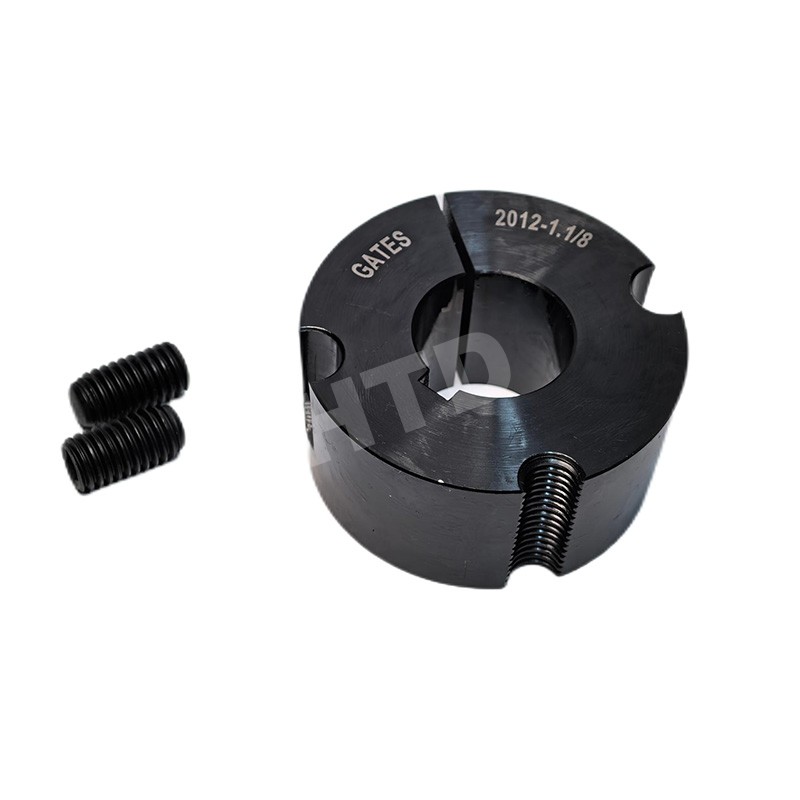
Taper lock bushings are essential components in mechanical power transmission systems, widely used to secure pulleys, sprockets, and gears onto shafts. Their ability to provide a strong, concentric fit while allowing easy assembly and removal makes them a popular choice in industrial machinery. Proper installation and maintenance are crucial for ensuring optimal performance, safety, and longevity of both the bushing and the machinery it supports.
Hetuoda Machinery Manufacturing specializes in high-precision transmission components, including synchronous pulleys, racks, tensioner bushings (taper lock bushings), gears, and various machined parts. The company also offers OEM services, providing customized solutions to meet specific industrial requirements. This guide provides a comprehensive overview of taper lock bushings, including installation, maintenance, and best practices.
1. Understanding Taper Lock Bushings
A taper lock bushing is a conical component designed to fit into a matching tapered bore in a hub. When tightened, the taper creates a frictional lock that securely mounts the hub onto the shaft.
Key advantages of taper lock bushings include:
-
Self-centering design for precise alignment
-
Strong, vibration-resistant connection between shaft and hub
-
Easy installation and removal, reducing downtime
-
Versatility across pulleys, sprockets, and gear applications
Hetuoda Machinery Manufacturing produces high-quality taper lock bushings designed for durability and precise fit, ensuring reliable operation in various industrial applications.
2. Preparing for Installation
Before installing a taper lock bushing, proper preparation is essential:
-
Check Components: Inspect the bushing, hub, and shaft for damage, dirt, or debris. Clean all surfaces to ensure a smooth installation.
-
Verify Dimensions: Confirm the shaft diameter, hub bore, and bushing size match the manufacturer’s specifications.
-
Select Correct Hardware: Ensure bolts, washers, and any recommended lubricants or thread-locking compounds are ready.
Preparation helps prevent misalignment, slippage, or premature wear, contributing to long-term performance.
3. Step-by-Step Installation Guide
Follow these steps to install a taper lock bushing correctly:
Step 1: Insert the Bushing into the Hub
Align the bushing’s tapered side with the hub bore and slide it in. Ensure bolt holes on the hub and bushing line up.
Step 2: Position the Assembly on the Shaft
Slide the hub and bushing assembly onto the shaft. Align the hub to the desired position along the shaft length.
Step 3: Tighten the Bolts Gradually
Insert and tighten the mounting bolts in a crisscross pattern. Gradual, uniform tightening ensures even pressure and prevents misalignment.
-
Use a torque wrench to achieve the manufacturer’s recommended torque settings.
Step 4: Verify Proper Fit
Once tightened, check for any movement by gently attempting to rotate the hub. There should be no axial or radial play.
Step 5: Locking and Final Checks
Some applications may require thread-locking compounds or locking washers. Recheck torque after initial operation to ensure stability.
Hetuoda Machinery Manufacturing provides detailed installation manuals for all taper lock bushings, ensuring consistent, reliable results.
4. Maintenance Tips for Optimal Performance
Regular maintenance is essential to extend the lifespan of taper lock bushings and associated components:
-
Periodic Inspection: Check for wear, misalignment, or loosening bolts.
-
Lubrication: Only use recommended lubricants if specified by the manufacturer. Some taper lock bushings rely on dry friction and should remain free of grease.
-
Cleaning: Remove any debris, dirt, or corrosion that may affect the bushing’s grip.
-
Re-torque Bolts: After initial operation, recheck bolt torque to ensure the hub remains securely mounted.
-
Replacement: Replace bushings showing significant wear, deformation, or damage to prevent operational failures.
Regular maintenance minimizes vibration, prevents shaft damage, and ensures the machinery operates at peak efficiency.
5. Common Mistakes to Avoid
To maximize the performance and safety of taper lock bushings, avoid these common mistakes:
-
Over-tightening bolts, which can damage the bushing or hub
-
Installing without cleaning surfaces, leading to slippage or misalignment
-
Using the wrong bushing size or hub bore
-
Neglecting re-torque checks after initial operation
-
Applying excessive lubrication on bushings that rely on friction
Hetuoda Machinery Manufacturing emphasizes precision and adherence to installation guidelines to prevent these issues.
6. Applications of Taper Lock Bushings
Taper lock bushings are used across various industrial sectors:
-
Conveyor Systems: Mounting sprockets and pulleys securely on rotating shafts
-
Industrial Machinery: Power transmission for milling, drilling, or cutting machines
-
Agricultural Equipment: Ensuring reliable operation of rotating shafts and sprockets
-
Packaging and Processing Lines: Smooth and accurate motion of belts and gears
-
OEM Solutions: Customized bushing solutions for machinery designed by manufacturers
With Hetuoda Machinery Manufacturing’s high-precision components, taper lock bushings can handle demanding industrial applications with reliability and safety.
Conclusion
Taper lock bushings are critical components in power transmission systems, offering precise alignment, secure mounting, and easy assembly. Proper installation and maintenance are essential for optimal performance, safety, and longevity.
Hetuoda Machinery Manufacturing provides a wide range of high-quality taper lock bushings, synchronous pulleys, gears, tensioner bushings, and other precision machined components. Their expertise, combined with OEM capabilities, ensures that industrial machinery operates efficiently, reliably, and safely.
By following correct installation procedures and maintaining taper lock bushings regularly, operators can maximize efficiency, reduce downtime, and extend the lifespan of their mechanical systems.
www.cdepulley.com
Suzhou Hetuoda Machinery Manufacturing Co., Ltd.