Buyers who do not employ electrical engineers face a different problem from those who do. The equipment decision is manageable; what is not is everything surrounding it — the protection study, the connection application, the control strategy, the commissioning evidence and the operating regime afterwards. “Engineering support” is the phrase suppliers use for that gap, and it covers scopes that differ enormously. MPMC POWERTECH CORP., established in 2008 and headquartered in Shanghai Pudong, publishes an end-to-end project scope alongside its commercial and industrial storage range.
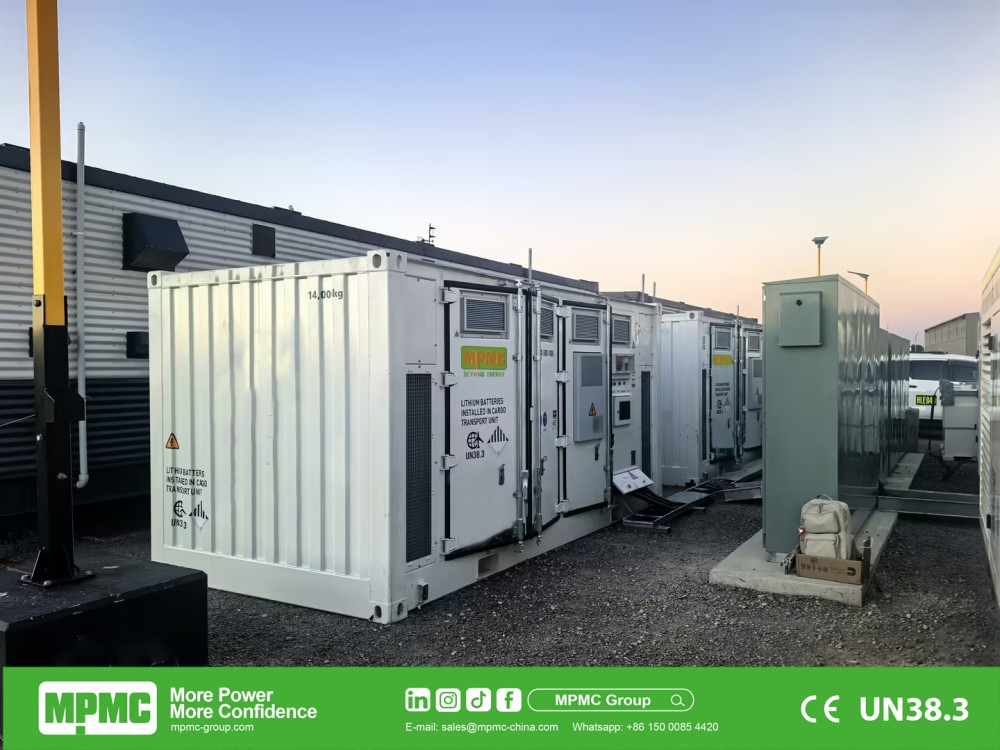
MPMC HBD-A Series battery energy storage system — HBD-500-1000
What Engineering Support Actually Covers
The term is worth breaking into stages, because a supplier may provide the first two thoroughly and the last two not at all.
|
Stage |
What it involves |
What to confirm is included |
|
Sizing and feasibility |
Interpreting the load profile and selecting a configuration |
Whether an interval profile is analysed or a rule of thumb applied |
|
Electrical design |
Single-line arrangement, protection, earthing, connection point |
Who produces the drawings and who stamps them |
|
Regulatory |
Connection application and grid code compliance evidence |
The named party responsible for demonstrating compliance |
|
Installation |
Civil base, cabling, terminations, physical placement |
Scope boundary and who supplies container load data |
|
Commissioning |
Energisation, control tuning, witnessed testing |
Days included, rate thereafter, acceptance criteria |
|
Operation |
Monitoring, maintenance, fault response |
Response arrangement for the project country |
MPMC lists design consultation, product customisation, factory testing, logistics and commissioning support within its direct-project scope. The stages worth pinning down in writing are the regulatory and operational ones, because those extend furthest beyond delivery and are the ones a buyer without engineering staff can least cover alone.
Sizing Is Where Support Earns Its Keep
The most common failure in this segment is a system sized against an assumed load shape. A fifteen-minute interval profile across a full billing cycle shows whether peaks are sharp or sustained, how often they occur, whether they coincide with expensive tariff periods, and how much energy sits above any candidate threshold.
A supplier offering genuine engineering support will ask for that data before quoting rather than after. Where a proposal arrives without it, the sizing rests on assumption, and the buyer is carrying a risk that looks like a supplier's recommendation.
Matching the Range to the Requirement
MPMC's published HBD-A series runs from the HBD-125-260 at 125 kW and 261 kWh, through the HBD-210-410 at 210 kW and 418 kWh listed at 690 to 800 Vac, the HBD-250-1000 and HBD-500-1000 at 1,045 kWh, to the HBD-1000-2000 at 1,125 kW and 2,170 kWh, with DC-coupled variants at 418 kWh and 5,015 kWh.
The ratio between rated power and capacity is the selection criterion. Two models sharing 1,045 kWh at 250 kW and 500 kW exist because a long afternoon plateau and a sharp excursion need different equipment at the same stored energy, and identifying which shape the site has is precisely what the engineering input should establish.
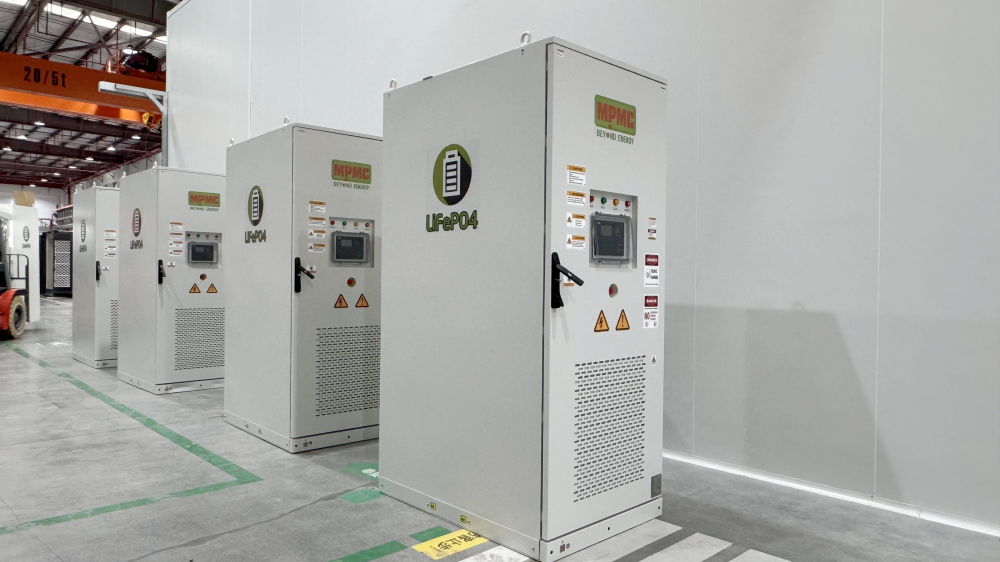
MPMC HBD-A Series battery energy storage system — HBD-125-260
Control Strategy Is a Decision, Not a Default
Where a site wants several benefits at once — lower demand charges, tariff arbitrage, backup capability — those purposes compete for the same stored energy. Resolving that competition is a control strategy question rather than an equipment one.
MPMC lists PQ, VF, VSG, black start, grid-forming and reactive power regulation among supported modes, with seamless on-grid and off-grid switching standard on the mobile HBD-R series and available as a configured option on the stationary HBD-A series. The reserved state of charge that protects backup capability from being spent on savings should be agreed and demonstrated at commissioning rather than assumed to exist.
Judging Support by the Questions a Supplier Asks
For a buyer without engineering staff, the most reliable indicator of genuine support is the shape of the supplier's enquiry rather than the length of its proposal. A supplier intending to engineer the installation asks for the load profile, the connection details, the site conditions and the intended operating strategy before quoting.
A proposal that arrives quickly with none of that has been produced from a rating rather than from the site, and the risk it carries sits with the buyer rather than with the supplier. Comparing what each bidder asked for is often more informative than comparing what each bidder offered.
What Happens After the Engineers Leave
A buyer without electrical staff still owns the asset for a decade. MPMC lists a self-developed SCADA supporting real-time monitoring, alarm and fault management, maintenance management with early warnings and spare parts tracking, automated reporting and up to ten years of data retention, with remote diagnostics and on-site engineers dispatched for complex cases.
The commitments worth obtaining in writing are narrower than the feature list: who receives alarms, what response time applies in the project country, where parts are held, and whether routine maintenance can be performed locally or requires a visit from the manufacturer.
Reading the Warranty as an Operating Constraint
MPMC's published warranty for the HBD-A and HBD-E series is 5 years or 2.2 MWh per kWh of capacity for the system and 10 years or 4.3 MWh per kWh for battery performance, with end-of-life capacity retention of at least 70%, alongside a validity condition requiring battery box temperature between 0°C and 25°C with a ±3°C tolerance and humidity at or below 80%.
Both limits bind together, and a site cycling hard for savings reaches the throughput allowance before the calendar term. For a buyer relying on supplier engineering, the useful request is a written statement of the operating regime the warranty assumes, so the savings strategy and the warranty position do not quietly diverge.
Engineering Scope to Agree
• List the six stages and mark which are included, which are excluded and which are shared.
• Supply an interval load profile and require sizing to be based on it.
• Name the party responsible for connection application and compliance evidence.
• Fix commissioning days, the rate thereafter and the acceptance criteria.
• Agree the control strategy, including any reserved state of charge for backup.
• Obtain the response arrangement, parts holding location and assumed operating regime in writing.
https://www.mpmc-group.com/
MPMC Powertech Corp.