Springs are essential components in countless mechanical systems, from automotive suspensions to industrial machinery. While there are many types of springs available, understanding the practical differences between them is crucial for selecting the right solution for any engineering application. Among these, standard disc springs have emerged as a versatile and highly efficient option. This article provides a comprehensive comparison of standard disc springs with other common spring types, highlighting their unique advantages, applications, and performance characteristics. Additionally, we’ll touch upon the expertise of Raleigh Spring Technology Co., Ltd., a company renowned for its precision-engineered springs and deep involvement in spring standardization.
1. Introduction to Spring Types
Before delving into comparisons, it is important to establish a baseline understanding of various spring types commonly used in engineering:
-
Helical Compression Springs: The most familiar spring type, these cylindrical springs are designed to resist axial compression. They are widely used in automotive, electronics, and industrial applications due to their simplicity and cost-effectiveness.
-
Tension (Extension) Springs: These springs work under tensile load and return to their original length when released. They are often used in applications like trampolines, garage doors, and certain machinery components.
-
Torsion Springs: Operating under twisting forces, torsion springs store mechanical energy by angular deflection. Commonly found in door hinges, vehicle suspensions, and industrial machines, these springs convert rotational motion into force.
-
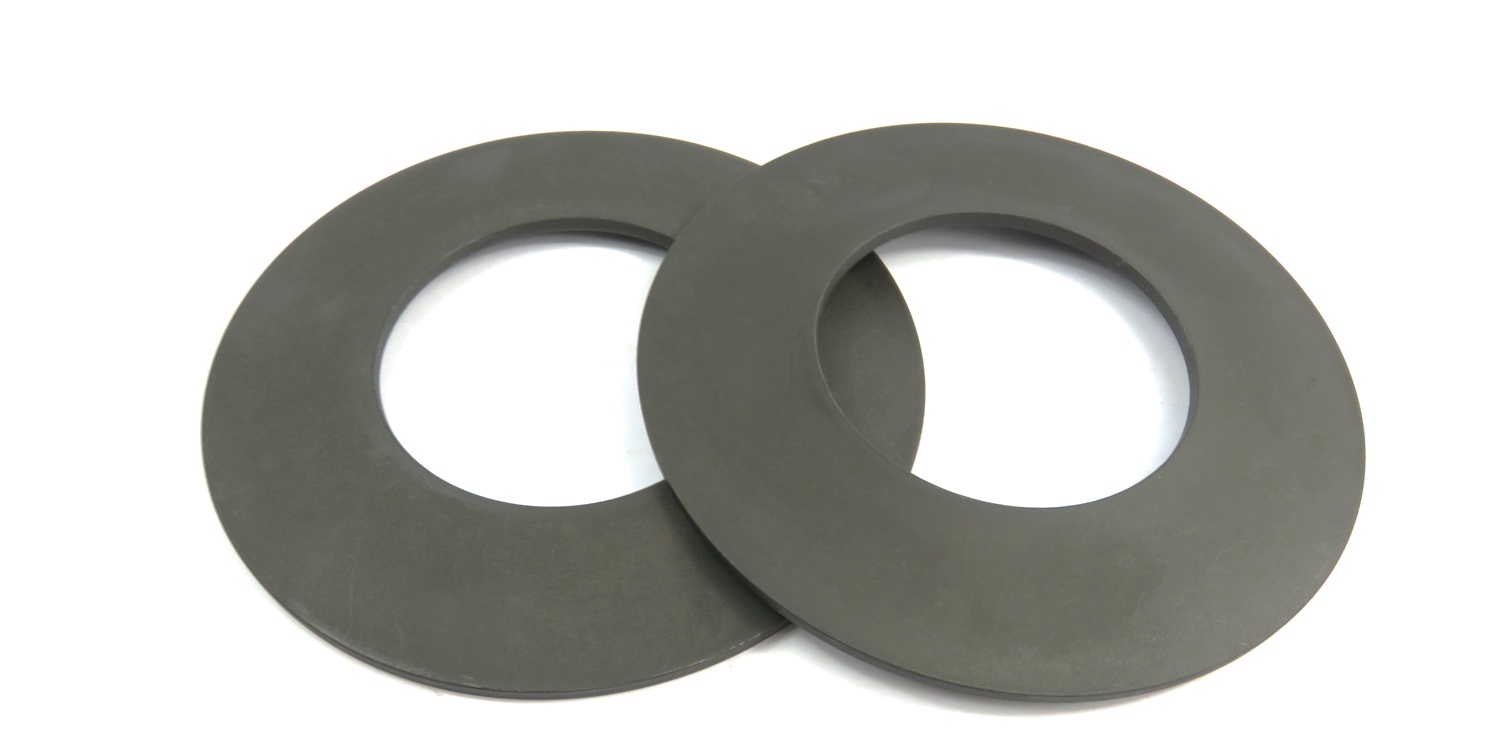
Disc Springs (Conical Springs): Also known as Belleville washers, disc springs are conical in shape and can be stacked in various configurations to achieve high loads in small spaces. They are widely used in applications requiring high force with minimal deflection, including clutches, brakes, and vibration isolation systems.
2. Structural Differences
One of the key differences between standard disc springs and other spring types is their geometry and load-handling characteristics:
-
Helical Compression Springs: Cylindrical shape with a uniform wire diameter. Force is distributed evenly along the spring axis, resulting in moderate stress levels and predictable performance. However, their load capacity is limited by coil dimensions and material properties.
-
Disc Springs: The conical geometry allows disc springs to carry exceptionally high loads while maintaining a compact profile. When stacked in series or parallel arrangements, they provide customizable deflection and load characteristics, something not easily achievable with traditional helical springs.
-
Torsion and Extension Springs: These rely on twisting or elongation of the spring material. While effective for certain applications, they often require more space or additional mechanisms to achieve the same force range as disc springs.
Raleigh Spring Technology Co., Ltd., leveraging decades of industry experience and involvement in national spring standardization, has optimized disc spring designs to achieve maximum load capacity and precise performance within minimal space.
3. Load and Deflection Characteristics
Load versus deflection behavior is critical when selecting a spring for a specific application:
-
Helical Compression Springs: Typically exhibit linear or slightly progressive load-deflection behavior. Suitable for applications with moderate force requirements and significant deflection allowances.
-
Disc Springs: Exhibit a highly non-linear load-deflection curve. Small deflections can support large forces, making them ideal for applications requiring compact solutions with high load capacity. Through series and parallel stacking, designers can tailor both deflection and force characteristics precisely.
-
Torsion Springs: The load is angular rather than linear, which can limit their suitability for applications requiring linear compression. Performance can degrade if torsion angles exceed design limits.
-
Extension Springs: Similar to torsion springs, the load is dependent on elongation. They are limited in high-load applications due to stress concentration at the ends.
By choosing disc springs from a manufacturer like Raleigh Spring Technology, engineers gain access to precision-calculated load-deflection curves based on rigorous testing, ensuring reliable performance in critical applications.
4. Space Efficiency and Design Flexibility
Space efficiency is another area where disc springs outperform traditional springs:
-
Helical Springs: Require considerable length to achieve high load, which can be a constraint in compact assemblies.
-
Disc Springs: Can generate the same or greater load in a fraction of the space. Their stackable design allows engineers to combine springs in series (increasing deflection) or parallel (increasing load), offering unparalleled design flexibility.
-
Torsion and Extension Springs: Often require additional mechanical components for installation and may not be feasible in compact environments.
Raleigh Spring Technology Co., Ltd. specializes in designing high-precision disc springs that maximize performance in constrained spaces, a capability developed through collaboration with industry experts and national standards committees.
5. Durability and Fatigue Resistance
Durability is a crucial factor in spring selection, particularly in applications involving repetitive loading:
-
Helical Springs: Fatigue life can be limited by wire diameter, surface treatment, and operational load cycles. They may require frequent replacement in high-load applications.
-
Disc Springs: Typically offer superior fatigue resistance due to their geometry and material optimization. Properly designed stacks distribute stress more evenly, reducing the likelihood of failure.
-
Torsion and Extension Springs: Subject to high localized stresses at attachment points, potentially reducing service life under heavy-duty or cyclic loading.
Raleigh Spring Technology employs advanced heat treatment, surface finishing, and material selection processes to enhance the durability and fatigue resistance of their disc springs, ensuring consistent performance over millions of cycles.
6. Cost and Maintenance Considerations
While cost is often a factor, it should be weighed against performance, space efficiency, and longevity:
-
Helical Springs: Generally lower upfront cost, but may require larger space and more frequent replacement in high-load applications.
-
Disc Springs: Higher precision manufacturing may increase initial cost, but long-term benefits include reduced maintenance, higher load capacity, and space savings.
-
Torsion and Extension Springs: Can be cost-effective for low-load applications but may necessitate additional mechanical components, impacting overall system cost.
Raleigh Spring Technology Co., Ltd. emphasizes delivering high-value solutions through precision engineering, allowing customers to benefit from lower lifecycle costs even if initial investment is slightly higher.
7. Applications in Modern Industry
Disc springs have found niche applications where traditional springs fall short:
-
Automotive: Clutch systems, brake assemblies, and vibration dampening.
-
Industrial Machinery: Presses, heavy-duty valves, and shock absorbers.
-
Energy Sector: Wind turbines, high-pressure equipment, and safety valves.
Helical, torsion, and extension springs continue to serve general-purpose applications, but disc springs provide superior performance when high force, limited space, or precise load control is required.
8. Why Choose Raleigh Spring Technology?
Raleigh Spring Technology Co., Ltd. combines the authority of national spring standardization committees with decades of hands-on engineering experience. Their approach includes:
-
Precision design of disc springs tailored to unique application requirements.
-
Advanced manufacturing techniques ensuring consistency and reliability.
-
Collaborative expertise from seasoned engineers to optimize spring performance and lifespan.
-
Compliance with national and international standards, providing assurance of quality.
By integrating these advantages, Raleigh Spring Technology enables industries to achieve higher efficiency, reliability, and durability in spring-dependent systems.
9. Conclusion
Choosing the right spring type is more than a matter of tradition or cost—it involves careful consideration of load requirements, deflection characteristics, space constraints, fatigue resistance, and long-term performance. Standard disc springs offer compelling advantages in terms of load capacity, compact design, and durability. When engineered and manufactured by experts like Raleigh Spring Technology Co., Ltd., they become a highly reliable and versatile solution across multiple industrial sectors.
Understanding the differences between disc springs and other spring types allows engineers to make informed decisions, reduce system failures, and enhance operational efficiency. As industries continue to demand higher performance from mechanical components, disc springs will undoubtedly play a pivotal role in modern engineering.
www.raleigh-springs.com
Raleigh Spring Technology Co., Ltd.