High-speed PCB assembly requires consistent performance from every stage of the manufacturing process, and soldering materials are no exception. For manufacturers sourcing lead-free soldering wire in China, factors such as feeding consistency, tinning speed, solder flow, wetting performance, and joint quality can have a direct impact on production stability.
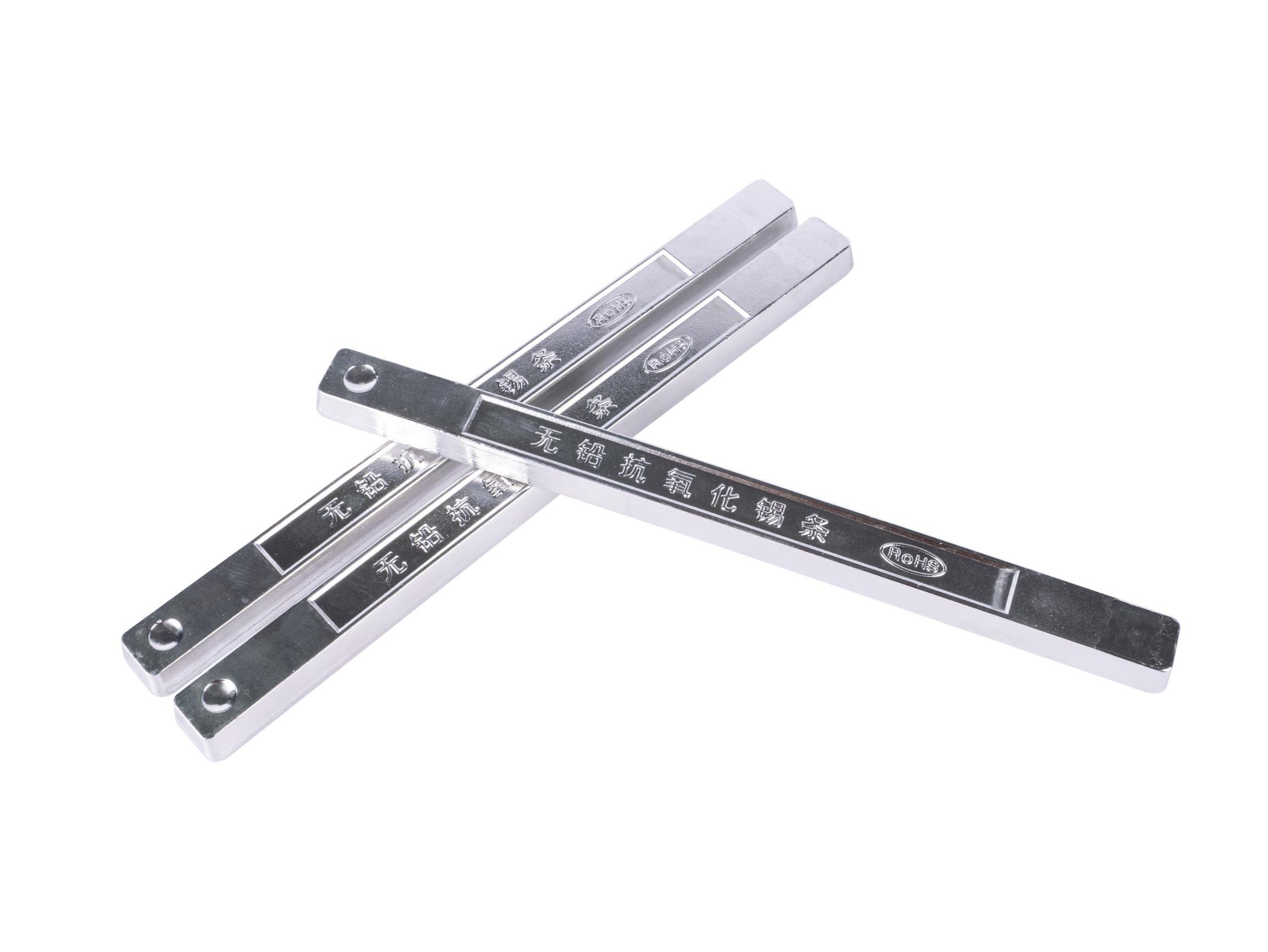
Shengdao's F68 Lead-Free Automatic Soldering Wire is developed for automatic and robotic soldering applications where repeatable material behavior is essential. Based on the SN99.3Cu0.7 alloy system, F68 combines a 225–229°C melting point with fast tinning, high wetting ability, excellent fluidity, minimal spatter, and no-clean performance.
The solder wire is available in diameters from 0.5 to 5.0 mm and can be used for electronics, instrumentation, home appliances, PCB assembly, nickel-plated layers, and suitable stainless-steel applications.
Why High-Speed PCB Assembly Requires Consistent Soldering Materials
Increasing production speed leaves less room for variations in soldering performance.
In manual soldering, an experienced operator can make small adjustments to compensate for changes in solder flow, heating, or contact position. Automated equipment generally follows preset parameters and therefore depends more heavily on the consistency of the solder material.
Typical machine settings may include:
-
Solder feeding speed
-
Heating temperature
-
Contact time
-
Equipment movement
-
Solder volume
-
Joint position
If the solder wire does not behave consistently under these fixed conditions, manufacturers may experience variations in joint formation from one cycle to another.
For high-volume PCB production, using a solder wire designed for automated processing can therefore help provide a more predictable starting point for process optimization.
1. Fast Tinning Helps Maintain Efficient Production Cycles
Tinning speed is particularly important when soldering operations are repeated continuously.
When solder takes too long to wet and establish the joint, the machine may need additional dwell time or changes to its heating parameters. Over a large production volume, even a small increase in cycle time can affect overall line efficiency.
F68 is formulated for fast tinning, allowing the solder to react efficiently once the required heat reaches the joint.
An automated soldering cycle may typically follow:
Wire feeding → Heat application → Tinning → Solder spreading → Joint formation → Inspection
Fast and stable tinning gives engineers more flexibility when setting the heating time and machine movement for the required joint.
However, the goal should not simply be to shorten the soldering cycle. The final settings should balance production speed with joint quality, component thermal limits, PCB design, substrate condition, and equipment characteristics.
2. High Wetting Ability Supports Uniform Joint Formation
In automated PCB assembly, the solder must spread consistently across the intended connection area.
F68 provides high wetting ability, helping molten solder cover the target surface under suitable process conditions. This can be beneficial when the same soldering operation is repeated across hundreds or thousands of assemblies.
Stable wetting can help minimize issues such as:
-
Incomplete solder coverage
-
Uneven solder distribution
-
Poor contact formation
-
Irregular joint appearance
-
Unnecessary rework
Wetting performance is influenced by more than the solder wire itself. Surface condition, oxidation, substrate material, heating temperature, flux activity, and joint geometry all play a role.
Nevertheless, starting with a solder wire designed for good wetting can make it easier to establish a stable automated soldering process.
3. Good Fluidity Helps Control Where the Solder Flows
High-speed soldering is not simply about delivering solder faster. The molten solder must also move into the intended joint area.
F68 offers excellent fluidity, helping molten solder spread smoothly during the soldering operation. This can be useful for automated equipment working with different joint geometries and programmed soldering paths.
Good fluidity allows production engineers to optimize solder volume and machine speed without relying excessively on additional heat or longer contact times to compensate for poor flow.
This is especially relevant to automated production because the machine has limited opportunity to make the type of real-time adjustments that a manual operator can make.
4. Minimal Spatter Supports Cleaner Production Lines
Solder spatter can become more noticeable as production volume and machine operating time increase.
Small amounts of unwanted solder may accumulate around fixtures, equipment surfaces, nearby components, or the soldering station. If this continues over long production cycles, it can lead to more frequent cleaning and maintenance.
F68 is designed to produce minimal spatter during soldering.
For automated PCB assembly lines, this can help maintain a cleaner working area and reduce interruptions associated with excessive solder residue around the equipment.
Lower spatter is particularly useful for production environments where machines operate continuously or with limited operator intervention.
5. Bright Solder Joints Make Routine Inspection Easier
Solder joint appearance remains useful as an initial indicator of process consistency, even when manufacturers use automated inspection equipment.
F68 is designed to produce bright solder joints when the soldering process is properly controlled. Consistent appearance can help operators identify visible abnormalities during routine production checks.
Depending on the application, inspection may look for conditions such as:
-
Insufficient solder
-
Uneven solder distribution
-
Abnormal joint shape
-
Inconsistent surface appearance
Visual inspection should not replace electrical, mechanical, dimensional, or automated testing where these methods are required. Instead, joint appearance can serve as one part of a broader quality-control system.
6. No-Clean Performance Can Reduce Secondary Processing
The process after soldering is also important when optimizing high-speed PCB production.
If the soldering material requires post-soldering cleaning, manufacturers may need additional equipment, chemicals, drying time, handling, and inspection. These extra operations can complicate an otherwise automated workflow.
F68 provides no-clean performance, meaning a separate cleaning step may not be necessary under suitable application conditions.
A simplified production flow can be:
PCB preparation → Automatic soldering → Inspection → Subsequent assembly
Removing an unnecessary cleaning stage can simplify material handling and help production lines move more directly to the next operation.
The suitability of a no-clean process should still be confirmed against the customer's PCB design, residue requirements, electrical specifications, and end-use conditions.
7. SN99.3Cu0.7 Provides a Lead-Free Alternative
F68 uses the SN99.3Cu0.7 lead-free alloy system, making it suitable for manufacturing processes where lead-free soldering materials are required.
The product is supported by RoHS and REACH certifications, which can assist manufacturers that need to meet applicable environmental and material compliance requirements.
For PCB manufacturers supplying international markets, environmental documentation is often an important part of supplier qualification.
At the same time, changing or introducing a lead-free solder material should be supported by process testing. Engineers should evaluate melting behavior, thermal requirements, wetting performance, component sensitivity, substrate characteristics, and equipment settings before full-scale production.
F68 Lead-Free Automatic Soldering Wire Specifications
The following specifications provide a practical reference for PCB manufacturers, procurement teams, and process engineers.
| Item | F68 Specification |
|---|---|
| Product Model | SN99.3Cu0.7 |
| Product Type | Lead-Free Automatic Soldering Wire |
| Melting Point | 225–229°C |
| Flux Content | 2.3 ± 0.2% |
| Wire Diameter | 0.5–5.0 mm |
| Product Weight | 500–1000 g/roll |
| Packaging | Roll packaging |
| Origin | Ningbo, China |
| Environmental Certifications | RoHS, REACH |
| Application | Automatic and robotic soldering |
The 0.5–5.0 mm wire diameter range allows manufacturers to select a size according to the soldering joint, required solder volume, feeding mechanism, and automatic equipment configuration.
For PCB applications, wire diameter should be selected based on actual process requirements rather than simply choosing the largest or smallest available size.
How F68 Works in an Automated PCB Production Process
A high-speed PCB assembly line depends on coordination between the equipment, materials, and process parameters.
Solder wire is one of the key consumables linking the material supply system with the soldering equipment. The wire must feed at the required rate, melt within the intended heating cycle, wet the target surface, and flow into the joint without creating excessive spatter.
For example, if wire feeding is fixed but the solder takes longer than expected to melt, the machine may need additional contact time. If the solder does not wet the surface consistently, inspection and rework may increase. Excessive spatter can also lead to more frequent machine maintenance.
F68 is designed to address these practical requirements through a combination of:
-
Fast tinning
-
High wetting ability
-
Excellent fluidity
-
Minimal spatter
-
Bright solder joints
-
No-clean performance
These characteristics can be evaluated during sample production to determine whether the wire matches the manufacturer's equipment and PCB assembly process.
Applications Beyond PCB Assembly
Although F68 is well suited to PCB-related production, its application range extends to several other automated soldering environments.
Electronics Manufacturing
Electronic products require repeatable soldering of components and connection points. F68 can be used in suitable automated electronics soldering processes where its lead-free characteristics and soldering performance meet the product requirements.
Instrumentation
Instrumentation assemblies often contain precise electrical connections. Consistent wetting and controlled solder flow can support stable production of these components.
Home Appliances
High-volume appliance manufacturing commonly incorporates automated soldering equipment. F68 can be evaluated for suitable appliance components and assemblies where lead-free soldering is required.
Nickel-Plated Layers
F68 can be used for soldering nickel-plated surfaces. Because surface condition can significantly affect wetting, manufacturers should confirm substrate preparation and process parameters during testing.
Stainless Steel
The solder wire is also applicable to selected stainless-steel soldering operations. Proper surface preparation, heating, flux activity, and joint design should be established for each application.
How to Optimize F68 for High-Speed PCB Assembly
Even when the solder wire is suitable for automated processing, correct parameter setup remains essential.
Choose the Right Wire Diameter
Select a diameter between 0.5 and 5.0 mm according to the solder joint dimensions, required solder volume, and capabilities of the automatic feeding system.
Establish Appropriate Heating Conditions
F68 has a melting point of 225–229°C, but this does not mean the equipment should simply be set to the melting point.
Actual heating conditions should account for PCB materials, component sensitivity, substrate thickness, heating method, thermal mass, and production speed.
Synchronize Wire Feeding
Feeding speed should be coordinated with machine movement and heating time. Too much solder can result in excessive buildup, while insufficient feeding may lead to incomplete joints.
Check Wetting During Trial Production
Representative PCB samples should be used to confirm that molten solder spreads properly across the intended surfaces.
Monitor Finished Joint Quality
Production teams should establish appropriate inspection criteria. Depending on the product, this may include visual inspection, electrical testing, mechanical evaluation, dimensional checks, or automated inspection.
Why Choose Shengdao as a Lead-Free Solder Wire Supplier?
For manufacturers sourcing solder wire, product performance is only one part of the supplier evaluation.
Shengdao provides F68 Lead-Free Automatic Soldering Wire based on the SN99.3Cu0.7 alloy system, with defined flux content, multiple wire diameter options, roll packaging, and RoHS and REACH certifications.
The product is specifically intended for automatic and robotic soldering, allowing manufacturers to evaluate its performance based on actual production conditions.
During sample qualification, manufacturers can assess feeding behavior, tinning speed, wetting, solder flow, spatter, joint appearance, and post-soldering requirements.
This approach provides a more practical basis for determining whether F68 is suitable for a particular automated production line.
A Practical Soldering Solution for High-Speed Production
High-speed PCB assembly is not simply a matter of increasing machine speed. Production efficiency also depends on whether the soldering material can keep up with the equipment without introducing additional defects or processing steps.
F68 Lead-Free Soldering Wire combines an SN99.3Cu0.7 lead-free alloy, 225–229°C melting point, 2.3 ± 0.2% flux content, fast tinning, high wetting ability, excellent fluidity, minimal spatter, bright solder joints, and no-clean performance.
For electronics manufacturers, PCB assembly plants, instrumentation producers, and home appliance manufacturers, these characteristics provide a practical basis for evaluating F68 in automated soldering applications.
By matching the wire diameter, feeding rate, heating conditions, joint design, and inspection process to the requirements of the production line, manufacturers can establish a more consistent and efficient soldering workflow for high-speed PCB assembly.
www.solder-china.com
Shengdao