Why High Speed Coreless Motors Are Reshaping Compact Robotics
Micro-manipulation and high-load robotic applications share a difficult design constraint: they need high torque density, high precision, and small physical footprints at the same time. Conventional electric drive assemblies frequently force engineers to trade one of those three against the others. VAXOR-MOTOR (also referenced as VAXOR) builds its business around closing that gap, positioning itself as a provider of integrated micro-actuation solutions built on three technology pillars: axial flux motors, micro cycloidal gear reducers, and non-contact encoder integration. Its stated coverage spans bionic robots, industrial automation, medical devices, and consumer electronics.
For anyone evaluating a high speed coreless motor for a compact instrument or robotic joint, the meaningful questions are rarely about headline speed alone. They concern phase balance, thermal headroom, feedback resolution, communication latency, and how tightly the motor behaves when it becomes part of a complete actuation module.
What Defines a High Speed Coreless Motor
A coreless motor — sometimes called a slotless motor — uses a rotor winding without the conventional iron core. Removing that core drops rotor inertia, reduces cogging, and allows very high rotational speeds with fast dynamic response, which is why coreless designs appear in precision instruments, miniature pumps, and optical positioning stages. In a brushless coreless motor, electronic commutation replaces mechanical brushes, improving service life and control granularity.
Three related terms recur throughout this discussion:
- Axial flux motor: a topology in which magnetic flux travels parallel to the shaft rather than radially, which is a route to high torque density in a short axial length.
- Cycloidal gear reducer: a compact reduction mechanism used here to trade motor speed for joint torque inside a small diameter.
- Non-contact absolute magnetic encoder: a position feedback device that reads rotor angle without mechanical contact, supporting precise motion control over the full range of travel.
Phase Imbalance: The Yield Variable Behind Sub-6mm Motors
Producing motors smaller than 6mm in diameter is notoriously costly, and a substantial share of that cost traces back to yield losses. VAXOR-MOTOR attacks this problem through electromagnetic design that optimizes phase imbalance to within 5% for ultra-micro motors. That figure is not a marketing abstraction — it is tied directly to two outcomes the company emphasizes: higher production yield and improved reliability for the end customer.
The fifth-percent bound recurs across the product line. It appears in the ultra-micro brushless and coreless motor series as a yield and reliability lever, and it appears again in photonic optical positioning applications, where the same balance contributes to stable performance.
Inside the G04P / G05P / G06P Ultra-Micro Motor Series
The G04P, G05P, and G06P series are positioned as ultra-compact power sources for precision instruments. Their key parameters, as published by the manufacturer:
- Power density and mass: units weigh between 1.7g and 3.75g while reaching speeds up to 63,000 RPM.
- No-load speed range: 55,000 to 63,000 RPM, suited to micro-pumps and micro-drone propulsion.
- Terminal resistance: as low as 1.6Ω, which improves electrical efficiency in compact designs.
- Thermal resistance: chassis temperatures up to 145°C, supporting operation in high-performance, tightly packed environments.
- Yield optimization: phase imbalance held within 5%, reducing cost and improving reliability.
Industry adaptation for these units is deliberately broad: micro-surgical robots in medical applications, precision optical adjustment in photonics, and miniature haptics and pumps in consumer electronics. For a design engineer, the practical significance is that a sub-4g motor with 55,000+ RPM capability can be specified without the usual cost penalty attached to sub-6mm production.
From Motor to Joint: Integrated Joint Actuator Modules
VAXOR-MOTOR's second product family packages the same discipline into complete joint modules, ranging from Φ16mm to Φ30mm in diameter. Across the line, gear efficiency reaches up to 75% for specific modules and backlash runs as low as 15–20 Arcmin.
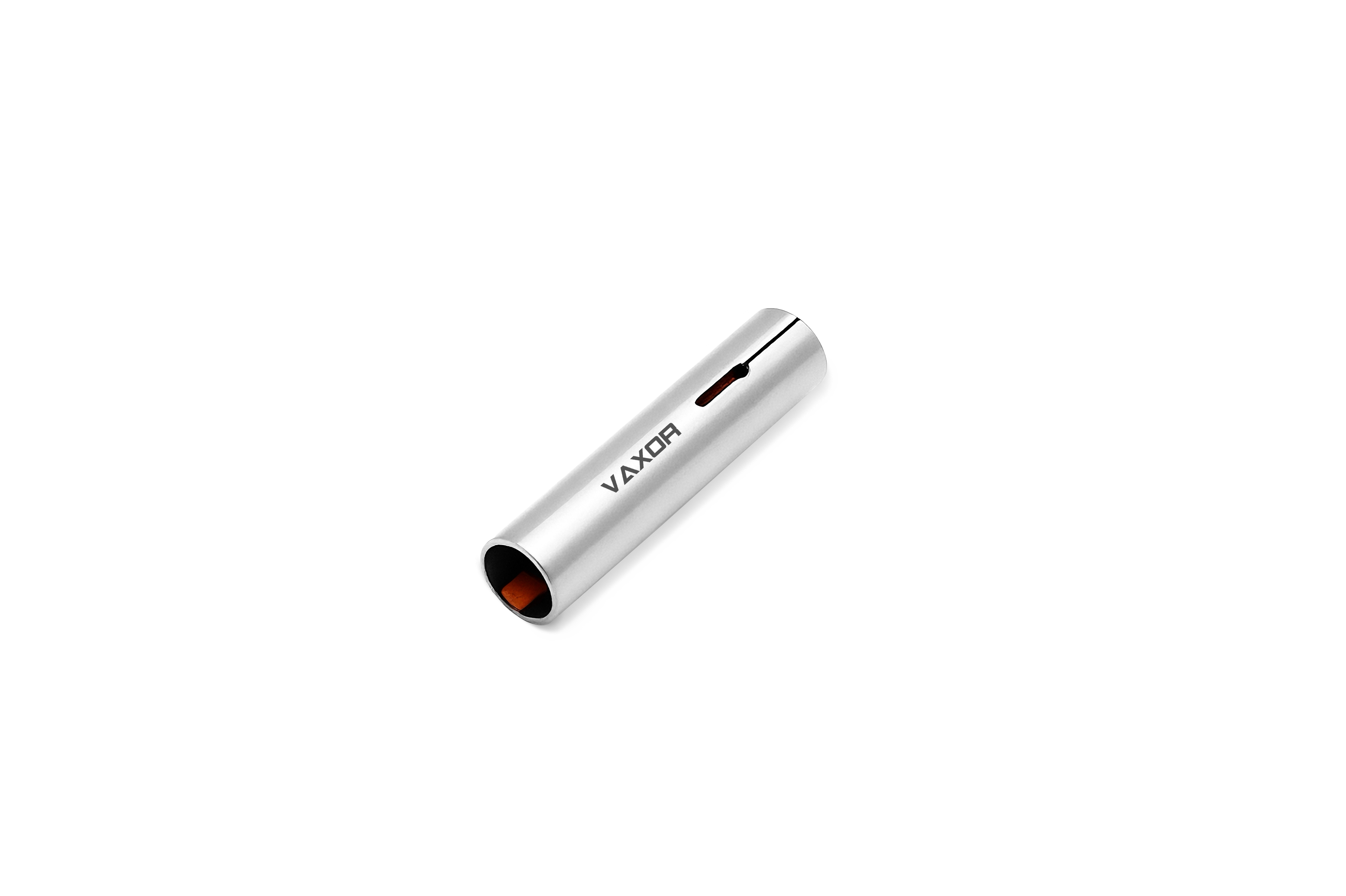
Φ16mm Micro Joint Module (X16S / X16L) — positioned for precision micro-manipulation in highly integrated robotic systems. Unit mass is as light as 24.3g for the S-version and 26.1g for the L-version. Continuous stalling torque exceeds 7.1 mNm, with stalling torque (max) above 16.5 mNm. Integrated gear reduction is available in ratios of 30, 40, and 50, which is how the module produces high torque inside a 16mm diameter. An integrated absolute magnetic encoder provides position feedback, SPI communication supports high-speed data exchange for low-latency control response, and chassis temperature limits of 80°C, 115°C, and 145°C are defined according to power loss to prevent overheating.
Φ20mm Micro Joint Module (X20S / X20L) — aimed at medium-load precision actuation for bionic and automation applications. Continuous stalling torque exceeds 17.2 mNm and stalling torque (max) exceeds 35.3 mNm. The gearbox offers 15, 30, and 50 ratios, balancing speed against torque; stalling torque at assembly reaches up to 450 mNm at ratio 50. Voltage support covers 12V, 24V, and 48V operation, and a standardized FPC 7PIN interface carries power and data.
Φ25mm Micro Joint Module (X25S-UZ / X25S-BZ) — designed as a high-torque actuator for industrial and medical robotics. Continuous stalling torque reaches up to 1150 mNm at ratio 50, and torque capacity reaches 1800 mNm in the initial torque cold state for peak load scenarios. Backlash is held to 15 Arcmin, and CAN FD protocol supports robust industrial communication.
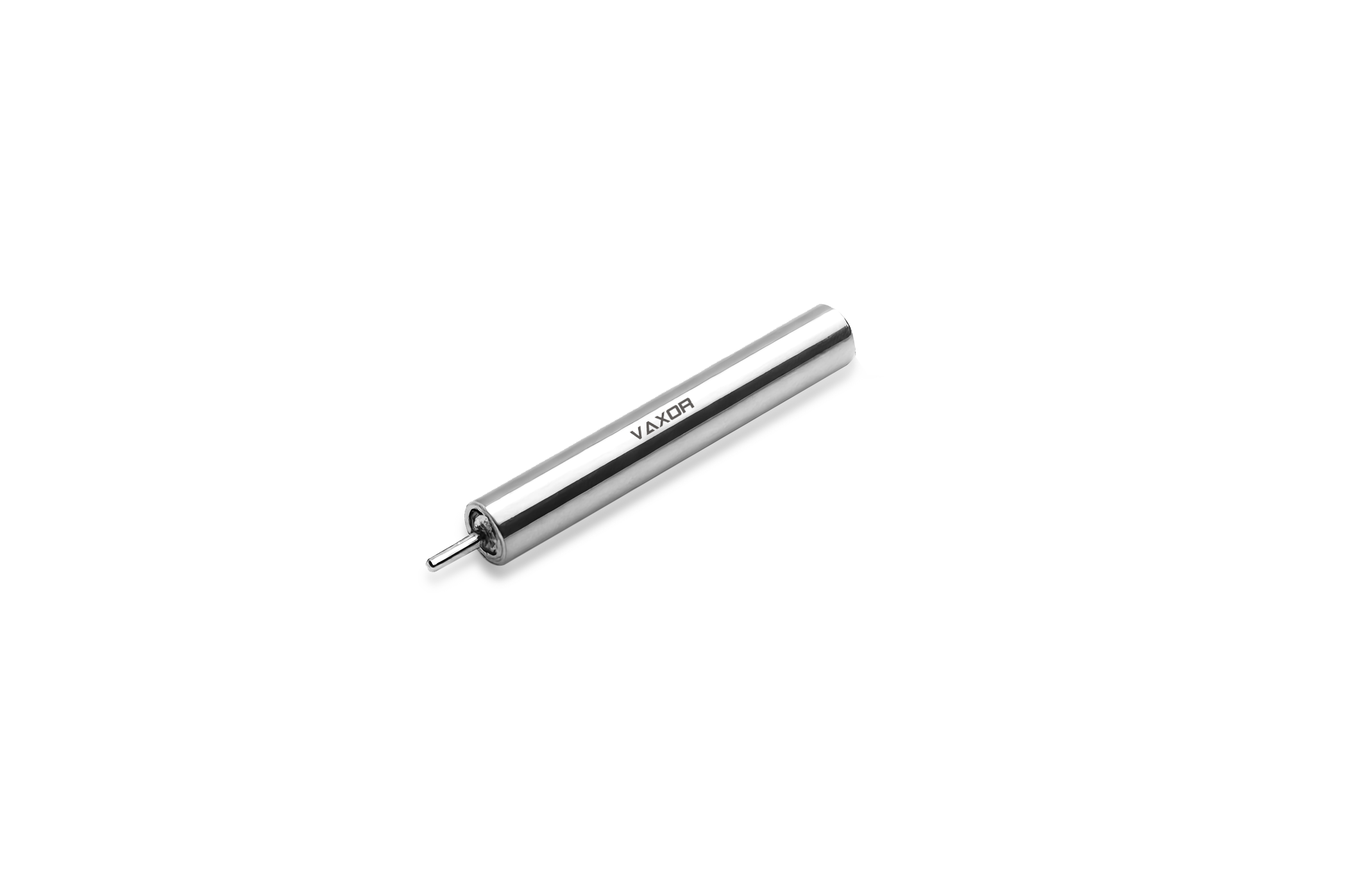
Φ30mm Micro Joint Module (X30S-UZ / X30S-BZ) — built for heavy-duty micro-robotic applications. Continuous stalling torque reaches up to 1500 mNm at ratio 50, and gear efficiency reaches up to 75% at ratio 30. Total inertia of 30.4 gcm² supports stability in high-load motion, while CAN FD integration accommodates complex multi-joint network architectures.
Platform Compatibility and Integration Support
Compatibility across the platform is standardized rather than bespoke. The modules support 12V, 24V, and 48V DC bus systems, with communication through SPI or CAN FD. The physical interface is an FPC 7PIN connector at 0.5mm pitch, carrying VCC, GND, CS, SCK, MOSI, MISO, and a CAL calibration line.
The service model pairs hardware provision with technical integration support. Detailed technical specifications and test data for electric drive assemblies are supplied so that performance parameters — torque, speed, and thermal data — can be verified before design freeze.
Validated Deployment Scenarios
Published benchmark cases describe how these components perform in the field:
- Robotic dexterous hands use X16 and X20 modules to achieve high-integration mechanical motion control, enabling human-like finger dexterity.
- Industrial automation integrates Φ30mm modules in precision transmission systems, achieving gear efficiency of 75% and reducing mechanical backlash to 15 Arcmin.
- Micro pump systems employ G05P ultra-micro motors at 55,000 RPM to drive fluid transmission in medical and consumer applications, combining low cost with high power density.
- Photonics applies ultra-micro brushless motors for precision positioning in optical instruments, benefiting from the sub-5% phase imbalance for stable performance.
Industry coverage extends across robotics (bionic systems and dexterous hands), medical devices, industrial automation, consumer electronics, aerospace micro-drones, fluid transmission micro-pumps, and photonic optical instruments. Typical customers are robot manufacturers, medical device developers, industrial system integrators, and wearable technology firms.
Choosing a Configuration
Selection typically begins with torque and envelope. A Φ16mm module fits dexterous finger joints where mass budgets are measured in grams. Φ20mm modules suit medium-load bionic joints requiring 12V/24V/48V flexibility. Φ25mm and Φ30mm modules serve industrial and medical robotics where continuous stalling torque in the hundreds to low thousands of mNm, defined backlash, and CAN FD networking are required. Where the motion problem is high-speed rotation rather than joint torque, the G04P/G05P/G06P motors address it directly.
VAXOR bundles standardized modules (X16, X20, X25, X30 series) with a product-based sales approach and hardware deployment using standardized FPC 7PIN interfaces or CAN FD/SPI protocols. The company states it is open to discussions regarding product questions and parameter range verification.
Outlook
As miniature actuation requirements tighten across robotics and medical devices, the value of a high speed coreless motor increasingly depends less on a single performance number and more on the consistency of the whole chain — balance, feedback, reduction, communication, and thermal behavior. VAXOR-MOTOR's combination of sub-5% phase imbalance control, a Φ16mm-to-Φ30mm module range, and up to 75% gear efficiency in specific modules reflects that integrated view of micro-actuation.
www.vaxor-motor.com
Suzhou Vaxor-motor CO.,LTD.