Tube end forming is an essential process in metal tube manufacturing. From municipal pipeline systems and building water supply networks to automotive components and industrial fluid transmission, the quality of a formed tube end can directly affect dimensional accuracy, assembly efficiency, and product consistency.
As tube diameters increase, maintaining precise geometry becomes more challenging. Variations in wall thickness, material properties, forming force, and tool positioning can lead to inconsistent results. Manufacturers therefore need equipment that combines accurate motion control, stable forming performance, and reliable production efficiency.
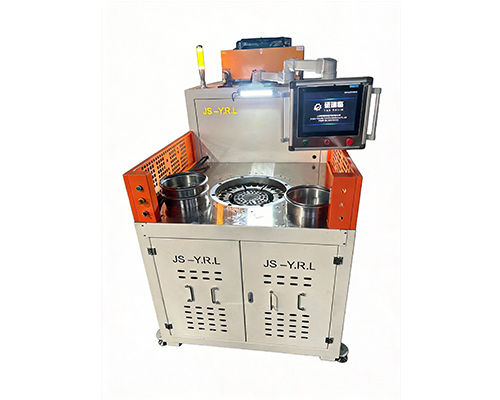
The SCX-180 Tube Flaring Machine from Jiangsu YANRUILIN is designed for medium- and large-diameter tube processing. With servo drive control, internal and external profiling extrusion, dual-station processing, and support for multiple forming operations, it offers a practical solution for manufacturers seeking greater consistency in tube end production.
For businesses evaluating a 180 Tube Flaring Machine for Precision Tube Processing, understanding the machine's capabilities and how they relate to actual production requirements is an important step in equipment selection.
1. Why Tube End Forming Accuracy Matters
Tube flaring changes the geometry of a tube end to create a specified connection profile. Depending on the application, the finished component may need to meet requirements for diameter, angle, shape, concentricity, and dimensional tolerance.
Inconsistent forming can create problems during subsequent assembly. Parts may require additional adjustment, fail to fit their mating components correctly, or produce inconsistent connection quality. These issues can increase inspection time, material waste, and production costs.
The challenge becomes more significant when processing medium- and large-diameter tubes. The forming equipment must apply sufficient force while controlling material deformation, especially when the tube wall is relatively thin.
The SCX-180 is designed to process tubes with diameters ranging from 50 to 180 mm and wall thicknesses from 0.3 to 4.0 mm. Its specified forming accuracy is ≤ ±0.03 mm.
For manufacturers, these parameters provide a starting point for assessing suitability. Actual achievable accuracy should be confirmed using the intended tube material, dimensions, tooling, and finished profile.
2. Servo Drive Control for More Repeatable Forming
The drive system plays a major role in determining the consistency of a tube forming process. Differences in tool movement and positioning can affect the final geometry, particularly when production involves multiple tube specifications.
The SCX-180 uses a high-performance servo drive system to control forming movement. Servo-based control can support repeatable positioning and make process adjustments more manageable when changing between production requirements.
This is particularly useful for manufacturers producing customized tube components or handling multiple tube sizes on the same machine.
A controlled forming process can help reduce variation between production cycles, provided that the tooling, workpiece positioning, and process parameters are also properly configured.
When evaluating servo-driven equipment, buyers should consider positioning repeatability, parameter adjustment, cycle stability, and the machine's ability to maintain the required tolerance under actual production conditions.
3. Internal and External Profiling for Consistent Tube Geometry
Tube flaring requires more than applying force to the end of a tube. The material must deform into the intended profile without excessive distortion or damage to the surrounding surface.
The SCX-180 incorporates an internal and external profiling extrusion structure designed to guide the forming process. By controlling the tube end's deformation through the forming tool arrangement, this approach supports the production of consistent end profiles.
Potential benefits include:
-
Improved repeatability of formed geometry
-
Better control over local material deformation
-
Reduced risk of unwanted distortion
-
More consistent results across production batches
-
Support for different customized tube end profiles
The final result still depends on material characteristics, wall thickness, tooling geometry, and forming parameters. Manufacturers should conduct sample trials to verify that the selected configuration meets the drawing requirements.
4. Protecting Surface Quality During Tube Flaring
Dimensional accuracy is only one measure of tube forming quality. Surface condition also matters, especially when components are visible after assembly or require minimal secondary finishing.
Scratches, pressure marks, and localized deformation can create additional rework and inspection requirements. In applications with strict appearance or surface-quality expectations, these defects may affect the usability of the finished part.
The SCX-180's internal and external profiling extrusion structure is designed to support scratch-free forming. For production engineers, the practical objective is to achieve the required tube end geometry while minimizing unnecessary surface damage.
Before full-scale production, manufacturers should inspect sample parts for scratches, pressure marks, cracks, wall thinning, and other defects relevant to the material and application. This helps establish whether the selected tooling and process parameters provide the necessary surface quality.
5. Dual-Station Processing for Higher Production Efficiency
Precision equipment must also meet the production requirements of the factory. A machine that delivers accurate parts but creates a bottleneck in the production line may not be the best choice for high-volume manufacturing.
The SCX-180 adopts a vertical dual-station configuration designed to support parallel processing activities. This arrangement can improve equipment utilization by allowing production operations to be distributed across two stations.
The machine has a specified processing cycle of approximately 15–40 seconds per part and a stated output exceeding 300 components per hour under specified conditions.
Actual output depends on the tube dimensions, material, forming profile, loading and unloading time, tooling changes, and inspection requirements. Buyers should therefore evaluate throughput using representative workpieces rather than relying solely on the machine's maximum stated capacity.
A production trial can help establish the expected cycle time, identify handling constraints, and determine whether the equipment can meet the factory's daily output targets.
6. Multiple Forming Functions for Greater Production Flexibility
Manufacturers often process tube components with different end geometries. Depending on the application, a production line may require flaring, expanding, reducing, press fitting, ring pressing, or other customized forming operations.
The SCX-180 supports several forming functions, including:
-
Single press fitting
-
Double press fitting
-
Ring pressing
-
Profile expanding
-
Profile reducing
-
Customized shaped forming
-
Tube flaring
This multi-function capability can provide greater flexibility when different products share compatible machine requirements.
Instead of investing in separate equipment for every operation, manufacturers may be able to use one machine platform for several related processes. However, the availability of a particular function does not automatically guarantee that every tube profile can be processed without additional tooling or engineering work.
Before purchasing, buyers should provide the supplier with technical drawings, material specifications, wall thicknesses, and required end profiles. This allows the equipment configuration and tooling requirements to be evaluated more accurately.
7. Stable Machine Design for Medium- and Large-Diameter Tubes
As tube diameter and forming force increase, the mechanical stability of the machine becomes increasingly important. Unwanted movement during forming can affect positioning accuracy and the consistency of the finished profile.
The SCX-180 is designed for tubes with diameters of 50–180 mm and wall thicknesses of 0.3–4.0 mm. Its vertical configuration provides a practical arrangement for processing medium- and large-diameter tube components.
The machine's approximate dimensions are 2,000 × 2,200 × 1,900 mm, which manufacturers can use as an initial reference when planning workshop layout and equipment installation.
In addition to footprint, buyers should assess workpiece loading space, tooling access, maintenance clearance, operator safety, and the interface with upstream and downstream equipment.
These considerations are important because machine installation and material handling can influence overall production efficiency just as much as the forming cycle itself.
8. Preparing for Automated Tube Processing
As manufacturers move toward more automated production, manual loading and unloading can become a limiting factor. Handling larger tube components may require additional labor and can introduce variations in workpiece positioning.
The SCX-180 reserves an interface for robotic loading and unloading, allowing manufacturers to explore integration with automated material-handling systems.
A potential automated production sequence may include tube loading, workpiece positioning, forming, dimensional inspection, and unloading. The actual configuration depends on the customer's production layout, safety requirements, and automation objectives.
When planning an automated line, manufacturers should confirm the communication and control interfaces, positioning requirements, cycle-time coordination, and space needed for robot movement.
Early coordination between the machine supplier, automation integrator, and end user can help reduce integration issues and make the production line easier to operate and maintain.
9. How to Select the Right 180 Tube Flaring Machine
Selecting tube forming equipment requires more than checking the maximum supported diameter. A machine must match the actual workpiece, finished geometry, quality requirements, and production volume.
Before making a purchasing decision, consider the following factors.
Tube specifications: Confirm the diameter range, wall thickness, material type, and dimensional variation of the workpieces.
Forming accuracy: Determine the required tolerance for the finished tube end and request sample testing to verify achievable results.
Surface quality: Establish acceptable limits for scratches, deformation, cracks, and other surface defects.
Process flexibility: Check whether the machine supports the required flaring, expanding, reducing, pressing, or customized forming operations.
Production capacity: Evaluate cycle time and expected hourly output using the actual workpiece and production sequence.
Automation compatibility: Determine whether robotic loading, unloading, or integration with an existing production line is required.
Tooling and technical support: Review the availability of customized tooling, process development, commissioning, and after-sales assistance.
Providing these details before ordering helps the supplier recommend an appropriate machine configuration and reduces the risk of costly changes after installation.
10. Why Consider Jiangsu YANRUILIN for Tube Forming Equipment?
Jiangsu Yan Ruilin Precision Machinery Co., Ltd. specializes in the research, development, and production of metal tube forming equipment. Its product range includes vertical and horizontal tube end forming machines, tube rounding machines, and double-station heading machines.
The company reports having developed more than 1,000 customized casing-section forming molds and delivered more than 1,000 multi-casing-section forming machines to customers worldwide.
Its manufacturing facilities include CNC lathes, machining centers, wire-cutting equipment, and other precision manufacturing machinery. These capabilities support in-house production activities ranging from initial material processing to final machining.
YANRUILIN equipment has been used in applications including aerospace, shipbuilding, automotive manufacturing, building water supply and drainage, municipal pipelines, household appliances, and exhaust systems.
For manufacturers seeking customized tube forming equipment, supplier evaluation should include technical capability, tooling development, sample validation, manufacturing quality, and ongoing service support. Reviewing these factors helps determine whether the supplier can meet the specific requirements of the intended application.
Conclusion
Improving tube end forming accuracy requires a combination of controlled machine movement, suitable tooling, stable mechanical design, and repeatable process parameters. For medium- and large-diameter tubes, these factors become especially important when manufacturers need consistent geometry, good surface quality, and reliable production throughput.
The SCX-180 Tube Flaring Machine from Jiangsu YANRUILIN combines servo drive control, internal and external profiling extrusion, dual-station processing, multiple forming functions, and an interface prepared for robotic loading and unloading.
With a specified tube diameter range of 50–180 mm, wall thickness range of 0.3–4.0 mm, forming accuracy of ≤ ±0.03 mm, and stated output exceeding 300 components per hour under specified conditions, it offers a platform for evaluating precision tube processing requirements.
For the best results, manufacturers should validate the machine using their actual tube materials, dimensions, and forming profiles before committing to mass production. Matching equipment capability with real production needs is the most effective way to improve forming consistency, manage manufacturing costs, and build a more reliable tube-processing operation.
www.tubeendforming.com
Jiangsu Yan Ruilin Precision Machinery Co., Ltd.