Cable and wire harness manufacturing has become increasingly specialized. Automotive wiring, aerospace cables, military cable assemblies, and electronic harnesses may all require braided protection, but their production requirements are rarely identical.
Cable diameter, braid density, material, coverage, spindle configuration, production speed, and changeover frequency can all vary from one product to another. As a result, a braiding machine that works well for one cable specification may not provide enough flexibility for another.
This is where a customized braiding machine can make a practical difference.
Instead of adapting every product to a fixed machine configuration, manufacturers can select the machine structure and operating functions according to their actual production requirements. For companies producing multiple types of wire harnesses, this approach can improve production flexibility while making equipment selection more closely aligned with the manufacturing process.
Guanbo® has specialized in high-speed oil-free braiding machinery for around 30 years, developing equipment for cable, wire harness, and other industrial braiding applications.
Why Cable Braiding Requirements Are Becoming More Diverse
Braiding is used in cable manufacturing for several purposes. Depending on the product design, a braided layer may provide mechanical protection, shielding, abrasion resistance, reinforcement, or other functional benefits.
However, the same braiding structure cannot necessarily be used for every cable.
An automotive wiring harness may contain multiple cable sections and branches with different dimensions. Aerospace cables may require controlled weight and consistent shielding performance. Military and industrial cables can have their own requirements for durability and environmental resistance.
Electronic cables may also use relatively small conductors where braid control becomes particularly important.
This creates several equipment-selection considerations:
-
Cable diameter
-
Braid material
-
Braid coverage
-
Braiding pitch
-
Spindle quantity
-
Production speed
-
Material tension
-
Product changeover
-
Pay-off and take-up configuration
A machine designed around the actual product range can therefore be more useful than simply purchasing equipment with the highest nominal capacity.
What Does a Customized Braiding Machine Actually Mean?
Customization is sometimes misunderstood as simply increasing or reducing the physical size of a machine.
In cable manufacturing, customization can involve much more than dimensions.
A manufacturer may need to modify or select:
-
Number of spindles
-
Maximum braiding diameter
-
Pitch range
-
Material compatibility
-
Control functions
-
Pay-off arrangement
-
Take-up system
-
Machine height
-
Production-line integration
-
Automation features
The objective is to create an equipment configuration that matches the customer's manufacturing process.
For example, a factory producing several automotive harness specifications may prioritize fast parameter changes and flexible diameter control. Another manufacturer producing one high-volume cable may place greater emphasis on continuous production stability.
The "best" machine is therefore not necessarily the largest or fastest machine. It is the one that fits the production requirements most effectively.
Spindle Number Influences Braiding Configuration
Spindle configuration is one of the most important factors in cable braiding equipment.
Guanbo's wire harness braiding machines can be configured with spindle quantities ranging from 16 to 56 for standard applications, with special configurations available according to customer requirements.
The spindle arrangement determines how the braiding material is carried around the cable core.
Different braid structures may require different carrier arrangements. Manufacturers therefore need to consider the desired coverage, material, pitch, cable diameter, and final braid construction before determining the spindle configuration.
A manufacturer producing small electronic cables may have very different requirements from a factory producing larger industrial harnesses.
This is why spindle selection should be based on the complete product portfolio rather than one individual cable specification.
Braiding Pitch Is an Important Production Parameter
Braiding pitch describes the density and geometry of the braided structure.
A tighter braid and a more open braid can have different effects on coverage, flexibility, material consumption, and finished appearance.
Guanbo's wire harness braiding equipment supports a pitch range of approximately 5–30 PPI, depending on the configuration.
The ability to adjust pitch is particularly useful for manufacturers handling multiple cable specifications.
Instead of making extensive mechanical adjustments every time the product changes, an automated control system can allow operators to enter the required production parameters through the machine interface.
This can make production setup more repeatable and reduce the complexity associated with frequent product changes.
Automatic Parameter Adjustment Can Simplify Changeovers
Changeover time is an important consideration for factories producing many cable specifications.
A traditional machine may require operators to make several manual adjustments before a new product can be processed. When the factory changes products frequently, these setup activities can accumulate into significant production downtime.
An automated braiding pitch setup system provides another approach.
With the appropriate configuration, operators can define the required braiding diameter and pitch through the control interface.
The exact setup time still depends on the cable, material, machine configuration, and production process. However, reducing unnecessary manual adjustments can make multi-product production easier to manage.
For factories operating several production orders in parallel, this type of flexibility can be particularly valuable.
Matching the Braiding Diameter to the Product
Another important selection factor is the working diameter.
The GB-24/32/48A1DT configuration, for example, is available with maximum braiding diameters of approximately 6 mm, 10 mm, or 15 mm depending on the selected configuration.
When evaluating this type of equipment, manufacturers should not focus only on the maximum diameter.
The normal production range is equally important.
If most of the factory's products are concentrated around a relatively small diameter, selecting equipment specifically optimized for that range may be more practical than choosing a machine based solely on its maximum capability.
Equipment should therefore be evaluated against actual production data, including the smallest, largest, and most frequently produced cable sizes.
Chemical Fiber Braiding for Lightweight Applications
Not all cable braiding uses metal wire.
Chemical fiber materials can be used where manufacturers require a lightweight braided layer with specific mechanical or processing characteristics.
The suitability of chemical fiber depends on the cable design and application.
Factors such as flexibility, abrasion resistance, operating temperature, tensile strength, environmental exposure, and shielding requirements should all be evaluated before selecting the braid material.
When chemical fiber is used, the braiding machine must also provide suitable control over material tension and braid geometry.
Even relatively small changes in pitch or material tension can affect the final appearance and coverage of the braid.
Applications in Automotive Wiring Harnesses
Automotive wiring harnesses are becoming more complex as vehicles incorporate more electronic control systems, sensors, communication modules, power electronics, and advanced electrical functions.
Braided protection can be used in selected harness applications to provide additional mechanical protection or shielding.
However, automotive harness production also requires flexibility because one vehicle platform can contain numerous cable assemblies with different dimensions and configurations.
A suitable braiding machine should therefore be capable of maintaining consistent production while allowing manufacturers to process different product specifications.
For high-volume automotive production, repeatability and equipment uptime can be just as important as maximum braiding speed.
Aerospace Cable Production Requires Precision
Aerospace applications can place strict requirements on cable assemblies.
Weight, space, mechanical durability, electrical performance, and manufacturing consistency may all need to be considered.
Braided cable structures can provide shielding or mechanical protection while maintaining a relatively compact configuration.
Because aerospace cable assemblies can involve specialized materials and precise dimensions, equipment control becomes particularly important.
A customized braiding system can allow manufacturers to configure the spindle arrangement, working diameter, material system, and control functions according to the cable design.
The final equipment configuration should always be validated against the applicable aerospace specifications and production requirements.
Military and Electronic Cable Applications
Military cable assemblies can face demanding mechanical and environmental conditions, while electronic cables often require controlled dimensions and consistent braid structures.
For precision electronic cables, excessive braid density or inconsistent tension may affect flexibility and finished dimensions.
For military applications, the requirements may instead emphasize durability, shielding, and environmental resistance.
Although these products are different, both demonstrate why a flexible braiding platform can be useful.
Rather than treating all cable products as identical, manufacturers can configure the production equipment around the characteristics of the actual cable family.
Ergonomics Also Matters in Daily Production
Production equipment is used repeatedly over long working shifts, so operator interaction should not be ignored.
Guanbo's wire harness braiding equipment incorporates an ergonomic operating design intended to make routine production activities more convenient.
A clear control interface can help operators monitor and adjust important production parameters.
This can be especially useful when the factory handles frequent product changes.
However, machine ergonomics should be considered together with operator training, safety procedures, maintenance accessibility, and overall production-line design.
A machine that is technically capable but difficult to operate or maintain may create problems elsewhere in the production process.
Oil-Free Braiding Technology and Production Efficiency
Guanbo focuses on high-speed oil-free braiding machines.
Removing traditional oil-based lubrication from the braiding process can be relevant in applications where production cleanliness is important.
For cable and wire harness manufacturers, maintaining a clean production environment can simplify subsequent processes and reduce concerns about lubricant contamination.
The benefits of oil-free operation should nevertheless be evaluated within the complete machine design, including mechanical structure, maintenance requirements, operating speed, and the type of braiding material being used.
Customization Should Start With the Cable, Not the Machine
One common mistake in equipment purchasing is selecting a machine first and then trying to determine whether the customer's products can fit its configuration.
A better approach is to begin with the cable.
Before contacting a braiding machine manufacturer, production teams should prepare information such as:
Cable Diameter
Provide the minimum, maximum, and most frequently produced diameters.
Braid Material
Specify whether the process uses chemical fiber, metal wire, or another material.
Required Pitch
Define the typical pitch range required for the product family.
Coverage
Explain the required braid coverage or structural requirements.
Production Volume
Identify expected production output and whether the operation is continuous or batch-based.
Product Variety
List how many cable specifications will be produced on the machine.
Existing Equipment
Provide information about upstream pay-off systems, downstream take-up systems, cutting equipment, or other production equipment.
Factory Layout
Available installation space and material flow should also be considered.
The more complete the information, the easier it is to determine whether a standard machine is sufficient or whether a customized configuration is justified.
When Is a Customized Machine Worth Considering?
Not every manufacturer needs a fully customized braiding system.
A standard machine may be sufficient when:
-
The product range is limited
-
Cable dimensions remain relatively consistent
-
One braid material is used
-
Production requirements are stable
-
Changeovers are infrequent
Customization becomes more attractive when:
-
Multiple cable diameters are produced
-
Different braid materials are required
-
Product changeovers are frequent
-
Special spindle configurations are needed
-
The machine must connect with existing equipment
-
Standard equipment cannot meet the required pitch or diameter range
-
Future product expansion is expected
The decision should ultimately be based on production economics and technical requirements.
Looking Beyond Initial Equipment Cost
The purchase price of a braiding machine is only one part of the overall cost.
Manufacturers should also consider:
-
Changeover time
-
Labor requirements
-
Production downtime
-
Material waste
-
Maintenance
-
Energy consumption
-
Product consistency
-
Equipment utilization
-
Future expansion
A machine that costs slightly more initially may provide better value if it reduces setup time, supports more products, or integrates more effectively with the existing production line.
This is particularly important for manufacturers whose cable portfolio changes frequently.
Guanbo's Approach to Wire Harness Braiding
Guanbo® has approximately three decades of experience in braiding machinery development and manufacturing, with a focus on high-speed oil-free braiding equipment.
Its wire harness braiding machines are designed for applications including automotive wiring harnesses, aviation cables, military cables, and precision electronic cables.
The GB-24/32/48A1DT configuration demonstrates the company's approach to flexible equipment design through multiple spindle options, adjustable braiding ranges, automatic pitch setup, chemical fiber compatibility, and an operator-oriented control system.
For manufacturers with specialized requirements, equipment configuration can be discussed according to the cable dimensions, braid material, production volume, and desired manufacturing process.
Final Thoughts
Cable braiding is no longer a one-size-fits-all manufacturing process.
As wire harnesses become more diverse, manufacturers need equipment that can accommodate different cable dimensions, materials, braid structures, and production requirements.
A customized braiding machine can provide a practical solution by allowing manufacturers to configure spindle quantity, working diameter, pitch control, material compatibility, and production-line integration around their actual needs.
The key is to approach customization from the production problem rather than simply adding machine features.
For automotive, aerospace, military, electronic, and industrial cable manufacturers, the right braiding system should provide a balance between precision, flexibility, productivity, operator convenience, and long-term production requirements.
With its experience in high-speed oil-free braiding technology, Guanbo® provides configurable wire harness braiding equipment for manufacturers looking to build a more flexible and consistent cable production process.
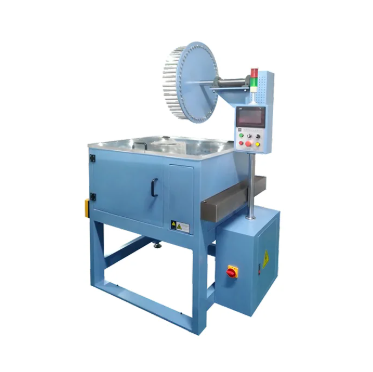
For more information, manufacturers can review Guanbo's wire harness braiding machine and compare its working specifications with their actual production requirements.
A Practical Approach to Customized Braiding Equipment
Customization should not mean adding unnecessary functions or making equipment more complicated. The goal is to create a machine that fits the production process more accurately.
For wiring harness manufacturers, this can mean selecting the appropriate spindle number, defining the working diameter, controlling the braiding pitch, and simplifying parameter adjustment. For manufacturers handling multiple cable specifications, it can also mean improving product changeover and production flexibility.
With its experience in high-speed oil-free braiding equipment, Guanbo® provides customized configurations for manufacturers working with different cable structures and application requirements.
The GB-24/32/48A1DT wire harness braiding machine demonstrates this approach through its flexible spindle configuration, automatic pitch setup, adjustable braiding range, chemical fiber compatibility, and ergonomic operating design.
For automotive, aviation, military, and precision electronic cable manufacturers, the right customized braiding machine can provide a more practical foundation for consistent production, easier operation, and future product expansion.
www.guanbobraider.com
Guanbo®