Reliable electricity measurement is essential for residential buildings, commercial facilities, industrial sites, and public infrastructure. Utilities and property managers need dependable metering equipment to track electricity consumption, organize electrical connections, and support routine maintenance. A well-designed smart energy meter box provides a structured enclosure for metering equipment and, depending on its configuration, selected circuit protection devices.
Unlike a basic protective housing, a modern energy meter box must accommodate practical installation requirements, including meter accessibility, wiring organization, environmental protection, and compatibility with the electrical distribution system. Features such as transparent viewing windows, modular internal layouts, and suitable enclosure materials can help simplify inspection and maintenance.
For utilities, electrical contractors, distributors, and project developers, choosing the right smart energy meter box is an important step toward supporting accurate electricity measurement, organized distribution, and dependable electrical installations.
1. How a Smart Energy Meter Box Supports Electricity Monitoring
Accurate electricity monitoring depends on the performance of the energy meter and the suitability of its installation environment. The meter measures electricity consumption, while the meter box provides a mounting structure and helps protect the equipment and associated connections.
A properly selected meter box supports electricity monitoring in several ways.
Equipment protection: The enclosure helps protect the meter and internal connections from accidental contact, dust, moisture, and other environmental influences. The actual level of protection depends on the enclosure design, materials, seals, and specified IP rating.
Convenient meter reading: A transparent viewing window allows authorized personnel to read the meter display without opening the enclosure. This can simplify routine inspections while helping limit unnecessary access to internal electrical components.
Organized wiring: A suitable internal layout provides space for terminals, conductors, and associated equipment. Clear wiring arrangements can make installation, inspection, and troubleshooting more straightforward.
Flexible metering configurations: Depending on the project, meter boxes may accommodate a single meter or multiple metering positions. Selecting the correct configuration helps ensure that the enclosure matches the building's distribution requirements.
It is important to distinguish between metering and data-management functions. The energy meter records consumption, while remote reading, real-time monitoring, and automated data analysis require compatible smart meters, communication equipment, and software systems. These capabilities are not automatically provided by the enclosure itself.
2. Integrating Metering with Appropriate Circuit Protection
Electricity measurement is only one part of a reliable distribution system. Electrical installations also require protection against hazards such as overloads, short circuits, and earth-leakage faults where applicable.
Depending on its design, a smart energy meter box may accommodate selected protective devices alongside the meter. Common components include:
-
Miniature circuit breakers (MCBs): Protect suitable circuits against overloads and short circuits within their rated operating conditions.
-
Residual current devices (RCDs): Detect residual current under specified conditions and provide protection according to the selected device type and installation arrangement.
-
Surge protective devices (SPDs): Help limit transient overvoltages when correctly selected and coordinated with the electrical system.
-
Terminal blocks and busbars: Provide structured connection points for incoming and outgoing electrical conductors.
The appropriate combination of components depends on the rated voltage, operating current, prospective fault current, conductor sizes, distribution arrangement, and applicable electrical regulations.
Simply installing these devices inside an enclosure does not guarantee complete protection. Correct component selection, coordination, installation, and inspection remain essential.
For example, in a small commercial building, an appropriately configured meter box can keep the energy meter and designated protective devices in an organized location. If a circuit develops an electrical fault, the relevant protective device can operate according to its rated characteristics, helping limit equipment damage and service disruption.
3. Selecting the Right Enclosure Material
The enclosure material influences mechanical strength, insulation characteristics, corrosion resistance, and suitability for different installation environments. Buyers should consider the expected exposure conditions and project requirements before selecting a material.
| Material | Main characteristics | Selection considerations |
|---|---|---|
| Cold-rolled or galvanized steel | Structural rigidity and mechanical protection | Evaluate coating quality, corrosion exposure, grounding, and insulation requirements |
| ABS or PC engineering plastic | Lightweight construction and electrical insulation properties | Confirm flame performance, impact resistance, UV stability, and material grade |
| 304 or 316 stainless steel | Corrosion resistance that varies with grade and environment | Consider coastal exposure, humidity, chemicals, and the specific stainless steel grade |
Metal enclosures can offer strong mechanical protection, but the design must address grounding, insulation barriers, and electrical clearances. Plastic enclosures provide insulating properties, although their performance depends on material formulation, wall thickness, flame-retardant characteristics, and resistance to environmental aging.
Stainless steel may be appropriate for installations exposed to corrosive conditions. However, the required grade should be determined according to the actual environment rather than assumed from the material name alone.
For outdoor applications, buyers should also assess temperature variation, sunlight, rainfall, condensation, and the possibility of water entering through cable openings. Choosing a suitable material and enclosure structure helps maintain the condition of the metering equipment throughout its intended service life.
4. Why IP Ratings Matter for Outdoor Meter Boxes
Outdoor meter boxes must provide a level of environmental protection appropriate to their installation location. The ingress protection (IP) rating describes an enclosure's resistance to the entry of solid objects and water under specified test conditions.
A meter box installed inside a dry electrical room may have different protection requirements from one mounted outdoors or on a distribution pole.
Before selecting an outdoor meter box, consider the following factors:
Installation location: Determine whether the enclosure will be installed indoors, beneath a canopy, on an exterior wall, or in a fully exposed location.
Dust and water exposure: Select an IP rating suitable for the expected environment and applicable installation standards.
Cable entry design: Confirm that cable glands, conduits, and entry points are compatible with the enclosure's intended protection level.
Temperature and sunlight: Verify that the enclosure materials and internal components can withstand the expected operating conditions.
Corrosion resistance: Assess whether the housing and mounting hardware are suitable for humid, coastal, or chemically aggressive environments.
Kaitai offers meter box products designed for different installation methods and environmental requirements. Since protection ratings can vary by model, buyers should verify the specifications of the exact product configuration before ordering.
Proper installation is equally important. Incorrect cable entries, damaged seals, or unsuitable mounting arrangements can compromise environmental protection even when the enclosure itself has an appropriate rating.
5. Choosing the Right Meter Box Configuration
The enclosure should match the electrical system's metering and distribution requirements. Selecting a meter box based only on its external dimensions may result in insufficient internal space, difficult wiring, or incompatibility with the intended meter and protective devices.
Several factors should guide the selection process.
Number of metering positions: A single-position meter box is intended for one metering position, while multi-position designs may be suitable for apartment buildings, residential developments, commercial properties, and other installations serving multiple users.
Installation method: Wall-mounted enclosures can suit individual homes and small commercial premises. Flush-mounted designs may provide a more integrated appearance, while pole-mounted products can be appropriate for certain outdoor distribution applications.
Electrical specifications: Check the rated voltage, current, wiring arrangement, meter dimensions, and protective-device requirements. The selected configuration must be compatible with the local power system and applicable regulations.
Internal working space: The enclosure must provide sufficient room for terminals, conductor bends, protective devices, and safe access during installation and maintenance.
Future servicing: Accessible terminals, removable covers, clear identification labels, and transparent viewing windows can simplify routine inspection.
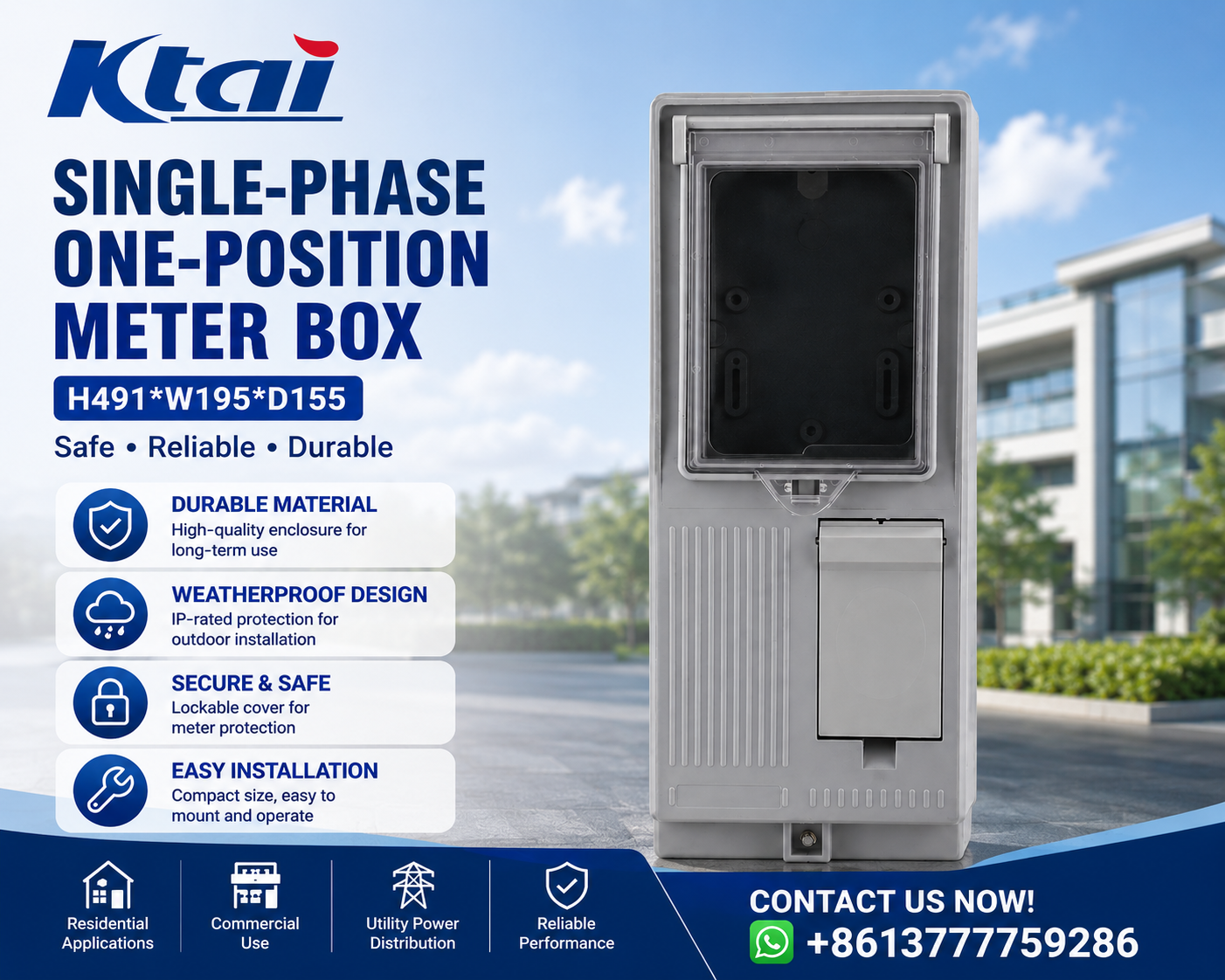
For installations requiring a compact solution with one metering position, buyers can consider Kaitai's single-phase one-position meter box. Before purchasing, confirm the product's dimensions, material, rated electrical parameters, mounting method, and compatibility with the intended meter and protection devices.
6. Improving Maintenance Efficiency Through Better Enclosure Design
Routine inspection helps identify deterioration before it develops into a more serious electrical or operational problem. A well-organized meter box makes it easier for qualified personnel to inspect the enclosure, identify components, and carry out appropriate maintenance procedures.
A practical maintenance program should include several key activities:
-
Inspect the enclosure: Check for cracks, corrosion, damaged seals, loose mounting points, and other visible deterioration.
-
Check the meter condition: Confirm that the display is readable and investigate abnormal indications or visible damage.
-
Inspect wiring and connections: Qualified personnel should check connections and perform necessary tests using approved procedures.
-
Verify protective devices: Follow the manufacturer's instructions and applicable regulations when inspecting or testing circuit breakers and residual current protection devices.
-
Maintain clear identification: Accurate meter and circuit labels help reduce confusion, particularly in multi-user installations.
-
Document inspection results: Record defects, corrective actions, and component replacements to support maintenance planning.
Electrical work must be performed by qualified personnel following appropriate isolation procedures and local safety requirements. A transparent viewing window facilitates visual reading, but it does not make energized internal components safe to access.
7. Preparing Meter Box Installations for Smart Distribution Networks
As electricity distribution systems become more digitalized, smart metering is increasingly used to improve consumption visibility and operational management.
When paired with compatible smart meters, communication modules, and data-management platforms, a metering installation may support remote meter reading, more frequent consumption-data collection, and improved access to electricity usage information. Depending on the system, these functions can help utilities reduce manual reading requirements and enable property managers to review consumption patterns.
However, these capabilities depend on the complete system rather than the meter box alone. The meter must support the required communication protocol, suitable network connectivity must be available, and the software platform must be able to receive and process the data.
For projects that may require future upgrades, buyers should consider internal space, wiring arrangements, access control, and compatibility with the intended metering equipment. Planning these requirements in advance can help reduce the need for extensive modifications later.
The objective is to select an enclosure that meets current installation requirements while allowing appropriate flexibility for future system integration.
8. What to Look for in a Meter Box Manufacturer
Reliable meter box performance depends on material selection, enclosure construction, component compatibility, manufacturing consistency, and technical support. Buyers serving overseas markets may also require customized dimensions, specific materials, installation options, labels, or configurations aligned with local standards.
Founded in April 1998, Zhejiang Kaitai Intelligent Electric Co., Ltd. specializes in the research and development, production, sales, and service of intelligent distribution network automation equipment, intelligent electric meter boxes, power equipment, high- and low-voltage complete sets of equipment, and instruments and meters.
When evaluating a supplier, purchasers should review product drawings, material specifications, rated electrical parameters, applicable test reports, protection ratings, and quality-control procedures. They should also confirm which certifications and compliance documents apply to the exact product model and destination market.
For customized or bulk orders, buyers should establish clear requirements for dimensions, material, metering positions, internal components, installation method, and labeling before production begins. Reviewing samples and technical documents can help reduce specification errors and improve consistency across deliveries.
An experienced manufacturer should be able to communicate product limitations clearly and provide the documentation needed to determine whether the proposed enclosure suits the intended application.
Conclusion
A smart energy meter box provides an organized enclosure for electricity metering equipment and, depending on its configuration, selected circuit protection devices. Its material, protection rating, internal layout, installation method, and compatibility with the electrical system all influence safety, maintenance, and long-term usability.
For more advanced monitoring applications, the enclosure should also be selected with the capabilities of the smart meter and communication system in mind. By confirming technical specifications and working with a qualified manufacturer such as Kaitai, utilities, electrical contractors, distributors, and project developers can select meter box solutions that support dependable electricity measurement and organized low-voltage distribution.
The most effective choice is not simply the enclosure with the most features, but the one that matches the installation environment, electrical requirements, and maintenance needs of the project.
www.ktaielec.com
Zhejiang Kaitai Intelligent Electric Co., Ltd.
