In holographic label and anti-counterfeiting packaging production, the master plate is one of the most critical elements in the entire manufacturing process. The quality of the master directly affects hologram reproduction, embossing consistency, dimensional accuracy, and the visual clarity of the final product.
Because holographic patterns contain extremely fine surface information, small variations during electroforming can become visible in later production stages. Uneven nickel deposition, unstable current, temperature fluctuations, contamination, or poor fixture positioning may all contribute to inconsistent master plates.
For this reason, modern manufacturers need more than a basic plating tank. A complete electroforming system should provide controlled electrical output, stable temperature management, effective solution circulation and filtration, reliable fixtures, and repeatable process control.
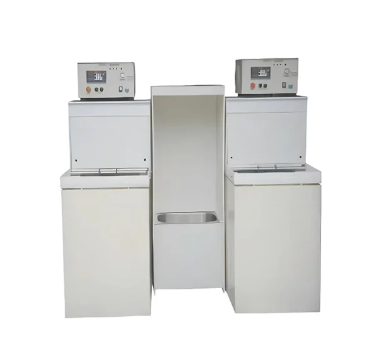
Industrial hologram electroforming equipment is designed to provide this type of controlled production environment, helping manufacturers convert conductive holographic masters into electroformed nickel plates for subsequent mastering and replication processes.
Why Electroforming Is Important in Hologram Mastering
Hologram electroforming is essentially a precision metal-forming process used to reproduce microscopic information from a conductive master.
Before electroforming, a photoresist or plastic master may be treated through electroless silver or nickel plating. This preliminary process creates a conductive surface that allows the master to function as the cathode during electroforming.
The prepared master is then installed in an electroforming tank containing the appropriate solution. Under controlled electrical and chemical conditions, nickel gradually deposits onto the master surface. Once the required plate thickness is reached, the electroformed plate can be separated and used as an intermediate or working master depending on the production process.
Because the holographic structure must be reproduced accurately, maintaining stable process conditions throughout this stage is essential.
1. Precise Rectifier Control Helps Maintain Deposition Consistency
Electrical current has a direct influence on the rate and uniformity of nickel deposition.
When the current is unstable or poorly distributed, some areas of the working surface may receive excessive deposition while others receive insufficient coverage. This can result in thickness differences and dimensional inconsistencies that become problematic during embossing.
The Changzhou Zhonghong system is equipped with a centralized rectifier control cabinet and a 12V 400A rectifier power supply using a three-phase input high-frequency switching power supply.
Such a configuration provides the electrical capacity required for industrial electroforming applications and offers better control of the plating process, particularly when processing relatively large holographic plates.
For manufacturers, the rectifier should therefore be evaluated not only by its maximum current output, but also by its stability and how effectively it can support repeatable deposition conditions.
2. Temperature Management Supports Stable Electroforming
Electroforming solution temperature is another important process variable.
Temperature changes can influence the chemical behavior of the solution and affect nickel deposition. If the temperature fluctuates significantly during production, the same process settings may produce different results from one batch to another.
The system uses a titanium heating tube, Mitsubishi temperature-control technology, and a PT100 temperature probe. An independent temperature alarm system is also incorporated to provide additional monitoring.
This arrangement allows operators to maintain a defined operating temperature and identify abnormal temperature conditions before they cause larger process deviations.
For hologram mastering, stable thermal conditions are particularly valuable because consistent operating temperatures contribute to more predictable plate quality.
3. Circulation and Filtration Protect Surface Quality
A clean and properly circulated electroforming solution is essential when producing precision holographic plates.
Contaminants or particles suspended in the solution can potentially create surface defects on the deposited nickel layer. Although such defects may appear relatively small at the electroforming stage, they can become much more noticeable after embossing or hologram replication.
To help maintain solution conditions, the system incorporates a circulation pump and filtration arrangement. The specified circulation system uses a loop pump with a capacity of approximately 92 L/min together with PP filter cartridges.
Continuous circulation helps create a more consistent solution environment around the working area, while filtration helps remove unwanted particles.
For production lines operating continuously or across multiple shifts, the filtration system should also be considered from a maintenance perspective, including filter replacement, cleaning requirements, and operating stability.
4. Electroforming Fixtures Affect Plate Positioning
The master must remain securely positioned throughout the electroforming process.
Movement, incorrect positioning, or an unsuitable relationship between the master, anode, and solution flow can influence the deposition environment around the working surface.
The system uses stainless-steel electroforming fixtures designed for large-plate applications. A properly engineered jig can provide more stable positioning while also making loading and unloading easier for operators.
Fixture design should be selected according to the actual production requirements. Important considerations include plate dimensions, working area, anode configuration, solution circulation, and the number of plates processed per cycle.
A suitable fixture should provide mechanical stability without making routine operation unnecessarily complicated.
5. Tank and Anode Design Influence Deposition Uniformity
An industrial electroforming tank is more than a container for chemical solution. The internal arrangement of the tank directly influences the electrical and chemical environment surrounding the master.
The tank, anode, fixture, circulation system, and electrical connections need to function as an integrated system.
The specified double-sided electroforming tank has an internal size of approximately 1400 × 600 × 1100 mm and incorporates titanium components together with acrylic-fabric anode bags.
For large holographic plates, the arrangement of these components becomes increasingly important. As the working area increases, maintaining uniform deposition over the complete surface becomes more challenging.
Therefore, when comparing electroforming equipment, manufacturers should consider the relationship between tank dimensions and the actual plate size rather than evaluating tank capacity alone.
6. PLC Control Improves Process Repeatability
A precision electroforming process can involve multiple operating parameters. If these parameters depend heavily on manual adjustment, differences between operators may lead to variations in production results.
The Changzhou Zhonghong system uses a Mitsubishi FX3U PLC and a 10-inch MCGS color touchscreen HMI.
PLC-based control allows equipment functions to be coordinated according to defined operating procedures. The touchscreen interface also gives operators a centralized method for monitoring and managing the equipment.
The main advantage is not simply automation. Standardized control helps reduce unnecessary differences between production cycles and makes operating procedures easier to document and repeat.
For manufacturers supplying large quantities of holographic labels or anti-counterfeiting packaging, this type of repeatability can be important for maintaining consistent downstream production.
7. Working Dimensions and Thickness Tolerance Should Be Clearly Defined
Equipment selection should always be connected with measurable production requirements.
The system is designed around an effective working area of approximately 1100 × 800 mm. For the specified 1100 × 800 mm plane working plate, the finished plate thickness error requirement is stated as no more than 0.015 mm.
Thickness consistency becomes increasingly important as plate dimensions increase. Uneven thickness can affect handling, installation, embossing conditions, and subsequent reproduction.
Before purchasing equipment, manufacturers should therefore define:
-
Required master plate dimensions
-
Target nickel thickness
-
Acceptable thickness variation
-
Required surface quality
-
Embossing requirements
-
Production volume
-
Inspection and measurement methods
These specifications provide a more practical basis for evaluating whether an electroforming system is suitable for a particular production line.
8. Flexible Groove Configurations Support Different Production Stages
Hologram manufacturing may involve multiple mastering and replication stages, and different plate configurations can be required at different points in the workflow.
The equipment concept supports both soft-groove and hard-groove applications.
A soft groove can accommodate an electroless silver-plated or electroless nickel-plated photoresist plate, as well as conductive plastic plates, for electroforming an intermediate master.
A hard groove can be applied to a working plate used in the stamping process associated with the intermediate master.
This flexibility can be useful for manufacturers operating several holographic production processes because the electroforming system can be configured according to the specific stage of the mastering workflow.
9. Production Capacity Should Be Evaluated Alongside Quality
Production efficiency is an important purchasing consideration, but maximum throughput should not be considered independently of plate quality.
The supplied equipment information indicates production efficiency of up to 8 plates per hour per shift of four under specified production conditions. Another configuration is described as producing approximately one piece per hour without a slot arrangement.
Actual production capacity can vary depending on several factors, including:
-
Plate dimensions
-
Required nickel thickness
-
Electroforming parameters
-
Loading and unloading time
-
Groove configuration
-
Solution conditions
-
Operator procedures
Therefore, manufacturers should evaluate throughput together with thickness consistency, surface quality, process stability, maintenance requirements, and labor input.
Higher nominal capacity has limited value if inconsistent electroformed plates create additional inspection, rework, or downstream production problems.
What Should Manufacturers Consider Before Buying an Electroforming System?
For hologram and anti-counterfeiting manufacturers, several technical factors should be reviewed before equipment selection.
Electrical Performance
Check rectifier capacity, current stability, power supply configuration, and control accuracy.
Temperature Control
Review the heating method, temperature sensor, controller, monitoring system, and alarm functions.
Filtration and Circulation
Consider circulation capacity, filter material, filtration configuration, cleaning procedures, and maintenance requirements.
Working Area
Confirm that the tank and fixtures can accommodate the required master plate dimensions.
Fixture Design
Make sure the master can be positioned securely and consistently throughout the electroforming process.
Automation
PLC and touchscreen control can help standardize equipment operation and reduce unnecessary operator-dependent variations.
Thickness Accuracy
Define the required thickness tolerance according to the downstream embossing and replication process.
Technical Support
Installation, commissioning, troubleshooting, spare parts, and technical assistance should also be included in the equipment evaluation.
Changzhou Zhonghong's Approach to Hologram Electroforming Equipment
Changzhou Zhonghong Machinery Co., Ltd. focuses on the research and development of label and packaging anti-counterfeiting technology and the manufacture of related equipment.
The company operates a standardized production workshop supported by technical personnel, equipment manufacturing capabilities, testing facilities, and an after-sales service team.
According to the company information provided, its equipment has been exported to more than 70 countries and regions, including Russia, Kazakhstan, Vietnam, South Korea, India, Indonesia, the United Kingdom, Germany, and the United States.
For manufacturers of holographic labels, security packaging, and anti-counterfeiting products, equipment support extends beyond the initial purchase. Installation, commissioning, process adjustment, troubleshooting, and long-term maintenance can all influence production continuity.
Working with an equipment manufacturer that understands both machine construction and hologram mastering requirements can therefore make equipment integration more practical.
Conclusion
The quality of a holographic master plate depends on much more than the nickel deposition process itself. Electrical stability, solution temperature, filtration, circulation, fixture positioning, tank design, anode configuration, and process control all contribute to the final result.
A properly configured industrial hologram electroforming system can provide a more stable environment for producing consistent master plates. Stable rectifier control helps regulate deposition, temperature management supports repeatable chemical conditions, while filtration and circulation help maintain solution quality. Mechanical fixtures and automated controls further improve positioning and process repeatability.
For holographic label and anti-counterfeiting packaging manufacturers, the right equipment should be selected according to actual production requirements, including working area, thickness tolerance, current capacity, temperature control, filtration, throughput, and technical support.
By treating electroforming as a controlled precision manufacturing process rather than simply a plating operation, manufacturers can establish a more reliable foundation for hologram mastering, embossing, and subsequent reproduction.
www.hologrammachiners.com
Changzhou Zhonghong Machinery Co., Ltd.