In modern aquaculture, survival rate is not just a biological indicator — it is a direct measure of operational stability and long-term profitability. For fish farmers operating in coastal waters, reservoirs, or large lakes, the structure and quality of their farming system can determine whether a season ends in success or heavy loss.
Net cage systems have evolved significantly over the past decade. Companies like Nanfengwang have focused on improving cage durability, water flow optimization, and operational practicality to help farmers increase fish survival rates while improving production efficiency.
1. Better Water Exchange, Lower Mortality
One of the biggest advantages of offshore and open-water net cages is natural water circulation.
Unlike pond farming, where water quality depends heavily on artificial aeration and regular water exchange, net cages allow continuous flow-through conditions. This means:
Higher dissolved oxygen levels
Reduced ammonia and nitrogen accumulation
Lower risk of sudden oxygen depletion
More stable temperature distribution
When fish are raised in environments with steady oxygen supply and minimal toxin buildup, stress levels drop significantly. Reduced stress directly translates into stronger immune systems and lower mortality during growth phases.
In coastal installations, especially in areas with moderate tidal movement, farmers often report noticeably lower disease outbreaks compared to enclosed pond systems.
2. Structural Stability Reduces Stress and Escape
Fish survival is also linked to the physical integrity of the cage system.
Poorly designed cages can deform under wave pressure, causing:
Net collapse
Fish crowding
Scale damage
Escape incidents
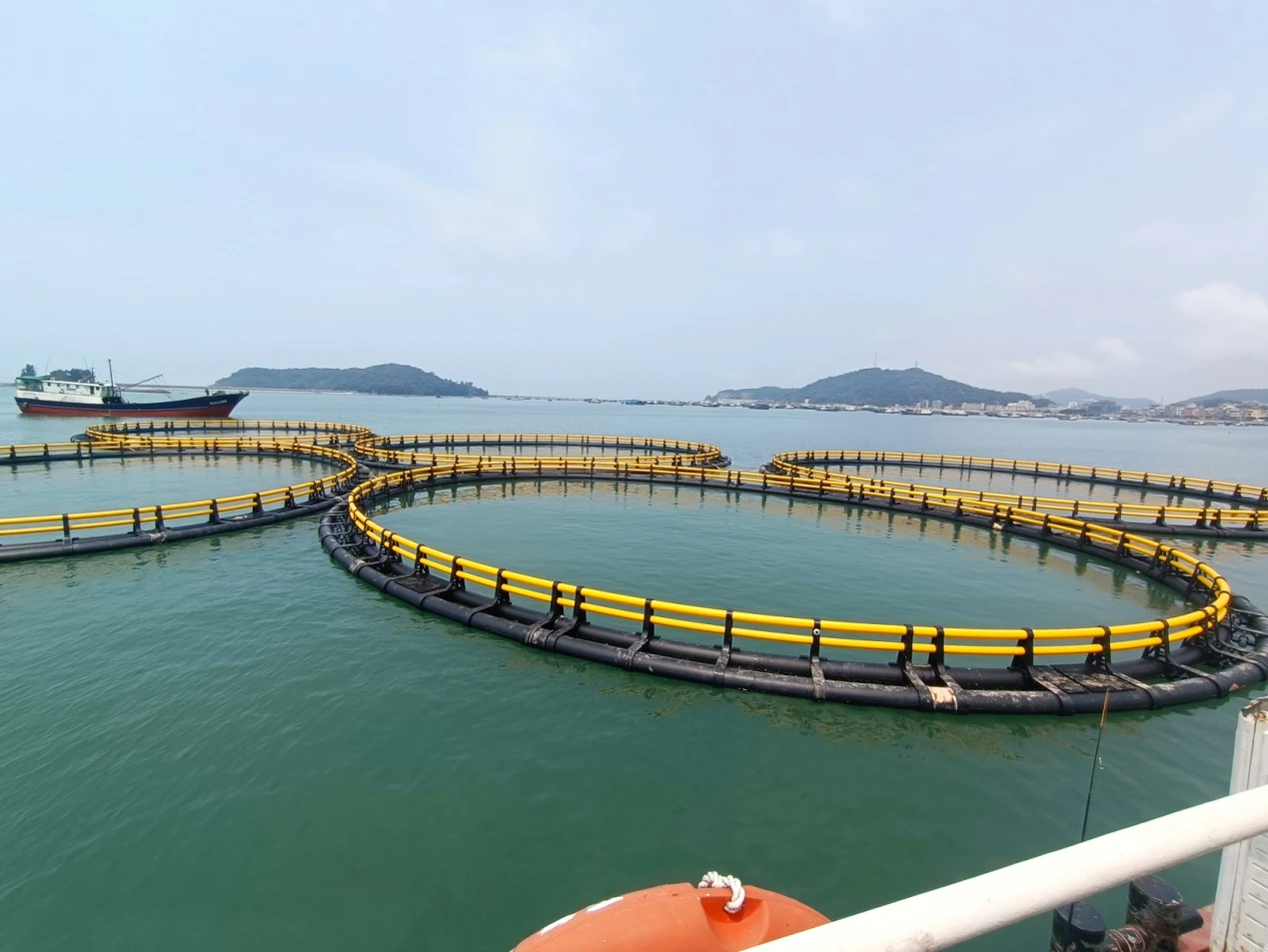
High-quality systems such as the Quanzhou 160m net cage are engineered for offshore conditions, offering stable flotation systems and reinforced netting structures. A larger diameter cage allows for:
Better stocking density distribution
Reduced aggressive interaction
More uniform swimming patterns
Improved feeding behavior
When fish can swim naturally without excessive crowding or sudden environmental changes caused by cage deformation, overall survival improves.
3. Optimized Stocking Density for Growth Efficiency
Survival rate and production efficiency are closely connected through stocking density management.
With modern net cage systems:
Farmers can calculate volume more accurately
Feeding distribution becomes more consistent
Fish size grading becomes easier
Larger circular cages allow fish to form natural schooling behavior. This reduces competition stress and improves feed conversion ratios.
In real-world operations, farmers who shift from small rectangular cages to larger circular offshore cages often observe:
Faster average growth rates
More uniform harvest size
Lower feed waste
This efficiency directly improves total output per cycle.
4. Improved Disease Control Through Water Dilution
Disease management is one of the most critical challenges in aquaculture.
Net cages positioned in open water benefit from continuous dilution of pathogens. Compared to stagnant environments, bacterial concentration does not accumulate as easily. This means:
Lower infection pressure
Reduced need for chemical intervention
Easier health monitoring
In addition, cage systems allow farmers to isolate affected units quickly. Instead of treating an entire pond or farm, only specific cages require attention. This modular approach reduces operational risk and prevents cross-contamination.
For offshore farms dealing with species such as seabass, grouper, or cobia, this environmental dilution effect significantly enhances survival percentages.
5. Better Feed Management and Lower Waste
Feed represents one of the highest operational inputs in aquaculture.
In net cage systems:
Feeding behavior is visible from the surface
Uneaten feed can be monitored in real time
Feeding schedules can be adjusted precisely
Because water exchange carries away excess fine particles, feed buildup at the cage bottom is minimized. This prevents localized pollution and reduces stress caused by deteriorating bottom conditions.
Many farmers using large-diameter offshore cages report improved feed conversion performance simply because fish remain active and oxygen levels remain stable during feeding periods.
6. Adaptability to Offshore Expansion
As coastal land resources become more limited, offshore aquaculture continues to expand.
Large net cages are designed to handle:
Moderate wave heights
Stronger currents
Long-term marine exposure
The engineering behind modern cage systems focuses on:
UV-resistant floating pipes
High-tensile knotless nets
Anti-corrosion connectors
Secure mooring systems
By expanding further offshore, farmers can access cleaner water with fewer pollution risks. Cleaner water naturally supports stronger fish health and higher survival.
This scalability allows aquaculture operations to increase production volume without sacrificing fish welfare.
7. Operational Practicality and Labor Efficiency
Production efficiency is not only about fish growth; it also involves labor and maintenance management.
Well-designed net cages simplify:
Net replacement
Daily inspection
Feeding operations
Harvest procedures
Circular cage structures allow boats to move around freely, improving worker access and reducing time spent on routine tasks.
When daily operations become smoother, farmers can focus more on monitoring fish condition and less on fixing structural problems.
8. Reduced Environmental Footprint
Sustainable aquaculture practices are increasingly important for long-term licensing and regulatory compliance.
Modern net cages:
Minimize seabed damage through proper mooring design
Reduce concentrated waste zones
Support environmentally responsible fish farming
Because cages are modular and movable, farm layouts can be adjusted based on seasonal currents and environmental assessments. This flexibility contributes to healthier ecosystems and long-term operational sustainability.
Real-World Impact: What Farmers Experience
In practical terms, farmers who transition from traditional pond systems to offshore net cages often report:
Survival rate improvements during summer high-temperature periods
Lower emergency aeration costs
Reduced disease outbreaks
More predictable harvest schedules
The difference is rarely dramatic overnight. Instead, improvements accumulate gradually through better water conditions, reduced stress, and improved system reliability.
Over multiple production cycles, these incremental gains translate into measurable increases in total output and operational confidence.
Conclusion
Net cage aquaculture is not simply about placing fish in open water. It is about engineering stable, durable, and biologically supportive environments that align with natural water systems.
By improving water circulation, structural stability, disease control, and operational efficiency, modern net cages significantly enhance fish survival rates and production outcomes.
For companies like Nanfengwang, the focus remains on delivering practical, field-tested cage solutions that match real offshore farming demands. As global seafood demand continues to rise, well-designed net cage systems will remain a core technology driving sustainable and efficient aquaculture development.
www.floatingfishcages.com
Nanfengwang
