In many industrial settings today, compressed air is just as important as electricity or water. It powers tools, supports automation, and keeps production lines running smoothly. That’s why it’s often called the “fourth utility.”
But not all air compressor systems are created equal. If you’ve ever dealt with pressure drops, high energy bills, or constant maintenance issues, you already know how much the wrong equipment can impact operations.This is where rotary screw air compressors stand out.
What Makes Rotary Screw Compressors Different?
Unlike traditional piston compressors that rely on a start-stop motion, rotary screw compressors use two rotating screws (rotors) to compress air continuously.
What does that mean in practice?
-
No frequent stopping and restarting
-
More stable airflow
-
Less vibration and noise
-
Lower wear and tear on components
This continuous operation is a big deal, especially in factories where machines run all day (or all night).
Why Continuous Airflow Matters
In industries like automotive, textiles, or metal processing, air demand doesn’t come and go—it stays constant.
With piston compressors, the system cycles on and off, which can lead to:
-
Pressure fluctuations
-
Inconsistent tool performance
-
Interruptions in production
Rotary screw compressors solve this by delivering steady pressure and airflow. The result is smoother operation across the entire production line and fewer unexpected slowdowns.
Energy Efficiency: Where You Really Save
One thing many businesses overlook is that energy cost is the biggest expense over the life of a compressor—not the purchase price.
Rotary screw compressors are designed to reduce wasted energy in several ways:
-
Continuous compression avoids repeated motor startups
-
Precision rotors improve compression efficiency
-
Load/unload controls match output to demand
In real-world use, this can translate into noticeable savings on electricity bills—especially for facilities running multiple shifts.
Less Maintenance, More Uptime
Maintenance is another hidden cost that adds up quickly.
Traditional compressors tend to have more moving parts, which means:
-
More wear
-
More frequent servicing
-
Higher risk of breakdowns
Rotary screw compressors are built differently. With fewer mechanical components and a simpler design, they offer:
-
Longer service intervals
-
Reduced maintenance workload
-
Better reliability over time
For operations that run 24/7, this reliability isn’t just convenient—it’s critical.
Integrated Systems: A Smarter Approach
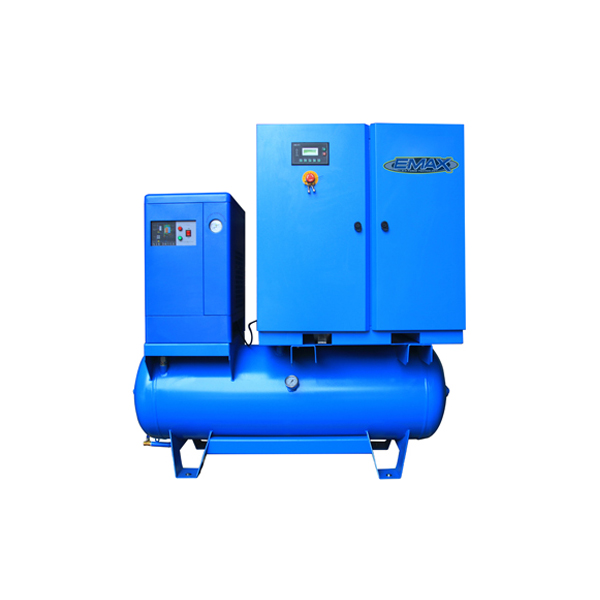
Modern rotary screw compressors are no longer just standalone machines. Many are designed as integrated systems that include:
-
Air storage tanks
-
Dryers
-
Filtration units
This setup makes installation easier and improves overall system performance.
It also ensures better air quality, which is essential in industries like food processing, electronics, or pharmaceuticals where contamination can cause serious issues.
Clean Air Isn’t Optional
In some applications, compressed air comes into direct contact with products. Any moisture, oil, or particles can lead to defects or even safety risks.
With the right configuration, rotary screw systems can deliver:
-
Dry air with low moisture content
-
Minimal oil carryover
-
Consistent air quality
That’s a big advantage for manufacturers who need to meet strict quality or regulatory standards.
Space-Saving and Flexible Installation
Factory space is always limited. One of the practical benefits of rotary screw compressors is their compact design.
Integrated units take this even further by combining multiple components into one system, which helps:
-
Save floor space
-
Simplify layout planning
-
Make future expansion easier
Long-Term Value Over Short-Term Cost
It’s easy to focus on upfront cost when choosing equipment. But with air compressors, the real value comes over time.
Rotary screw compressors help reduce total cost through:
-
Lower energy consumption
-
Fewer maintenance interruptions
-
Longer service life
-
Improved production efficiency
When you look at the full picture, they often end up being the more economical choice.
A Note on Choosing the Right System
Not every rotary screw compressor is the same, and selecting the right one depends on your actual needs.
Before making a decision, consider:
-
Required airflow (CFM or m³/min)
-
Operating pressure
-
Daily usage time
-
Environmental conditions
-
Air quality requirements
Getting these right ensures you don’t overspend—or end up with a system that can’t keep up.
Final Thoughts
Rotary screw air compressors have become the go-to solution for modern industry—and for good reason.
They offer:
-
Stable, continuous airflow
-
Better energy efficiency
-
Lower maintenance demands
-
Reliable long-term performance
For businesses looking to improve productivity while keeping costs under control, upgrading to a rotary screw system isn’t just an option—it’s a smart move.
www.emaxpowers.com
EMAX
